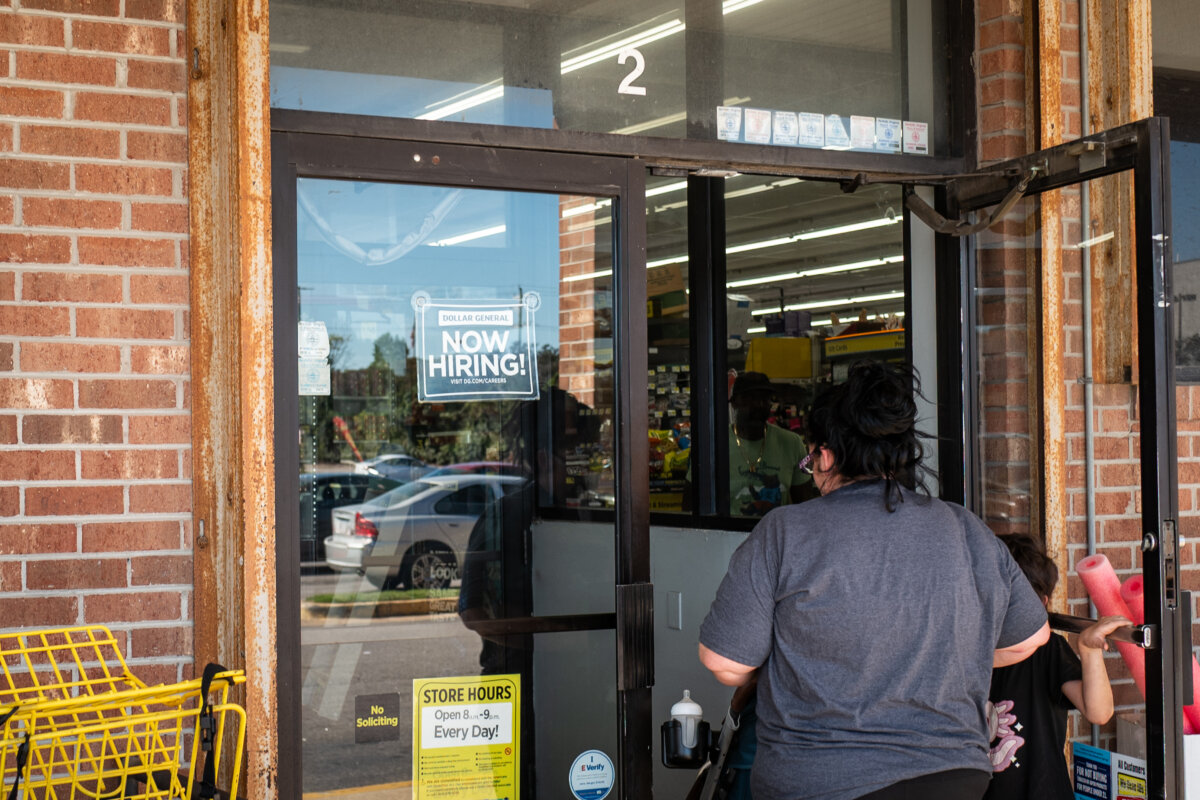

The boom in artificial intelligence (AI) drove the highest level of planned job cuts in three months, new data released on May 7 show.
In April, U.S.-based employers announced 83,387 layoffs, according to global outplacement firm Challenger, Gray, and Christmas. Although this is up 38 percent from March’s 60,620 job cuts, the reading is down 21 percent from the same month a year ago.
Excluding the COVID-19 pandemic, this was the second-highest total since 2009.
Technology accounted for a sizable share of last month’s reductions. Companies announced 33,361 job cuts, bringing the year-to-date total to 85,411.
Artificial intelligence was the most commonly cited reason for lowering headcount last month, said Andy Challenger, the firm’s chief revenue officer.
“Technology companies continue to announce large-scale cuts and are leading all industries in layoff announcements,” he said in a statement. “They are also often citing AI spend and innovation. Regardless of whether individual jobs are being replaced by AI, the money for those roles is.”
AI adoption has already prompted widespread layoffs this year; major tech and non‑tech employers are trimming staff as they retool operations around automation.
Block, eBay, Meta, Oracle, PayPal, and Pinterest have been among the top names, raising concern that the new technology could be displacing a sizable share of the workforce.
This is forcing today’s generation of workers to adapt.
New data from Indeed suggest that job seeker searches for AI roles have ballooned 11-fold since the release of OpenAI’s ChatGPT in 2022.
“Indeed’s real-time data show that workers are increasingly aware of AI and interested in roles that use it,” Cory Stahle, labor economist at Indeed, said in an April 28 research note.
“It’s possible that new model releases and viral moments have driven some of the early interest in AI, but persistent growth since the spring of 2025 suggests that AI is becoming more mainstream.”
As more models and products emerge, AI-related job postings and searches should continue to climb and shift “into something much more durable,” Stahle said.
Entities in federal, state, and local government, meanwhile, announced plans to terminate more than 9,100 positions—the highest monthly total since March 2025. In the first four months of 2026, the public sector has announced 11,419 layoff plans.
Employers in the chemical, media, pharmaceutical, and warehousing sectors also announced job cuts, according to Challenger data.

Over the past 15 months, the Trump administration has implemented sweeping global tariffs to rebalance international trade and reshore manufacturing. Although factory activity has rebounded in recent months, payrolls are not accelerating at a similar pace.
Industrial goods manufacturers have unveiled plans to cut almost 8,000 jobs this year, up 71 percent from the same four-month span in 2025.
“Tariffs, an ongoing war in Iran, automation and AI, and shifting consumer behavior are all impacting manufacturing companies in a way that is likely to cost jobs,” Challenger stated.
In addition to AI, American businesses cited closures, cost-cutting, restructuring, and market and economic conditions as factors in the layoffs.
Hiring Outlook Mixed
Various data have presented a mixed outlook for hiring in the coming months.
April’s hiring plans declined by 69 percent from the previous month to 10,049—also down 38 percent from a year ago.
Year-to-date, employers have announced intentions to hire almost 61,000 workers, down 13 percent from the first four months of 2025.
The automobile sector has led all industries this year, with plans to hire 12,258 workers. Entertainment and leisure, aerospace and defense, and government have also been the top industries planning to expand headcount.
But hiring could be anemic heading into the summer season.
“With a number of factors potentially impacting summer travel plans as well as how businesses operate across sectors, we predict hiring plans will remain muted,” Challenger said.
Other figures suggest a bright outlook for summertime.
The number of hires surged by 655,000 in March to 5.554 million, according to the Bureau of Labor Statistics’ Job Openings and Labor Turnover Survey published earlier this week.
This brought the hires rate—newly hired individuals as a share of total employment—to a two-year high of 3.5 percent.
Additionally, private payrolls rocketed by a larger-than-expected 109,000 last month, the largest increase since January 2025, ADP said.
Still, even if the U.S. economy is entrenched in a low-hire climate, it remains in a low-fire state.
Initial jobless claims—a measure of the number of applications for unemployment benefits—remains historically low at about 200,000.
Recurring unemployment claims remain below 1.8 million.
Economic observers will receive fresh insights into the state of hiring when the bureau publishes the April non-farm payrolls report on May 8. Economists expect constrained hiring due to uncertainty from the war in Iran and higher energy costs.
 Friends Read Free
Copy
Facebook
Tweet
Friends Read Free
Copy
Facebook
Tweet