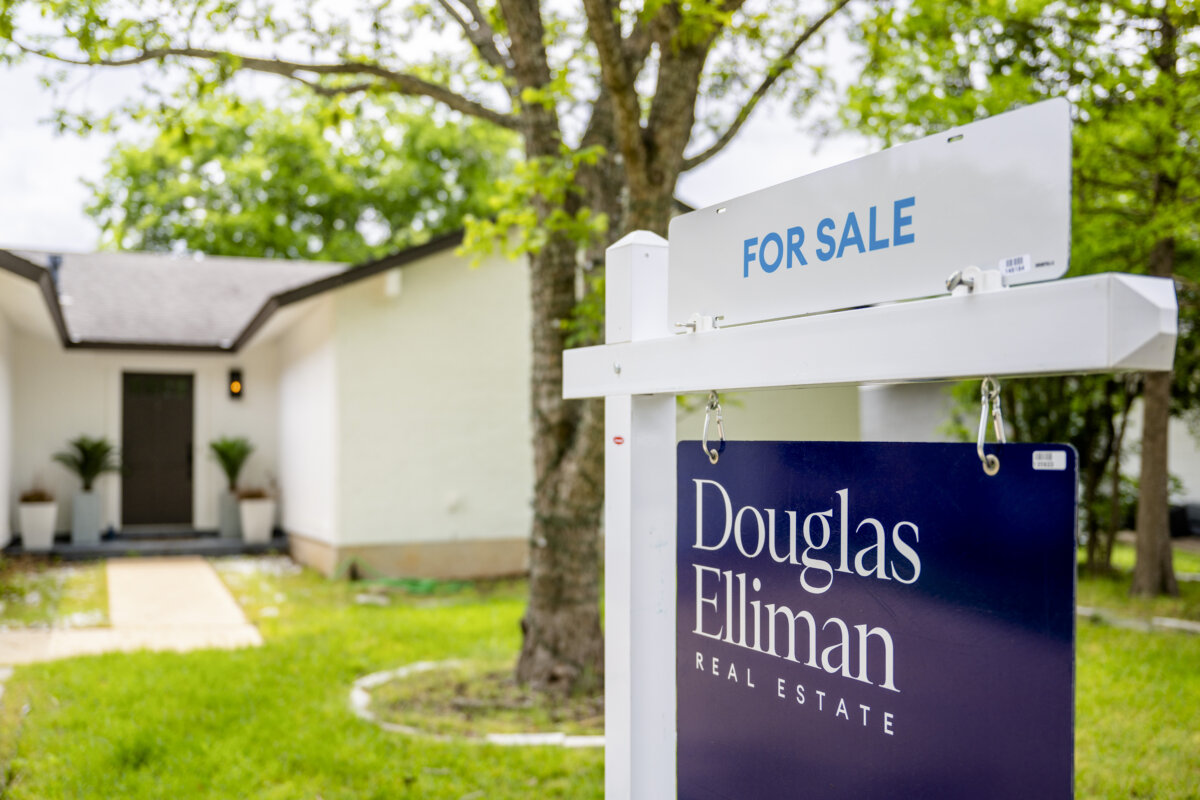

The weekly average rate on a 30-year fixed-rate mortgage continued to climb for the most recent week, hitting its highest level in nine months.
For the week ending May 27, the rate was 6.53 percent, up from the previous week’s 6.51 percent. The last time rates exceeded this level was for the week ending Aug. 27, 2025. Rates had dipped below the 6 percent level to hit 5.98 percent in late February, but have since been on the rise, according to Freddie Mac.
“Pending home sales have increased three months in a row, indicating there’s latent demand and homebuyers are ready to jump back into the market if mortgage rates decline,” Sam Khater, Freddie Mac’s chief economist, said.
Pending home sales refer to signed contracts that have yet to be closed, a process that can take up to two months.
On a weekly basis, pending home sales have fallen for two straight weeks, according to a May 28 statement from real estate brokerage Redfin.
The company said that rising mortgage rates and home prices have made purchasing homes more expensive in recent weeks, with the median monthly housing payment rising to $2,637 for the four weeks ending May 24—the highest level in 11 months.
“I’m seeing a lot of house hunters who are what I call ‘tire kickers,’ meaning they’re serious about buying—but they’re cautious, waiting to see if mortgage rates decline or the economy improves,” said Redfin agent Jason Gale.
Redfin attributed the jump in mortgage rates in the last few weeks to multiple factors, including the ongoing U.S.–Iran war and the possibility of the Federal Reserve hiking its benchmark interest rates.
In April, the Federal Reserve kept its interest rates unchanged for the third straight policy meeting, keeping it in the range of 3.5–3.75 percent.
Minutes from the April meeting suggested that many officials believe interest rates could be raised if inflation remains above the 2 percent target. In February, the 12-month inflation rate was 2.4 percent, which jumped to 3.3 percent in March and 3.8 percent in April, according to data from the Bureau of Labor Statistics.
Higher inflation rates can lead the Federal Reserve to raise its benchmark interest rates to slow price growth. Rising interest rates can also raise mortgage rates, which affect prospective homebuyers.
Increasing Housing Affordability
Amid rising mortgage rates and housing costs, the Trump administration and lawmakers have taken several actions aimed at ensuring Americans have access to affordable homes.
Late last month, the Department of Housing and Urban Development (HUD) and the Department of Agriculture rescinded a policy on minimum energy standards for newly constructed single-family and multifamily properties.
According to HUD, enforcing these energy standards would have raised the cost of home construction by $20,000 to $31,000, making homes more expensive for many first-time homebuyers.
Earlier this month, HUD announced updates to some environmental review requirements to reduce the “costs and complexity” for multifamily property developers and lenders.
Meanwhile, last week, the House of Representatives passed the 21st Century ROAD to Housing Act, which seeks to improve housing affordability nationwide, according to a May 20 statement from the House Committee on Financial Services.
The bill also focuses on streamlining housing development, eliminating regulations that act as burdensome barriers in the market, encouraging the construction of new properties, and updating outdated HUD programs.
“Homeownership is central to the American Dream. The American people elected Republicans into office because they were tired of this milestone getting further and further away from them,” Rep. Tom Emmer (R-Minn.) said.
“By passing the 21st Century ROAD to Housing Act, we’re continuing to deliver wins for hardworking Americans.” The bill now goes to the Senate.
 Friends Read Free
Copy
Facebook
Tweet
Friends Read Free
Copy
Facebook
Tweet