The majority of U.S. K–12 students have already returned to the classroom or will soon do so this academic year, with limited access to their phones on public school grounds.
Following busy legislative sessions across the nation in recent months and years with respect to education laws, 30 states and the District of Columbia now have laws or regulations in place prohibiting or limiting student phone use in schools, according to a review of state legislature websites.
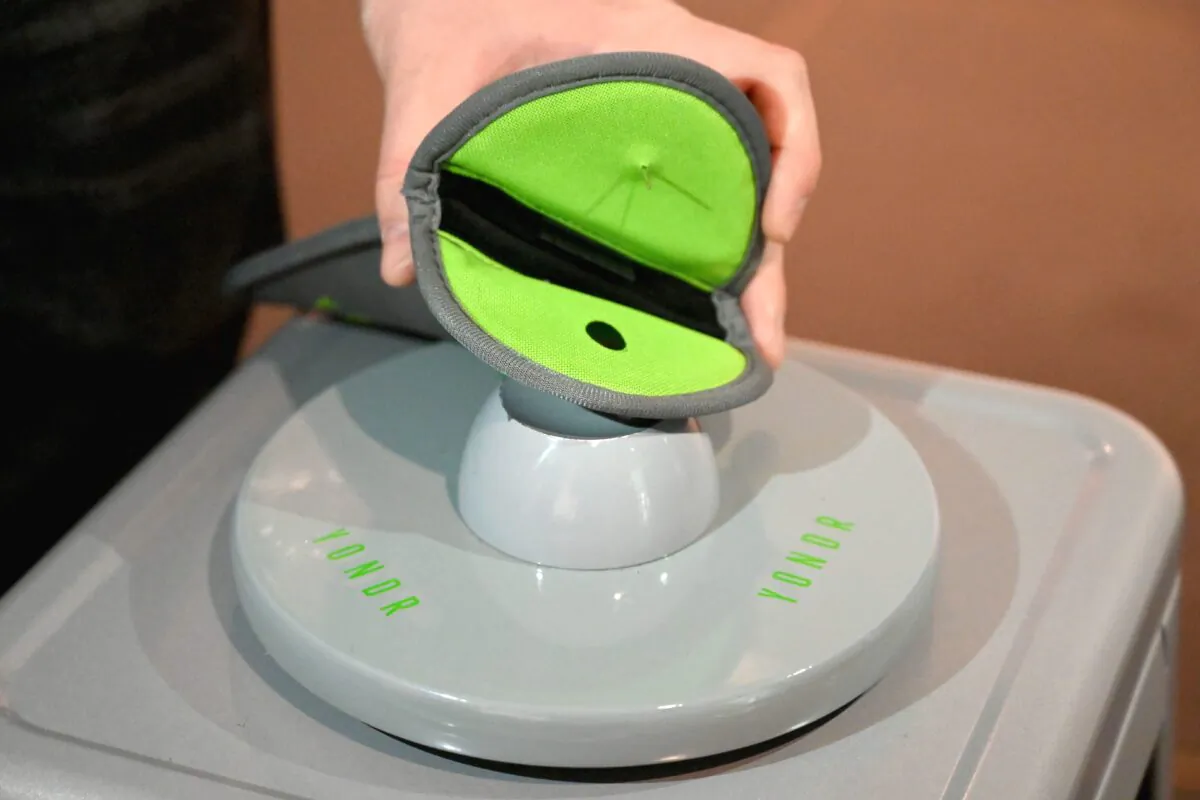
This ranges from “bell to bell” policies under which students must place their devices in a locked pouch, to lesser restrictions allowing use between classes, at lunch or recess periods, or in classes in which smartphone applications are relevant to instruction.
Here’s a breakdown of how and why this movement spread across the nation:
Justification
Most states considered input from teachers and school leaders before legislators or education agencies determined restrictions. The National Center for Education Statistics reported that more than half of public school leaders believe that cellphones hurt academic performance.
“With 54 percent of school leaders reporting negative impacts of cell phone use on academic performance, and even more citing negative impacts on students’ mental health and attention spans, schools are facing a critical issue,” Peggy Carr, the center’s then-commissioner, said in a Feb. 19 statement.
“Schools are responding with practical solutions, like banning or restricting phone use.”
The federal agency surveyed personnel in 1,490 K–12 schools across all states and the District of Columbia in December 2024.
Parent-led organizations, including the Phone-Free Schools Movement and Fairplay, continue to lobby for restrictions. In 2024, those groups sent literature to schools linking phone use to increasing adolescent anxiety and depression rates.
“The detrimental effects of excessive smartphone and social media use on our youth are clear, and immediate action is necessary,” Sabine Polak, cofounder of the Phone-Free Schools Movement, said in a July 2024 statement.
It Began in the Sunshine State
Florida House Bill 379, “Technology in K–12 Public Schools,” signed into law by Gov. Ron DeSantis ahead of the 2023–2024 academic year, allows teachers to prohibit classroom cellphone use and authorizes them to confiscate phones from students if the devices are causing disruptions. The legislation also restricts access to certain platforms, including TikTok, and requires instruction on the social, emotional, and physical effects of social media.
“We have prioritized giving Florida students the tools they need to succeed in the classroom by emphasizing the importance of learning, removing distractions from the classroom, and giving their teachers the tools they need to prepare our children to compete in a global economy,” Republican state Rep. Paul Renner, then the speaker of Florida’s House of Representatives, said after the law was signed on May 9, 2023.
However, a 2025 bill proposing a pilot program for more-restrictive, campus-wide bans of cellphones in Florida public schools failed. Under that legislation, six districts of varying sizes would have tested the policy for one academic year and reported the results to the state’s Department of Education for consideration of a future statewide campus-ban policy, according to the Florida Senate website.
A Nonpartisan Issue
In the first half of 2024, mostly red states adopted cellphone restrictions in public schools, and Minnesota enacted a law requiring policy adoption at the district level, according to official state legislature websites.
The movement gained momentum during the remainder of 2024 and into 2025 ahead of the coming academic year, with most states authorizing some type of restrictions.
Alabama and Oregon, for example, both passed statewide bans in which phones must be turned off and stored outside of the classroom or in a secure pouch that only school personnel can unlock.
By contrast, California and Iowa are among several states that task individual school districts with setting restrictions.
Several states issued a summer 2026 deadline to adopt a policy, although they have the option of implementing regulations sooner.
Not Everyone Is on Board Yet
Connecticut, Idaho, Kansas, and Washington state currently have state policies that only “encourage or recommend” cellphone restrictions.
Sixteen states—from Maine and Massachusetts in New England, to Mississippi in the Deep South, to Wyoming and Montana in the Northwest—don’t have statewide policies, but that does not necessarily preclude individual districts in those states from enacting their own restrictions.
Opponents cite safety concerns and the inconveniences to children who may need to contact their parents about important issues during the school day.
The National Parents Union, in a September 2024 research study, indicated that 78 percent of adults surveyed said they want their kids to have cellphones at school so they can be contacted if there’s an emergency, while nearly half of the respondents said they rely on cellphones to coordinate school transportation.
States and school districts should prioritize Internet safety and classroom management so “kids are engaged and not interested in cell phone shenanigans,” Keri Rodrigues, the organization’s president, said in a statement.
“And on cell phone policies, let’s commit to ensuring that any policies that are developed are done so at the local school level and take into account the diverse views of students, families, and teachers within the school community,” she said.
Chris Page, head of Highlands Ranch High School in Colorado and the 2023 Principal of the Year in that state, encourages cellphone use in class as part of a K–12 digital citizenship curriculum that he says trains children to balance device use with personal interaction and learning.
“It’s our responsibility to teach kids to use them the right way,” Page previously told The Epoch Times. “We don’t control technology like that anymore. Disruptions have always existed. How we guide them is the art of teaching.”
National Data
The National Center for Education Statistics, citing findings from the School Pulse Panel, reported in February that more than three-quarters of public schools now prohibit students from accessing their phones during class.
To a lesser extent, the federal agency reports, 12 percent of schools maintain policies in which teachers can decide whether phones are allowed in class, and 5 percent have policies allowing phones in the classroom.
By grade level, 86 percent of elementary schools, which typically serve K–5, prohibit cellphones during class, while 55 percent of middle schools and high schools have those restrictions.
Across all grade levels, 38 percent of U.S. public schools enforce phone restrictions between classes, during recess periods, and in extracurricular activities, according to the center.
What’s Ahead
New York state public schools, which start later than most states’ and remain in session until late June, could become the bellwether for leaders considering a very restrictive statewide “bell to bell” phone-free school policy that makes exceptions for medical conditions, language translations, individualized education plans, and for contacting parents in certain situations.
The state will issue grants for phone storage devices. Districts are required to publish annual reports detailing enforcement policies that “prevent inequitable discipline,” according to Gov. Kathy Hochul’s website.
“A statewide policy on cell phones in the classroom would measurably improve the classroom experience for both teachers and students, aiding in New York’s quest to both recruit and retain high-quality teachers across the state,” reads a recent report from the governor’s office titled “More Learning, Less Scrolling: Creating Phone-Free Schools.”
Nationwide, Americans will be watching for indications that the restrictions are working.
In the absence of metrics such as test scores and other school data correlating to cellphone bans, emerging reports on U.S. and foreign jurisdictions that have had policies in place for a short time show promising results regarding student engagement and “decreased behavioral issues,” the Rockefeller Institute for Government reported recently.
“Additionally, as other technologies are introduced—or re-introduced—to supplement communications in light of cell phone bans, as in the case of pagers, policymakers will need to consider how to adapt their policies to meet the ever-changing technological landscape in education,” the report stated.
 Friends Read Free
Copy
Facebook
Tweet
Friends Read Free
Copy
Facebook
Tweet