
A bipartisan group of lawmakers in both houses of Congress is seeking to ban the U.S. government from using artificial intelligence tools developed by China and other adversarial nations.
On June 25, members of the House Select Committee on the Strategic Competition Between the United States and the Chinese Communist Party introduced the No Adversarial AI Act.
The bill is designed to “protect federal agencies from the risks posed by artificial intelligence technologies controlled by foreign adversaries,” such as the Chinese communist regime, Russia, Iran, and North Korea, a statement from the Committee’s Democratic Party membership said.
Specifically, the No Adversarial AI Act requires the Federal Acquisition Security Council—an information-sharing agency within the Cybersecurity and Infrastructure Security Agency—to compile and maintain a publicly available list of AI technologies developed by firms linked to foreign adversaries.
The list must be updated at least every 180 days.
Government agencies would be barred from acquiring or using any AI tools appearing on the list unless granted a narrow exception for scientific research, testing, national security, or counterterrorism efforts.
Those exceptions must be justified in writing and reported to Congress and the Office of Management and Budget.
If passed, the measure would also grant the federal government authority to remove existing AI products developed by designated foreign adversaries from its systems and create an oversight mechanism for assessing future threats.
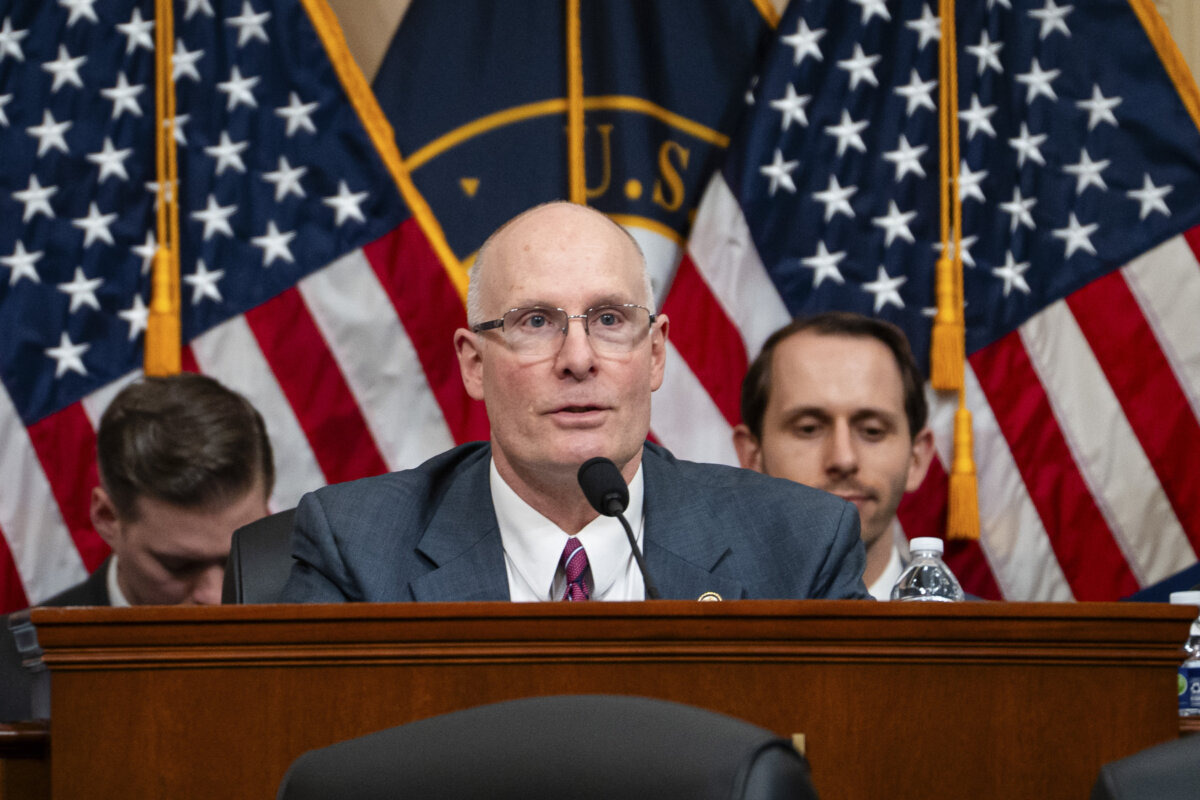
The bill was formally introduced to the House by Rep. John Moolenaar (R‑Mich.), the chairman of the Select Committee on the Chinese Communist Party, and Rep. Raja Krishnamoorthi (D‑Ill.), the panel’s ranking member.
The Senate version is sponsored by Sens. Rick Scott (R‑Fla.) and Gary Peters (D‑Mich.).
“The CCP doesn’t innovate—it steals, scales, and subverts. From IP theft and chip smuggling to embedding AI in surveillance and military platforms, the Chinese Communist Party is racing to weaponize this technology,” Moolenaar said in a statement.
“We must draw a clear line: U.S. government systems cannot be powered by tools built to serve authoritarian interests.”
The measure was drafted after the committee concluded an investigation into the connections between DeepSeek and the Chinese communist regime.
DeepSeek is a Chinese AI platform whose developers have been accused of copying American AI technology and using advanced, U.S.-made chips to build their own AI models.
The committee following its investigation concluded that DeepSeek is inherently compromised by the Chinese communist regime’s ideology, and that its outputs are biased.
Furthermore, the committee alleged that the company used sophisticated techniques to mimic and copy top American AI models and that it is actively siphoning data back to China for exploitation.
It also said Nvidia Corp. chips, either sold legally by the company to Chinese customers or smuggled into the country by illicit means, were essential for the development and operation of DeepSeek’s large language model DeepSeek R-1.
A Reuters investigation published on June 23 corroborated the claims made by the committee’s investigation.
The same investigation quoted an unnamed State Department official who said DeepSeek is actively supporting the Chinese communist regime’s military and intelligence operations.
In a statement, Peters said the proposed legislation attempts to protect innovation while ensuring national security is not compromised by clandestine AI functions.
“Artificial intelligence holds immense promise for our economy and society—but it also presents real security risks when leveraged by foreign adversaries,” Peters said.
Representatives of the Select Committee on the Strategic Competition Between the United States and the Chinese Communist Party did not respond to a request for comment from The Epoch Times.
 Friends Read Free
Copy
Facebook
Tweet
Friends Read Free
Copy
Facebook
Tweet