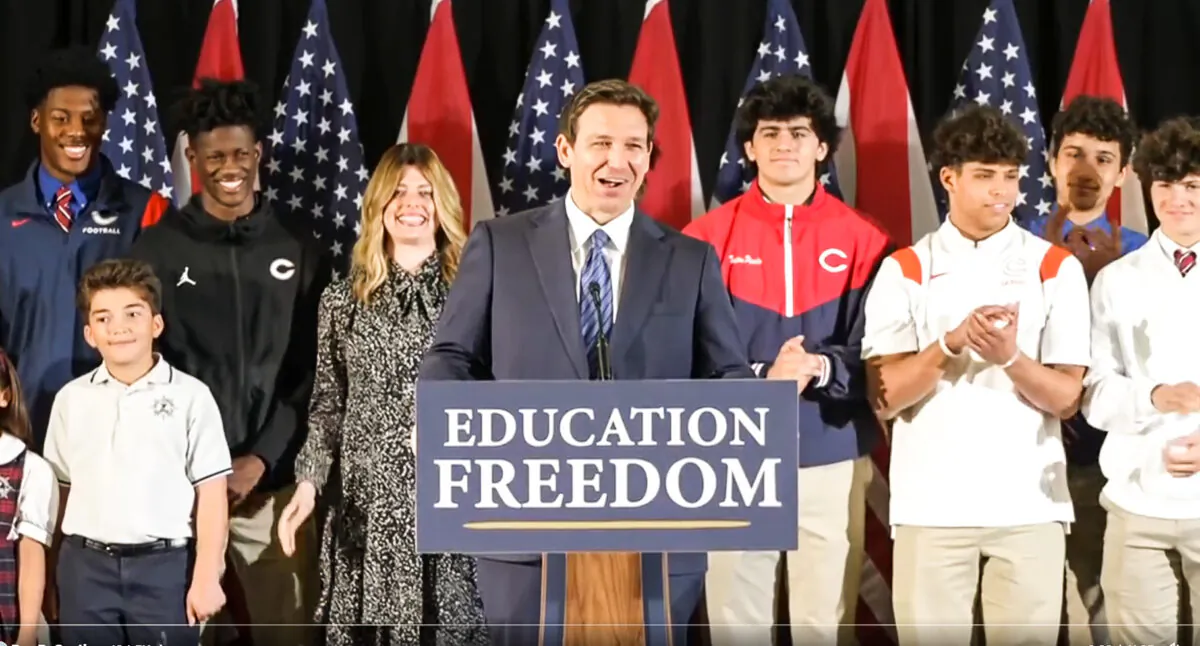
Proclaiming Florida the best state for choice in education, Gov. Ron DeSantis signed Florida’s universal school choice bill into law on March 27, giving every family educational options as “the money follows the child.”
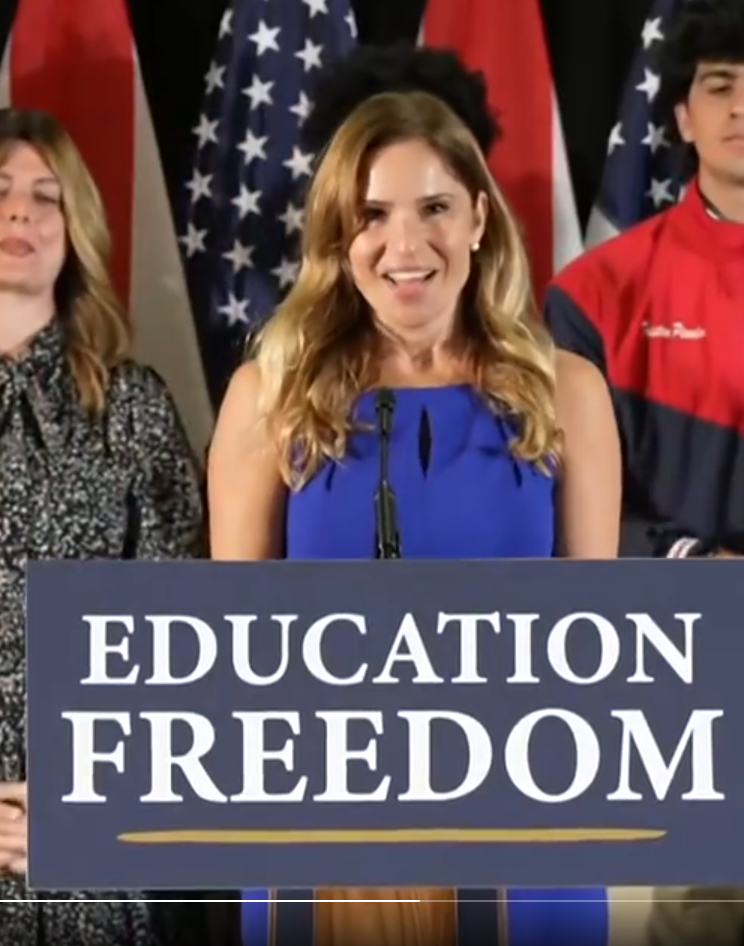
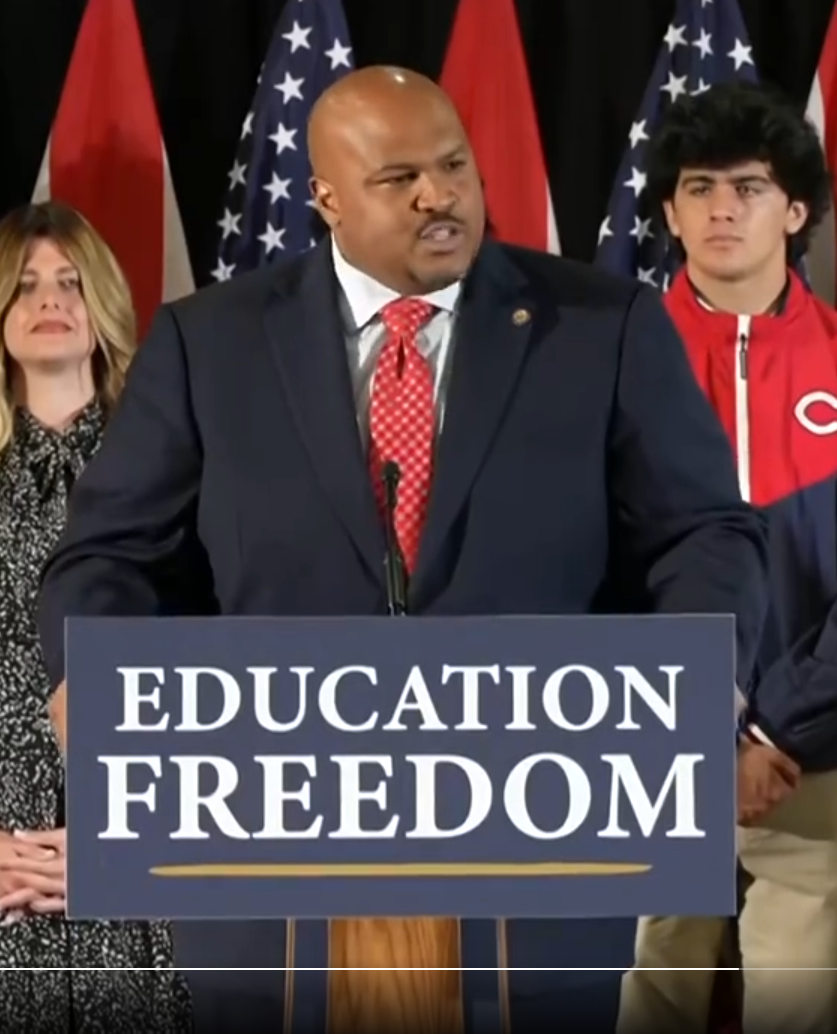
“Florida is No. 1 when it comes to education freedom and education choice, and today’s bill-signing represents the largest expansion of education choice in the history of these United States,” DeSantis said in a ceremony at Christopher Columbus High School, a Catholic school in Miami.
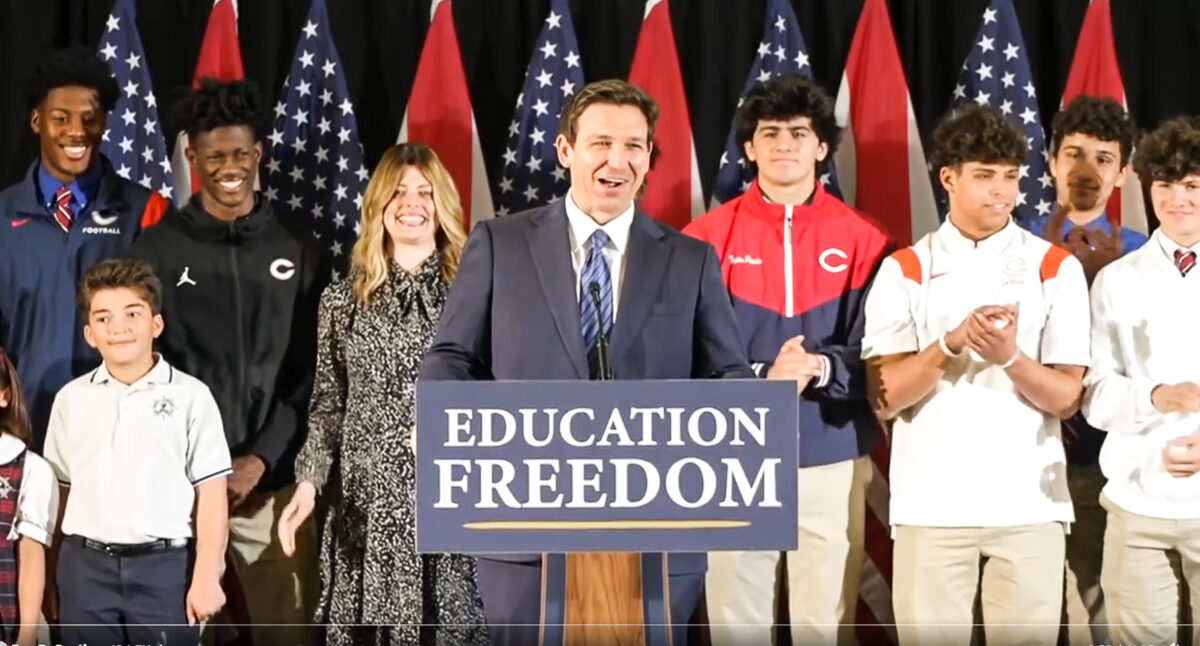
“When you combine private scholarships, charter schools and district choice programs, Florida already has 1.3 million students attending a school of their choosing,” he said, standing at a podium bearing an “Education Freedom” poster. “These programs have been instrumental in elevating school achievements over the past 20 years.”
DeSantis said that the 1.3 million students in Florida already using school choice makes it a group larger than the entire K-12 enrollment in 35 other states.
School choice lifts school performance by forcing schools to compete, DeSantis said.
“Our charter schools perform better because they have to compete for individual students,” he said. “They’re not entitled to anybody at a charter school.”
Democrats and teachers’ unions, who had opposed the bill, painted the state’s educational prospects in dark tones going forward, because of the legislation.
State House Minority Leader Fentrice Driskell, a Democrat representing Tampa, told reporters on the day of the bill-signing ceremony that the law would be “devastating to Florida’s public schools.”
The bill, she said, creates “two systems,” characterizing vouchers as “coupons we’re giving to millionaires.”
Later, she told The Epoch Times in an email, “Florida already has school choice. We have traditional neighborhood public schools; as well as magnet, charter, and private schools, Florida Virtual School, and homeschooling. This will upset the balance between our educational options, potentially financially crippling our public schools.”
Arizona’s move to school choice “became welfare for the wealthy,” she wrote. “Universal vouchers did not cause a mass migration from public schools, but they did cause a mass migration of tax dollars into the bank accounts of for-profit corporate schools.”
And the measure failed, she said, in “delivering low income kids out of failing schools. The majority of the families applying for the money came from the wealthiest zip codes, and the overwhelming majority were not even in public schools before the vouchers.”
How it Will Work
The bill, which goes into effect on July 1, eliminates current financial eligibility restrictions and allows any student eligible for kindergarten through 12th grade to participate. It continues to prioritize low- and moderate-income families, those below 185 percent of the federal poverty level. And it establishes a second tier of priority for families earning between 185 percent above the federal poverty level and 400 percent above.
The income amount that puts families in the category of living in poverty depends on the number of family members. In 2023, a family of four is considered to be living in poverty if the family income is at $30,000 or below.
The law addresses high demand and wait lists for its Family Empowerment Scholarship for Students with Unique Abilities by speeding up how many new scholarships are offered each year. It lifts enrollment caps for new students, allowing 20,000 next school year and 40,000 each year after that until 2027.
It requires the Department of Education to develop an online portal that will help parents to choose the best educational options for their children. And it eliminates the requirement that students complete at least one credit virtually to graduate.
The bill also “removes red tape and bureaucracy” for those wanting to be teachers, the governor’s office said, making teaching certificates valid longer, and allowing those with good work ratings and at least three years of classroom experience to skip the general knowledge requirement they otherwise must fulfill.
Scholastic Successes
Sen. Corey Simon, a Republican who sponsored the Senate version of the bill, said he has filed 25 bills this year. But this one means the most to him for personal reasons. The neighborhood he grew up in “on the other side of Dixie Highway” in Pompano Beach “didn’t have a lot of success stories,” he said.
His mother, a Publix Supermarket employee for 35 years, “didn’t want her son to deal with the same obstacles that she saw right outside of her front door,” Simon said. “And so she utilized her work address so that I could go to a better school.”
“When I got into the Senate, when I was running for this position, that’s the story that I told. That’s the life that I’ve lived. That’s the passion that I approached this bill with. Because I understood that I wouldn’t be standing here today in this position without the sacrifice that my mother made. And I wanted to ensure that every family had that same opportunity, to make the choice that was best for their children.”
Hera Varmah spoke of how the state’s scholarships had helped her poor immigrant family.
She’s one of 12 children born to immigrants from Jamaica and Liberia. Two are now engineers, and one is in medical school.
She graduated from Tampa Catholic High School and Florida A&M University and now works for the American Federation of Children. Four of her other siblings are in college, three are in high school, and one is in middle school.
“My parents would stop at nothing to give us the best education possible,” Varmah said. “They also believe that school values should align with their children’s and with theirs.”
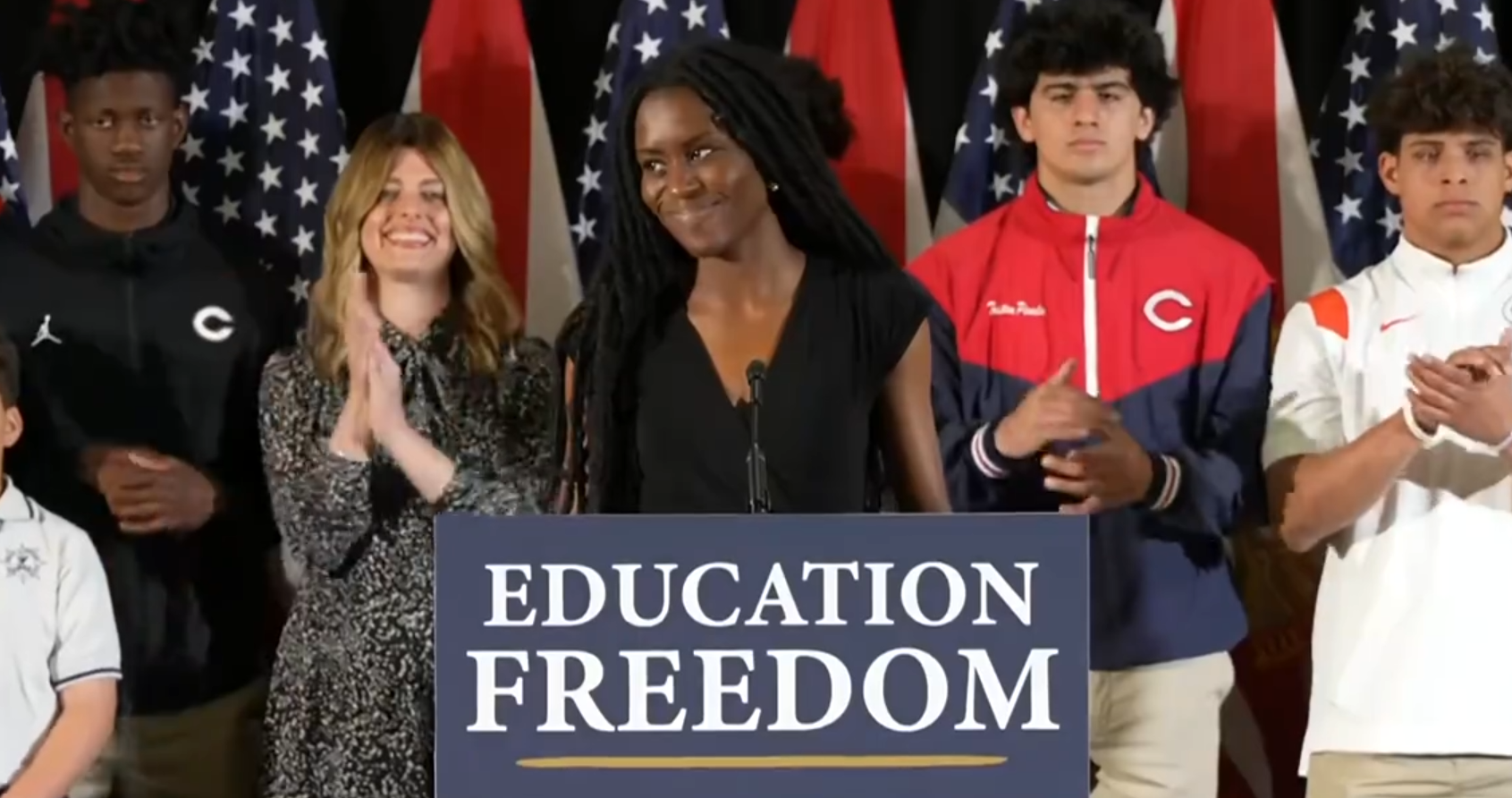
“When people say school choice doesn’t work, I simply show them my family,” Varmah said. “This is the power of giving a child an education that fits their needs.”
Aimee Uriarte, a single mother, said she moved from Costa Rica back to the United States three years ago, partly because of her older son Sebastian’s opportunity to go to Christopher Columbus on a scholarship. Now, he’s a straight-A student and active on the school’s television network.
His younger brother Alejandro has ADHD, and had academic trouble during the pandemic, she said. But a scholarship sent him to Christopher Columbus with his brother. Like his brother, he’s won an award for his work in the school’s journalism program, despite his struggles with attention-deficit/hyperactivity disorder.
“Education choice scholarships have been a huge blessing to my family,” Uriarte said.
“Governor, you have this mother’s eternal gratitude for allowing my boys’ future to be promising in a school like Columbus,” she said, choking up as she was speaking, before giving DeSantis a hug.
Rachel Haydon Sabbah spoke about being the mother of four daughters in Fort Lauderdale who attend the Jewish Cooperative School, an Orthodox institution. Two of her girls qualify for Family Empowerment Scholarships, enabling her to homeschool one and get therapy for the other. She had previously been put on a waiting list for the treatment.
“The legislation will cause the unique abilities waitlist to vanish,” she said, “and allow nearly 10,000 special needs families to get the funding that they need.”
Editor’s note: This story was updated after it was published to include comments from Florida House Minority Leader Fentrice Driskell.
 Friends Read Free
Copy
Facebook
Tweet
Friends Read Free
Copy
Facebook
Tweet