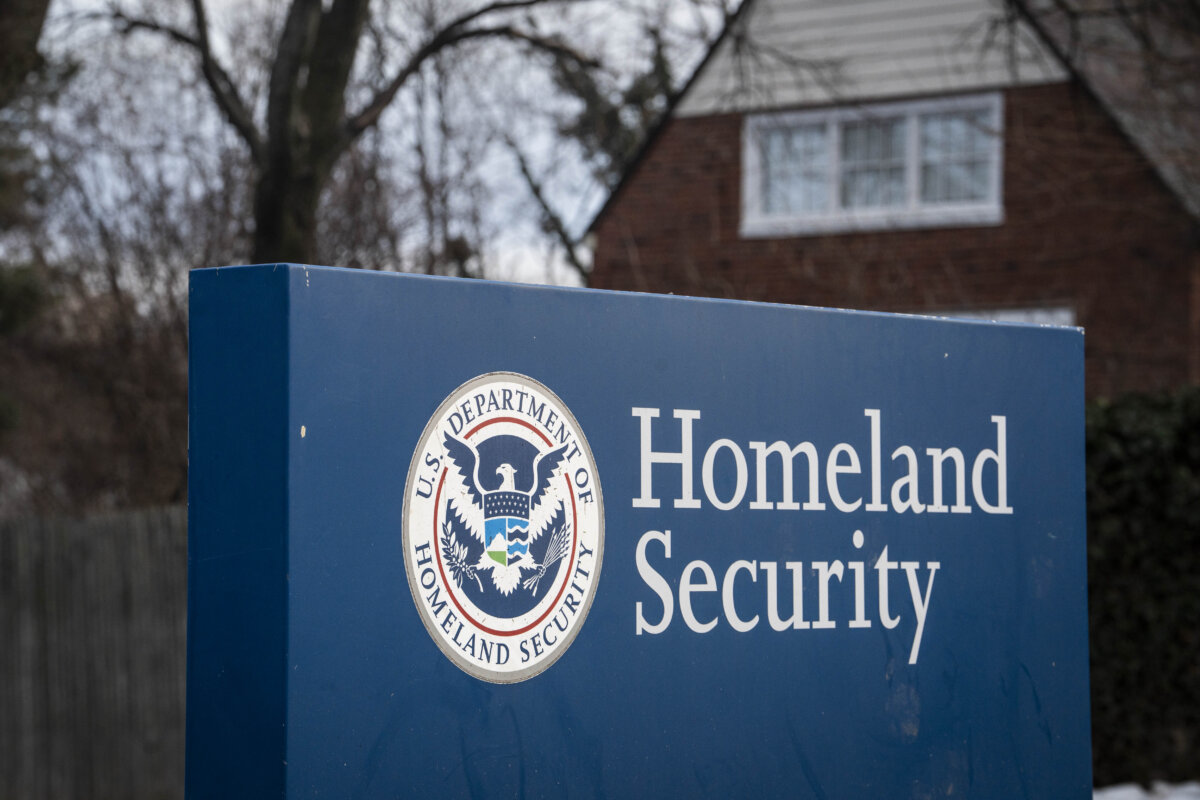

The Department of Homeland Security (DHS) is considering a new rule that would impose major fees for foreign students seeking to work in the United States.
The proposed rule, announced by the Trump administration on Oct. 7, would require colleges and universities to pay a $70,000 fee for each nonimmigrant student applying to participate in the Optional Practical Training program.
The program authorizes foreign students to temporarily work in the United States in jobs related to their field of study either during or after their time in school.
The new proposal comes after the Trump administration was blocked last month from implementing limitations on F-1 visas, which allow nonimmigrant students to live and study in the United States.
DHS said Wednesday that the proposed rule is intended to reduce the influx of cheap labor into the United States, curb fraud and abuse, protect American workers, and strengthen the integrity of the immigration system.
“Optional Practical Training was never meant to be a back door into the American workforce, a subsidy for cheap labor, or a prize for those who game the system,” a DHS spokesperson said in a statement.
“DHS is upskilling OPT to require foreign students to justify their worth to employers. American workers should not have to compete against a program that has been turned into a pipeline for cheap foreign labor.”
In addition to the initial $70,000 fee for each nonimmigrant student participating in the optional practical training program, colleges and universities would also be required to pay a $30,000 fee for each renewal or extension of the program’s authorization for students.
Under the program, F-1 nonimmigrant students are required to receive a recommendation from a designated school official before applying for employment authorization with U.S. Citizenship and Immigration Services.
Students participating in the program are typically eligible to work in the United States for one year after graduation.
However, some students with degrees in science, technology, engineering, or mathematics are eligible to work for an additional two years.
More than 294,000 foreign students participated in the optional practical training program during the 2024–2025 academic year, according to the President’s Alliance on Higher Education and Immigration.
In Wednesday’s announcement, DHS said it was proposing the new rule in response to fraud and abuse discovered by the Student and Exchange Visitor Program.
As the program has expanded, schools, officials, employers, and F-1 nonimmigrant students have attempted to exploit regulations, including “problematic worksites and ‘pay-to-stay’ visa schemes,” according to DHS.
The department suggested the fees would encourage colleges and universities to employ additional oversight and be more selective of students recommended for the training program.
In response, Fanta Aw, CEO of nonprofit NAFSA: Association of International Educators, said in a statement that the program provides foreign students with the opportunity to have hands-on experience.
She said international students involved in the program also fill labor shortages in science, technology, engineering, or mathematics fields.
“Imposing this new fee structure on Optional Practical Training is the latest in a series of developments that creates deep uncertainty for international students,” Aw said.
“Driving away the talents, perspectives, and aspirations of international students will only hurt American innovation, economic growth, workforce development, and global leadership.”
A federal judge blocked another Trump administration rule on Sept. 14 that would limit students on F-1 visas to four years in the United States before requiring them to seek approval from U.S. Citizenship and Immigration Services to stay longer.
DHS said the limitation on F-1 visas was needed to address national security risks, including foreign spying at universities in the United States.
Judge F. Dennis Saylor IV of the U.S. District Court for the District of Massachusetts, who blocked the Trump administration from implementing the law while a legal challenge moved forward in court, said DHS did not explain how the rule would deter future spying or acts of sabotage.
In May 2025, the Trump administration attempted to revoke Harvard University’s certification to enroll foreign students under the Student and Exchange Visitor Program.
Harvard responded by suing the administration, and a federal judge blocked the government from preventing the university from enrolling foreign students through the program.
 Friends Read Free
Copy
Facebook
Tweet
Friends Read Free
Copy
Facebook
Tweet