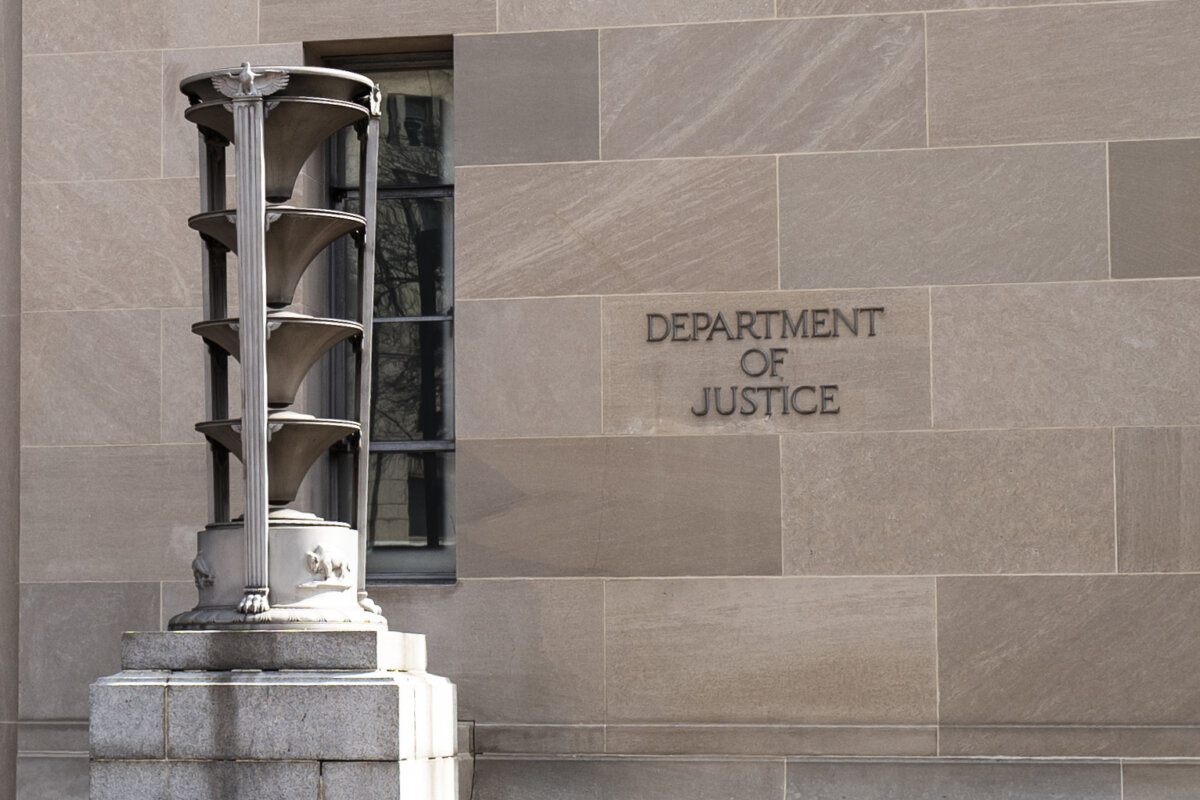

Lawyers in the Justice Department’s Office of Legal Counsel (OCL) concluded Tuesday that federal rules barring faith-based groups from using charity-grant money for worship, religious instruction, or proselytization are unconstitutional and not required by the First Amendment’s establishment clause.
The opinion, titled “Constitutionality of Religious Restrictions on the Use of Federal Funds,” answered a formal request from the civil rights office of the Department of Health and Human Services (HHS).
The Department of Justice (DOJ) announced its opinion on social media Wednesday.
“Yesterday, DOJ’s Office of Legal Counsel issued an opinion protecting religious liberty in federal charity programs,” the department’s official account stated on X. “More than half of U.S. food pantries and soup kitchens are faith-based.”
The opinion focuses on three statutes that forbid grantees from using direct federal funds for religious activities: the 1996 welfare overhaul known as PRWORA, the Public Health Service Act, and the Child Care and Development Block Grant law from 1990. Companion HHS regulations require faith-based providers to keep worship, religious instruction, and proselytization separate in time or location from grant-funded services.
“Federal statutory provisions and regulations that restrict federal funding based on either the religious status of a program provider or anticipated religious uses of the funds are not required under the Establishment Clause,” the opinion says.
“Because the statutory and regulatory religious restrictions applicable to programs administered by the Department of Health and Human Services discriminate based on anticipated religious use without any compelling governmental interest, they violate the Free Exercise Clause.”
The establishment clause is the First Amendment provision that bars the government from establishing an official religion.
The old restrictions grew out of late-1990s Charitable Choice efforts, when lawmakers opened welfare, addiction-treatment, and child-care programs to religious providers but still limited “sectarian” spending to satisfy then-prevailing establishment clause doctrine.
The OLC now says that doctrine has been superseded by later Supreme Court decisions, including Trinity Lutheran, Espinoza, Carson v. Makin and Kennedy v. Bremerton School District. Under those cases, OLC wrote, use-based religious restrictions on generally available federal funding programs are presumptively unconstitutional.
The opinion does not rewrite the U.S. Code but informs the executive branch how to treat those laws as a constitutional matter.
Religious Liberty Efforts
The DOJ’s move this week fits a broader Trump administration effort to expand religious participation in federal programs.
The department’s Religious Liberty Commission presented its final draft report to President Donald Trump on June 26, recommending that the Justice Department issue guidance on the establishment clause.
“The truth is that the phrase ‘wall of separation between church and state’ appears neither in the First Amendment nor anywhere else in the Constitution,” the report stated.
In April, a Justice Department task force released a separate report alleging anti-Christian bias in Biden-era prosecutions, policies, and agency practices.
The report by the DOJ’s Task Force to Eradicate Anti-Christian Bias found the former administration’s prosecutions, policies, and practices constituted bias throughout multiple agencies.
“No American should live in fear that the federal government will punish them for their faith,” Acting Attorney General Todd Blanche said at the time.
 Friends Read Free
Copy
Facebook
Tweet
Friends Read Free
Copy
Facebook
Tweet