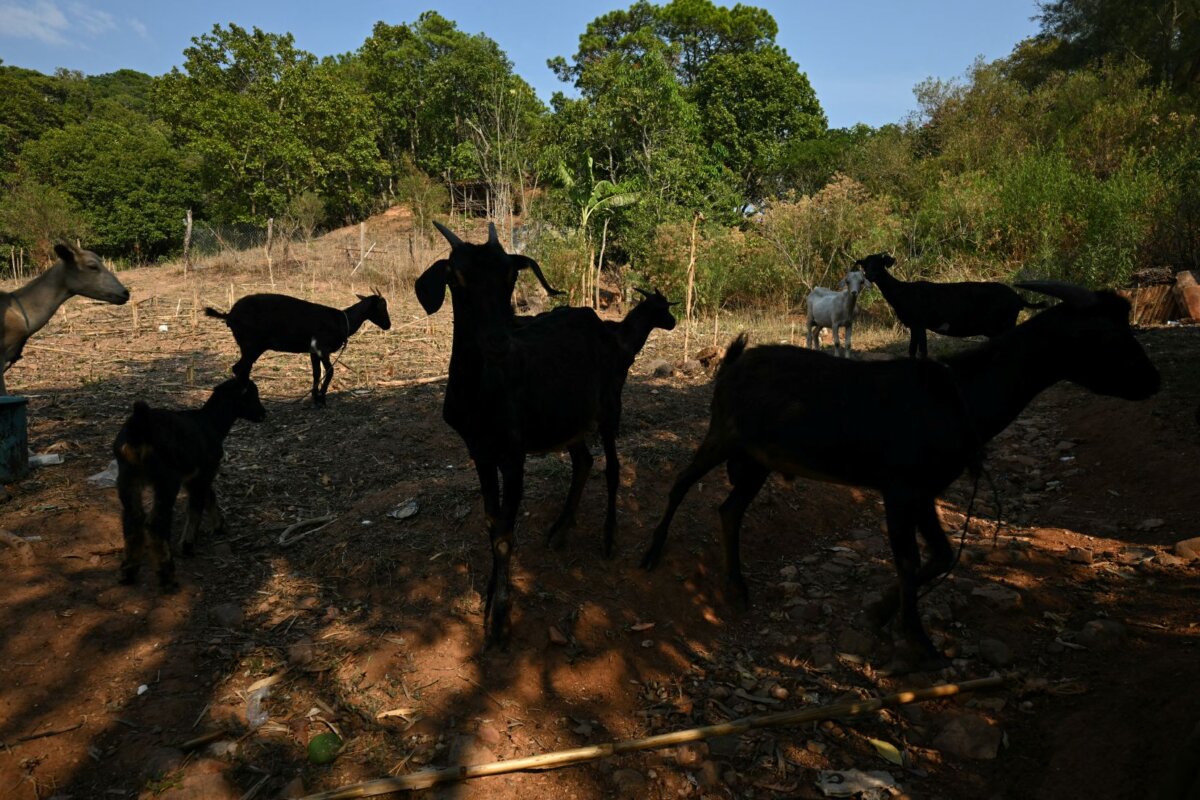

A flesh-eating parasite known as the New World screwworm was detected in a Mexican goat just 25 miles south of the U.S. border with Texas.
The parasite infested a 5-year-old goat in Mexico’s Coahuila state, U.S. Department of Agriculture (USDA) Secretary Brooke Rollins told reporters during a call on Tuesday. It marks the closest confirmed detection to the United States during the current outbreak.
“There’s no doubt that this is a very, very serious threat to our livestock,” Rollins said.
USDA officials said the fly lays eggs in the open wounds of warm-blooded animals. Larvae then burrow into living flesh, often killing the host if untreated.
The agency said it has stepped up monitoring along the border.
The latest detection follows a pattern of northward creep documented over the past year.
In September 2025, Mexico confirmed an infection in an 8-month-old cow in Sabinas Hidalgo, Nuevo León—less than 70 miles from the U.S. border. At the time, Rollins accused Mexico of neglecting to maintain the agreed-upon protocols.
“Mexico has failed to ‘regularly maintain fly traps as agreed,’ thereby negatively affecting detection efforts,” Rollins said in an X post at the time.
Releasing Sterile Male Flies
By early February, the northernmost active case in Mexico was roughly 200 miles from the border. The USDA’s Animal and Plant Health Inspection Service responded by releasing sterile male flies near the border and in parts of Texas. Officials have released about 100 million sterile flies per week in Mexico to disrupt the parasite’s reproduction.
Such swarms can be countered by releasing such flies. When sterile male flies mate with females, they end up laying unfertilized eggs, diminishing the swarm over time and warding off the threat they pose to cattle.
Rollins said in February that besides opening sterile-fly production facilities on both sides of the border, her agency has also halted imports of live cattle, horses, and bison from Mexico.
She said the agency had invested up to $100 million in research and innovation related to traps, treatments, and improved fly production; and training detector dogs to identify infected animals.
No cases have been confirmed in U.S. livestock, though traps remain active in Texas, Arizona, and New Mexico.
Eradicated From the US in 1966
The New World screwworm was eradicated from the United States in 1966 through a long-running sterile-insect program. It reemerged in Mexico in late 2024 and has since spread steadily northward, prompting repeated alerts from federal officials.
In August 2025, officials confirmed the first travel-related human case—a patient in Maryland who had returned from El Salvador—in the United States, though there are currently no active cases and no threat, according to the Centers for Disease Control and Prevention.
A single female screwworm can lay up to 3,000 eggs, allowing rapid population growth if unchecked. An outbreak in Texas alone could inflict $1.8 billion in damage and shrink the national cattle supply, pushing up beef prices, experts have said. Ranchers in border states continue heightened surveillance.
The USDA said it continues to work with Mexican authorities to contain the parasite before it reaches American soil.
Reuters contributed to this report.
 Friends Read Free
Copy
Facebook
Tweet
Friends Read Free
Copy
Facebook
Tweet