
Lockheed Martin and GM Defense unveiled today a novel effort to bolster America’s manufacturing capacity and defense industrial base.
The companies signed a memorandum of understanding to combine Lockheed Martin’s defense production capabilities with General Motors’ prowess in high-rate commercial manufacturing and engineering, with the U.S. Department of War facilitating the effort.
Their goal is to bolster defense supply chains, advance manufacturing processes, and design capabilities, as well as assess strategies to raise output for defense needs through commercial-scale production methods and facilities.
The initiative includes shortening the amount of time required to reach full production and adapt tested commercial approaches to strict defense standards in terms of quality and performance.
“America’s security depends not only on developing advanced technologies, but on our ability to produce them quickly, reliably, and at scale,” Frank St. John, chief operating officer of Lockheed Martin, said in a statement. “This collaboration brings together two leaders in American manufacturing and innovation to explore new ways to strengthen the defense industrial base, expand production capacity and accelerate delivery of critical capabilities for the United States and its allies.”
Steve duMont, president of GM Defense, shared a similar sentiment.
“Working together, GM Defense and Lockheed will further strengthen American manufacturing and national defense by driving greater speed, efficiency, and innovation in the aerospace and defense sectors,” duMont said. “Over the coming weeks, we will be working to identify initial projects to pursue together.”
The partnership is in response to robust demand throughout the defense sector for greater output volume, more resilient supply networks, and faster adaptation of manufacturing techniques.
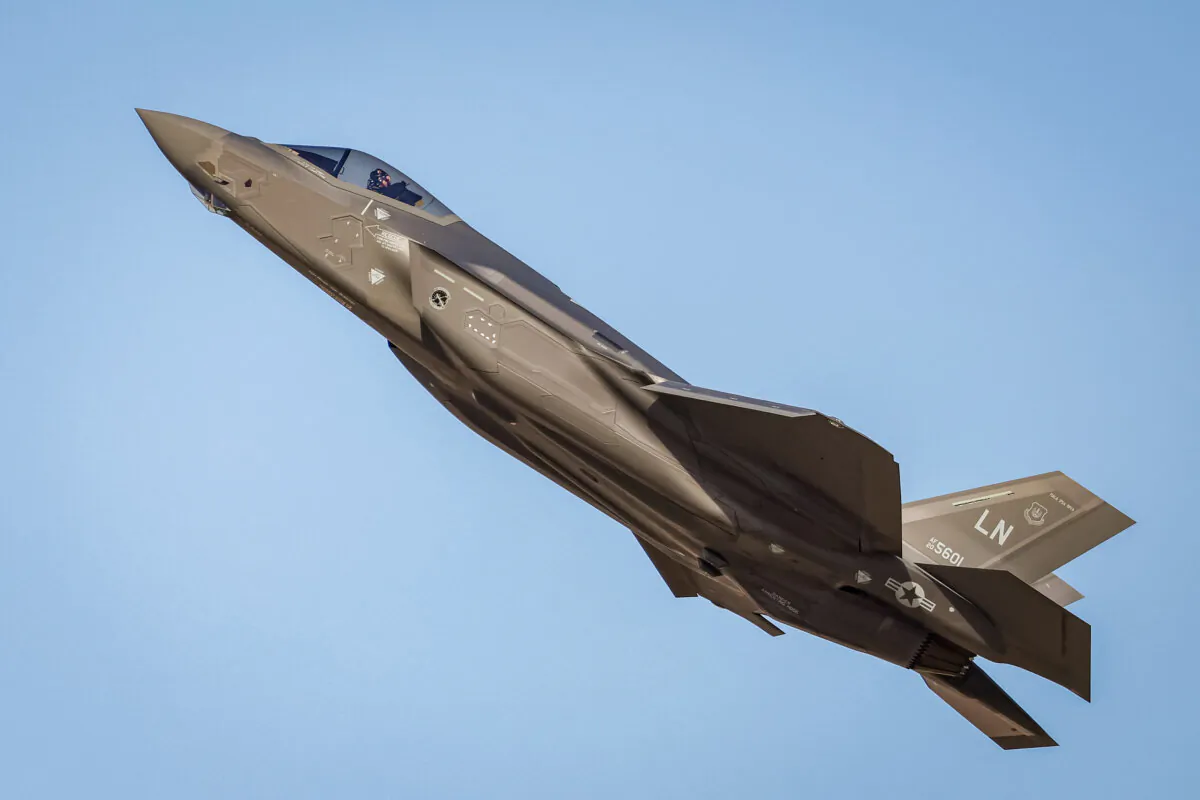
Lockheed Martin already builds advanced technologies across air, land, sea, space, and cyber domains to military and allied standards, including the U.S. Government’s Golden Dome for America, a multilayered shield for the entire country, the company says.
“Together with scaled radar production lines, and field‑tested counter‑UAS (unmanned aircraft system) systems, this integrated approach demonstrates that our defense is no longer siloed; it is a seamless, cross‑domain network that can detect, track, and neutralize threats wherever they arise,” it stated.
GM Defense supplies specialized vehicles, power systems, autonomy features, and connectivity solutions to defense, security, and government customers worldwide, including during World War I, World War II, and every other conflict involving the United States, according to its website.
Teams from both organizations will scope out initial projects in the coming weeks. Specific products or contracts remain unknown.
In February 2025, Stephen Feinberg, President Donald Trump’s nominee for deputy secretary of defense at the time, opined to the Senate Armed Services Committee that weapons production should be an option for a greater number of major U.S. commercial manufacturers, like Ford and General Motors, instead of being limited to defense firms.
Feinberg underscored that greater participation is key to keeping pace with communist China, whose military has set its sights on supplanting U.S. military supremacy.
 Friends Read Free
Copy
Facebook
Tweet
Friends Read Free
Copy
Facebook
Tweet