
SPRINGFIELD, Ohio—Temporary Protected Status (TPS) was set to end for certain Haitian immigrants in the United States on Feb. 3 until Judge Ana Reyes of the U.S. District Court for the District of Columbia granted a last-minute reprieve on the evening of Feb. 2.
According to the judge’s ruling, termination of TPS is “null, void and of no legal effect.” Work authorization will continue for Haitian immigrants, who will also be protected from detention and deportation for the duration of the judicial stay.
“We can breathe for a little bit,” said Rose-Thamar Joseph, operations director of the Haitian Support Center in Springfield. “It is not a final victory, because a judge cannot redesign a country for TPS or extend the TPS, but it means a lot for us.”
Earlier on Feb. 2, two dozen faith leaders and hundreds of congregants at Springfield’s St. John Missionary Baptist Church gathered, hopeful that the federal judge would intervene in the pending TPS expiration.
“We believe in the legal system of this country of ours; we still believe. We believe that through the legal ways, the judge hopefully will rule in favor of current TPS holders today that will allow them to stay while we continue to fight,” Guerline Jozef, executive director of the Haitian Bridge Alliance, told those in the packed church.
“We have been called for such a time as this to protect those who have nowhere else to go. They cannot go back to Haiti.”
The pending conclusion of TPS had many Springfield residents and Haitian immigrants in Springfield on edge for opposing reasons.
Haitian immigrants were fearful that Immigration and Customs Enforcement (ICE) agents would descend upon the southwest Ohio city and arrest them.
Residents were concerned that protests from activist groups that have targeted ICE agents in Minnesota would arrive in Springfield and cause destruction and violence.
On the campaign trail in September 2024, President Donald Trump promised “the largest deportation” in the history of the United States.
“And we’re going to start with Springfield and Aurora,” he said.
If TPS does eventually expire, ICE agents can detain Haitian immigrants who do not have other legal immigration protections.
At a press conference on Jan. 27, Ohio Gov. Mike DeWine, a Republican, said he expected that immigration enforcement would begin on the same day TPS expires.
Fears of Unrest, Deportations
On social media, multiple activist groups rallied participants to join them in Springfield to confront ICE agents.
“I don’t want what is going on in Minneapolis to happen here in Springfield,” a Springfield business owner told The Epoch Times on the condition of anonymity, for fear of backlash from Haitian immigrant supporters. “If ICE does come here, I’m afraid of a violent reaction from protesters, and I’m afraid of what will happen to the Haitians if they are sent back to their country.”
Resident Erynn Hanford told The Epoch Times that Haitian immigrants have added to the economy and that she wants them to stay.
“They are worshiping in our churches,” she said. “They are shopping at our markets. They are eating in restaurants and developing new businesses. They have helped revitalize our city, which frankly was dying. Our Haitian community has added to our culture, and we have benefited from their presence.”
Some Haitian business owners in Springfield have said they have seen a decline in customers and sales because immigrants have left the area.
“I’m terrified. My whole family is terrified. We want to stay here. We don’t want to be sent back,” a Haitian immigrant who lives in Springfield told The Epoch Times. “Many [Haitian] people I know have moved out of Springfield because we’re afraid. We have nothing left to go back to in Haiti, and we’re scared to stay here.”
Pushon Jacques, 41, is a TPS holder from Haiti. He said his homeland is “unlivable” because of gangs and violence. Losing TPS will mean he can’t work and provide for his family, he said.

A lifelong Springfield resident who also owns a small business told The Epoch Times, “I wouldn’t be able to stay in business if I spoke out about how I feel, and that’s unfair.”
“We can’t speak up at meetings or on social media without being harassed and being called a racist—all because we bring up how the influx of Haitians has drained the city financially,” she said. “Our city officials have made it clear they don’t care about heritage citizens.”
Outside of Ohio, many Americans had never heard of Springfield until Trump called attention to Haitian immigrants in the city during a Sept. 10 presidential debate.
“In Springfield, they’re eating the dogs. The people that came in, they’re eating the cats. They’re eating the pets of the people that live there,” Trump said.
City officials, police, and Haitian immigrants denied the accusation, but Springfield became a central part of Trump’s promise to address the border crisis.
JD Vance, who is now vice president, said immigrants were overburdening Springfield’s services and housing.
Springfield’s population was about 58,000 in 2020. In subsequent years, numerous Haitian immigrants entered the city. Springfield Mayor Rob Rue has been outspoken in defending the presence of the Haitians. City Hall declined multiple interview requests from The Epoch Times, but in a September 2024 interview with PBS, Rue acknowledged that the immigrant population “taxed” the “infrastructure of the city,” including its safety forces, hospitals, and schools.
Cultural Issues
Springfield had a small Haitian population before 2021, when the number of illegal border entries began to break records. A shortage of entry-level and blue-collar workers made the city an attractive destination, especially because of its low cost of living compared with major metro areas.
The cultural differences between long-term residents and immigrants have caused tension.
“They don’t understand the laws; they don’t understand some of our customs,” Kyle Koehler, a Republican state senator who represents Springfield and Clark County, said in September 2024. “We don’t understand some of their customs, and that clash and the overwhelming amount of people that have come at one point has really caused some issues.”
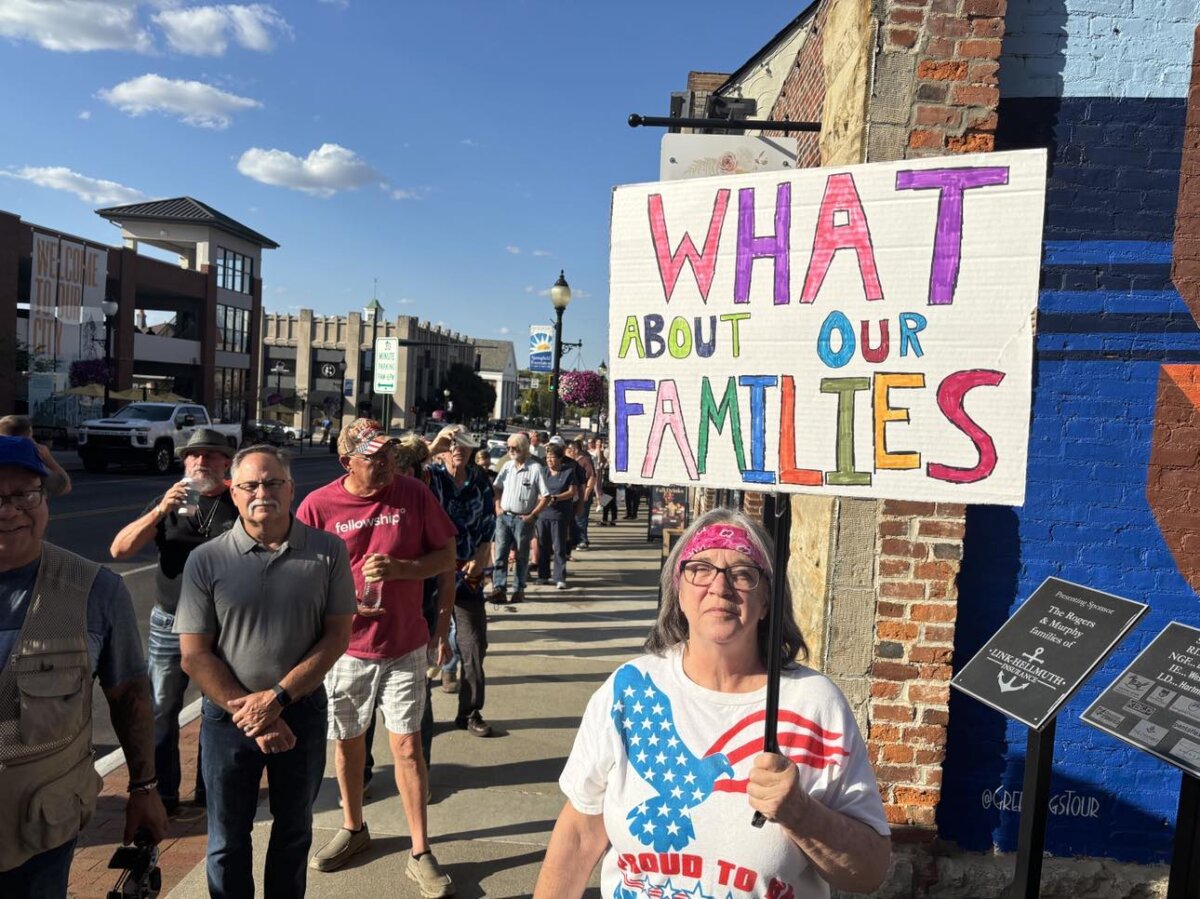
The city of Springfield has stated: “Immigrants with TPS are legally qualified to receive financial assistance, health and nutrition services, employment and education services, and housing services. Since immigrants granted TPS must apply for an Employment Authorization Document that can take up to several months to receive, they may need assistance until they can legally seek employment.”
Many residents have complained about an overburdened health care system and concerns about driver safety because of Haitians operating motor vehicles without licenses and an understanding of English.
Since Trump brought national attention to Springfield, multiple residents have also lamented that landlords have not renewed the leases of longtime citizens so they could rent to Haitian immigrants by the bed or the room.
Springfield native Michael Morris said a friend of his who owns rental properties discovered that a tenant at a four-bedroom house was subletting rooms to Haitian immigrants. She was paying $1,500 a month and getting $500 a person from 12 Haitians, he told The Epoch Times.
Longtime Springfield resident Diana Daniels has been an outspoken critic of how the city has handled the influx of Haitian immigrants.
“There is a huge divide here, and it’s a result of city leaders dismissing what heritage residents think,” she said. “Over the course of the last six months especially, I’ve seen many people who were once OK with the Haitians being here become fed up with the quality of life in our city, and when we bring it to the City Council’s attention, we’re ignored and even criticized.”
Mark Massie is a Springfield native who operates a sign shop with his wife, Rosalee.
He said he remembers a city thriving with industry and business, and well-kept neighborhoods. Those days have long vanished, he said, and he told The Epoch Times that he and his wife are contemplating moving away because of the decline that has accelerated over the past five years.
Even before Trump’s comments during the 2024 debate, it was a city that was divided about the presence of Haitian immigrants.
On Feb. 1, he joined a group of locals who walked around downtown praying for the community.
“We have our share of tension here, but I’m afraid it will be escalated because of protesters from outside the area,” Massie said. “It won’t be good news for Springfield.”
TPS Designation for Haitians
U.S. Citizenship and Immigration Services defines TPS as a designation given to people when armed conflict, environmental disasters, epidemics, or other extraordinary or temporary conditions happen in their home countries.
TPS allows foreigners to gain work authorization permits in the United States and prevents them from being deported.
Many Haitians were granted TPS in 2010, when an earthquake killed more than 220,000 people and devastated most of the country’s infrastructure, according to the Haitian Bridge Alliance.
The Biden administration extended TPS for Haitians in July 2024, citing gang activity resulting in economic, security, and health hardships, among other factors.
In July 2025, the Trump administration ended TPS for Haitians.
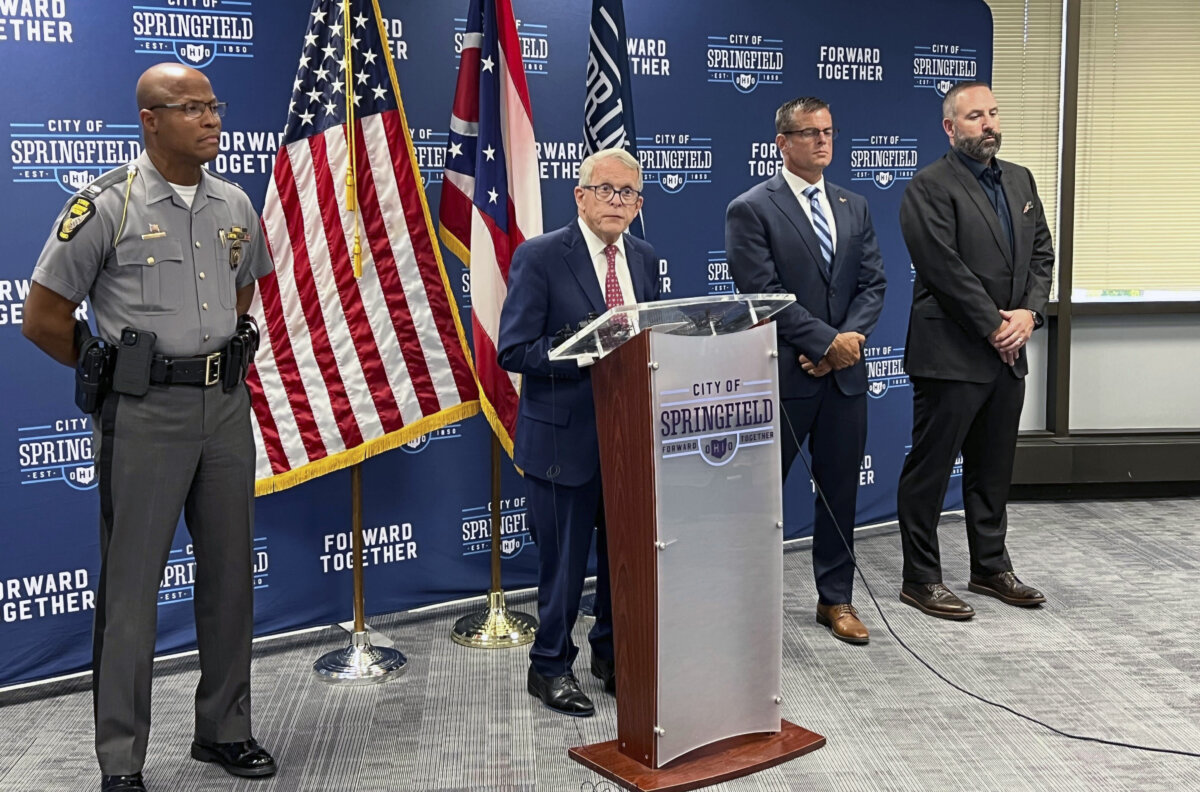
“After reviewing country conditions and consulting with appropriate U.S. Government agencies, the Secretary determined that Haiti no longer continues to meet the conditions for designation for TPS,” the Federal Register announcement read. “The [Homeland Security] Secretary, therefore, is terminating the TPS designation of Haiti as required by statute.”
The Department of Homeland Security (DHS) originally sought to terminate Haiti’s TPS designation on Sept. 3, 2025.
In July 2025, that move was blocked, and TPS was extended to Feb. 3, 2026, by a New York U.S. district court judge.
DHS updated the Federal Register and stated, “In compliance with the U.S. District Court for the Eastern District of New York’s final judgment, the current Temporary Protected Status designation period for Haiti ends February 3, 2026.”
DHS spokesperson Tricia McLaughlin denounced Reyes’s Feb. 2 ruling as “lawless activism.”
“Haiti’s TPS was granted following an earthquake that took place over 15 years ago,” she said in a statement. “It was never intended to be a de facto amnesty program, yet that’s how previous administrations have used it for decades.”
A longtime supporter of the Haitian community, DeWine told reporters on Jan. 27 that the state was bracing for widespread layoffs in the Springfield area if TPS ends.
He said that the end of TPS could damage the region’s economy, place a strain on children’s services if parents are detained, and harm families if they are forced to return to Haiti.
“These people are working, and they are hard workers, so I think from a public policy point of view, it is a mistake,” DeWine said. “It is not in the best interest of Ohio for these individuals who are working and who are workers to lose that status. Having said that, this is not my decision. This is a decision for the federal government, for the president of the United States.”
Haitians have helped rebuild Springfield’s and Clark County’s economies, according to DeWine.
Last week, the Springfield City Commission approved a resolution urging ICE to “comply with city policies on masks and officer identification to preserve the public peace within the community.”
The city noted that it cannot mandate the request because ICE operations fall under federal jurisdiction.
Federal agents have a legal right to enforce immigration laws in Ohio, DeWine said, and Ohioans have the right to protest ICE as long as they don’t impede law enforcement efforts.
Because of Reyes’s Feb. 2 ruling, Haitian immigrants, Springfield residents, elected officials, and law enforcement will have more time to prepare for the potential end of TPS for Haitians.
The Associated Press contributed to this report.
 Friends Read Free
Copy
Facebook
Tweet
Friends Read Free
Copy
Facebook
Tweet