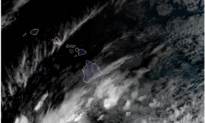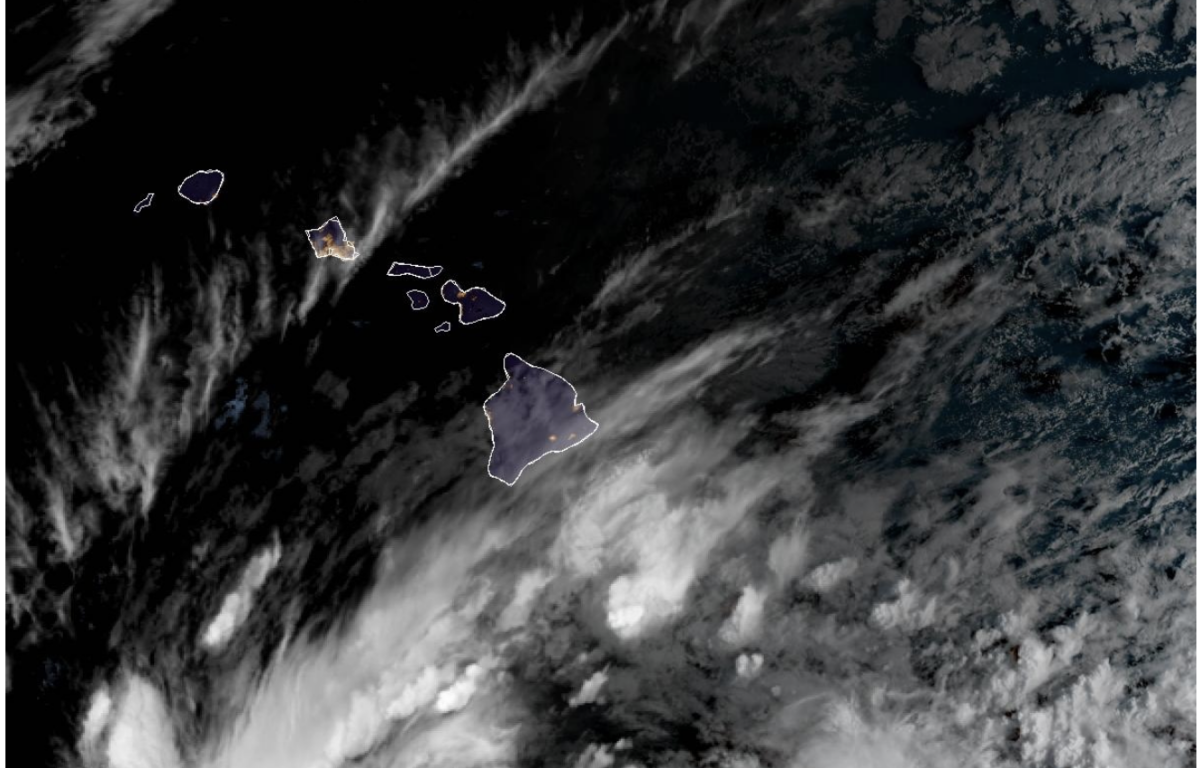

Hawaii could face destruction from yet another hurricane this weekend, according to the National Hurricane Center, with the Big Island and Maui feeling the greatest effects.
Tropical Storm Lolo has formed in the Central Pacific and is expected to reach hurricane strength by the end of Sept. 24, and a major hurricane by the weekend. A Hurricane Watch is in effect for the Island of Hawaii, also known as the Big Island, with a hurricane warning likely needed by the end of the day.
That island could see heavy rainfall as soon as late Sept. 24, with this storm ultimately delivering 15–20 inches of rain and some areas getting as much as 35 inches. Storm surge is expected to be one to three feet.
Hurricane conditions—that is, storm conditions with maximum sustained winds of at least 74 mph—could arrive as early as the night of Sept. 25.
“The time to finish preparations for significant heavy rain and flooding impacts on the Big Island is now as heavy rain increases in both coverage and intensity today and Friday,” the National Hurricane Center warned. “Periods of heavy rain are expected to continue across the Big Island and Maui through the weekend. Life-threatening, catastrophic flooding and mudslides are possible, especially in areas of steep terrain across the Big Island and Maui.”
At 11 a.m. ET on Sept. 24, Lolo’s center was tagged about 285 miles south of the Big Island’s south point, with maximum sustained winds reaching 60 mph.
“Nolo is stationary but is expected to move to the north or north-northeast later today through Friday, followed by a sharp westward turn by Saturday in the vicinity of the Big Island,” the National Hurricane Center said in its 11 a.m. ET public advisory.
“Nolo is forecast to become a hurricane by tonight and could become a major hurricane by the weekend.”
Beyond the Big Island, Maui is expected to get rainfall totals of five to 10 inches, with some areas getting as much as 20 inches, triggering the possibility of life-threatening flooding and mudslides there as well.
Oahu, which hosts the state’s capital, Honolulu, and the other islands are expected to receive one to three inches of rain, with some areas getting six inches. Some flooding will be possible.
Forecast tracks anticipate Lolo’s center to remain offshore, with only the southern tip of the Big Island placed in the cone of uncertainty, but a hurricane does not have to make landfall in order to cause terrible devastation.
Hawaii has already faced several hurricane and tropical storm threats this hurricane season, including Hurricane Lala, which also scraped the southern coast of the Big Island in mid-August before passing south of the Archipelago, and Hurricane Lowell, which made an incredibly close pass to Kauai in early September. Both storms delivered debilitating winds and rains that triggered catastrophic floods and mudslides that buried key roadways, carried homes off their foundations, and left a vast majority of island residents without power.
Lolo is the seventh named storm to be recorded in the Central Pacific this hurricane season. If the National Hurricane Center’s forecast holds true, Lolo will become the fifth hurricane and the third to be a major hurricane (Category 3 to Category 5). That puts this hurricane season at five named storms, four hurricanes, and three major hurricanes, above the normal average recorded between 1990 and 2020.
As of Sept. 15, those six named storms generated an amount of accumulated cyclone energy 295 percent greater than that 30-year average. However, the National Hurricane Center still reported no direct deaths related to those storms.
Hawaii Gov. Josh Green told residents on Sept. 23 that his administration was watching the situation and that he had already deployed emergency vehicles, with more than 500 National Guardsmen ready to be deployed, and 100 hotel rooms to house people on top of available shelters.
Green also said the state will spend millions of dollars to modernize the state’s emergency center and modernize and harden the Port of Honolulu, among other advancements.
So far this year, Green said, disaster recovery and necessary resilience spending—including for the Kona Low Storms in March and the Hawaii Island earthquake in May—has exceeded $1 billion. The state’s “rainy-day fund” has $1.7 billion.
 Friends Read Free
Copy
Facebook
Tweet
Friends Read Free
Copy
Facebook
Tweet