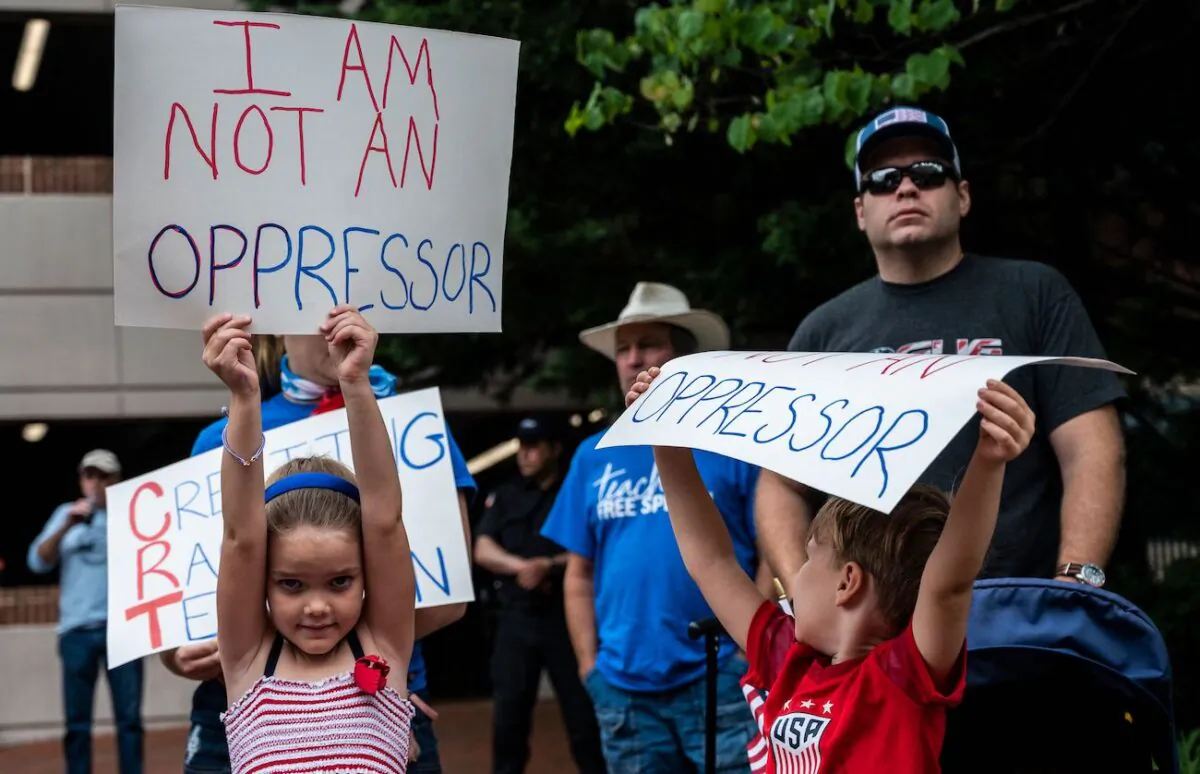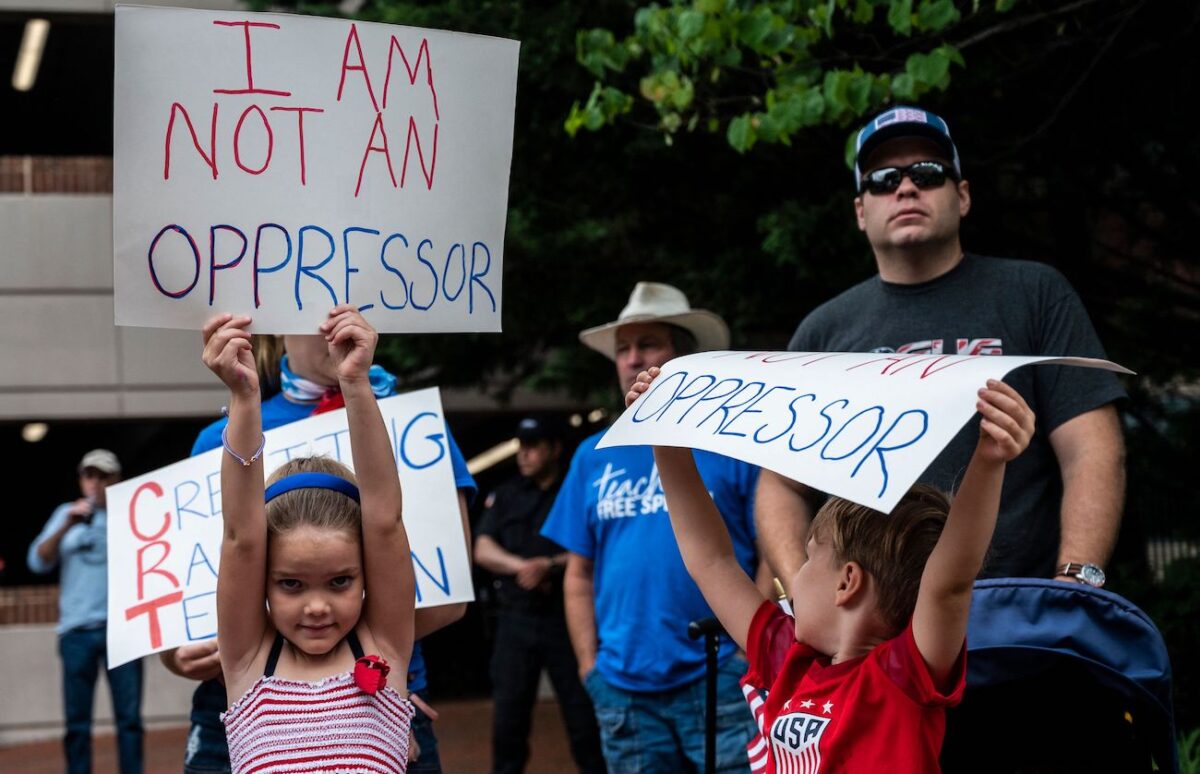

In Ithaca, New York, administrators established anti-marginalization courses promoting the use of gender pronouns and challenging students to critically examine whether they must identify as either male or female.
In Cambridge, Massachusetts, a student panel established an “intersectional” feminist club and organized an anti-Asian sentiments workshop.
In Princeton, New Jersey, the Minority Student Achievement Network developed a course on racial literacy and injustice to supplement existing instruction on the roles that power and privilege play in shaping historical narratives.
These events took place not at Cornell, Harvard, and Princeton universities, but at nearby public high schools and middle schools, according to the events’ respective websites. The Epoch Times reached out to all three districts but did not receive a response.
President Donald Trump recently penalized the three universities and most of their Ivy League counterparts for civil rights violations linked to racism, anti-Semitism, and transgender ideology.
The local K–12 public school districts near these universities teach the same progressive curricula, but have not faced the same federal pushback as elite universities.
Mitch Siegler, founder of the THINC Foundation, which promotes K–12 curriculum transparency, said he believes that there is a “natural connection” between the curricula in private universities and lessons taught at public schools.
“Maybe it’s been going on in college towns for 50-plus years, but now it’s to the oppressor-oppressed heartbeat,” he said.
Siegler, who has a particular interest in exposing liberated ethnic studies programs, attributes much of the off-campus spread of progressive and radical ideologies to consultants who teach full-time at universities and sell their curricula on the side.
“It’s a lot of the same players, and it’s not hard for them to find [public school leaders and teachers] who are deeply marinated in this thinking,” he told The Epoch Times.
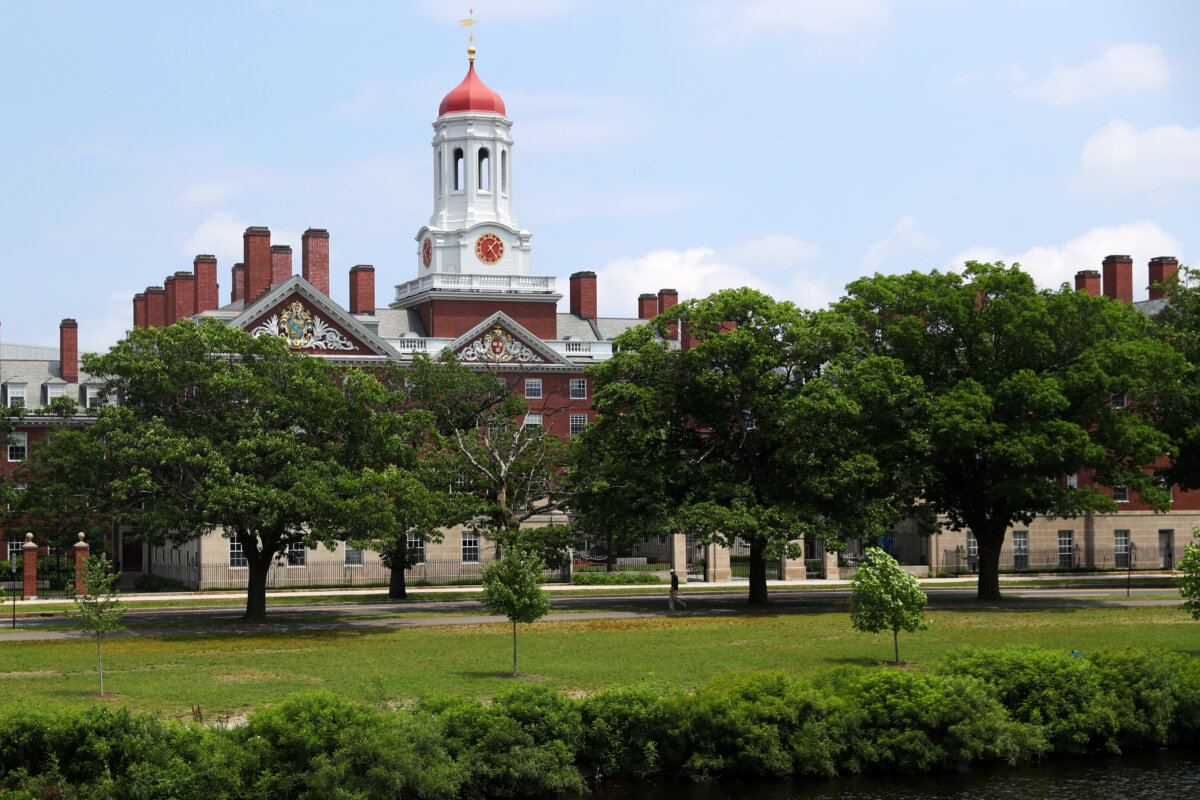 The campus of Harvard University in Cambridge, Mass., on July 8, 2020. (Maddie Meyer/Getty Images)
Adam Szetela completed a PhD at Cornell and served as a visiting fellow at Harvard before penning his recent book, “That Book is Dangerous! How Moral Panic, Social Media, and the Culture Wars Are Remaking Publishing.” According to him, a number of post-graduate students in Ivy League programs hope to become professors but must settle for public school teaching jobs close to their universities.
“Even in the hard STEM fields, you’ll be reading ‘theory’ focused on the need to decolonize physics, the whiteness of biology, and so on,” Szetela told The Epoch Times. “This isn’t just conjecture. Just read the syllabi.
“The link between education and radically transforming society is one the left has been acutely aware of for quite some time.”
Columbia University developed and advocated for a pre-kindergarten black studies curriculum and teacher training program specifically for New York City Public Schools. Similarly, the University of Minnesota provides free ethnic studies instructional materials to K–12 teachers, including a “Jim Crow of the North” lesson plan for 11th grade and 12th grade on how racial housing covenants created lasting disparities in Minneapolis and St. Paul, Minnesota.
The University of Minnesota and New York City Public Schools did not respond to requests for comment.
Although prevalent in districts near elite universities, radical and progressive programs are taught throughout the United States. A recent report from Defending Education found that K–12 school districts in 22 states have spent more than $17.5 million since 2017 on liberated ethnic studies.
Liberated ethnic studies, also referred to as critical race theory in many districts, focus on telling the stories and histories of black people, indigenous people, and people of color as a vehicle for eradicating racism, according to the Liberated Ethnic Studies Model Curriculum Coalition.
“Liberated ethnic studies pushes divisive, anti-American and anti-Western ideologies into K-12 schools hiding behind seemingly noble missions, pleasant sounding language, and academic jargon,” the Defending Education report states.
Probing Universities
Earlier this year, Trump signed an executive order prohibiting diversity, equity, and inclusion programs that, under the Biden administration, were used for hiring, student admissions, mandatory diversity training, and affinity groups by race that violated civil rights laws and a 2023 Supreme Court decision.
The Trump administration probed about 60 schools and later announced sanctions against every Ivy League school except Dartmouth, as well as several prestigious private and public colleges and universities across the nation. Some were primarily cited for failing to take action against on-campus anti-Semitism.
Columbia agreed to pay a $200 million fine and implement programs to combat anti-Semitism and promote viewpoint diversity.
Many institutions are still negotiating with Trump. Harvard administrators and researchers from the University of California–Los Angeles are still engaged in legal battles with the federal government over hundreds of millions of dollars in federal funding.
Higher education institutions of all types have recently removed listings of diversity, equity, and inclusion programs and scholarships from their websites, as well as career opportunities based on race, religion, or gender ideology.
Probing K–12
There have been far fewer federal investigations into public school districts.
According to the Department of Education, the majority of these investigations have pertained to Title IX violations. For instance, they have involved schools that withheld information from parents about their child’s so-called gender identity or schools that allowed males identifying as women to play on female sports teams or use their facilities.
Trump’s executive order prohibiting men from participating in women’s sports covers scholastic-level competition. He also signed an order calling for an end to “restorative justice” policies at public schools that promoted alternatives to traditional disciplinary methods, such as suspension and expulsion, in the name of racial equity.
In May, an Illinois school district was cited for civil rights violations that included maintaining segregated affinity groups, conducting classes in which “whiteness” was used as a derogatory term, and having students participate in “privilege walks” that attempted to illustrate that the United States is an inherently racist nation.
What Is Ahead?
Secretary of Education Linda McMahon recently launched an initiative promoting civics and U.S. patriotism in public education, with $160 million in competitive grants available to states.
Progressive curriculum proponents, meanwhile, do not rely on federal funding. A recent RealClearInvestigations report identifies several private foundations and charitable billionaires paying for “anti-racist” STEM—science, technology, engineering and math—instruction in various city school districts.
Quetzal Education Consulting is among those teacher training and curriculum providers. The firm’s clients include the public school districts of New York City; Pittsburgh; San Francisco; New Haven, Connecticut; and Sacramento, California, as well as Santa Clara University and Central Washington University.
“A Quetzal favorite, this six-session [anti-racist math workshop series] equips math educators to identify, disrupt, and replace white supremacy culture practices in math instruction with practices that center the wellness of students of color and grow their anti-racist math praxis collaboratively in pedagogy and instruction,” the website states.
Although it is up to the Department of Education’s Office for Civil Rights to prevent policies and required curricula from violating constitutional rights, the federal staff normally assigned to those investigations has been reduced as a result of ongoing layoffs and is ill-equipped to serve public schools right now, according to Meg Keller-Cogan, program director at Canisius University in Buffalo, New York.
“It’s like posting a speed limit with no enforcement,” she said, stressing that she does not endorse liberal or conservative curricula in schools. “It’s very difficult to hold people to expectations.”
 Friends Read Free
Copy
Facebook
Tweet
Friends Read Free
Copy
Facebook
Tweet