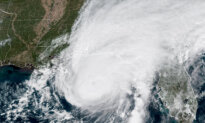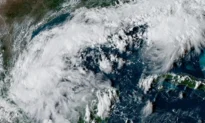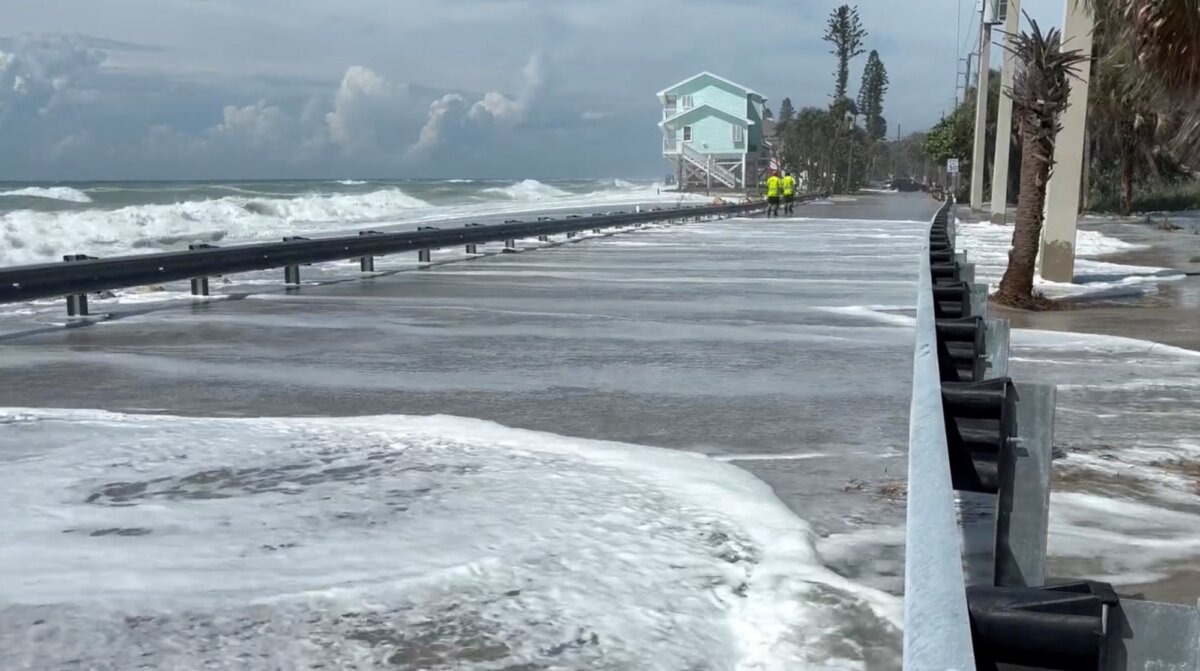

Isaias weakened to a post-tropical cyclone on Saturday after rapidly losing strength following landfall as a Category 2 hurricane, though flash-flooding risks remained and hundreds of thousands of utility customers in Florida and Alabama were without power.
The storm also disrupted offshore energy operations in the Gulf, where producers halted about 70 percent of daily oil output ahead of its arrival, according to the U.S. Marine Minerals Administration.
The post-tropical cyclone was about 25 miles south-southwest of Montgomery, Alabama, the National Hurricane Center said in its 5 a.m. ET advisory Saturday. It was moving north at roughly 14 miles per hour.
Isaias was expected to move across Alabama and into the Tennessee Valley later Saturday and Sunday, the agency said.
“Slow weakening is forecast today, and Isaias is forecast to dissipate on Sunday,” said the National Hurricane Center, adding that maximum sustained winds had fallen to 35 miles per hour, with occasional higher gusts.
Flood Risks Persist
Despite weaker winds, Isaias continued to pose a threat.
“Flash, urban, and river flooding is possible across the region, with considerable impacts likely across much of southern Alabama and the Florida Panhandle into southwestern Georgia,” the National Hurricane Center said.
“Considerable flash flooding and landslides are also possible across the Southern Appalachians.”
Tornado risks were expected to persist through Saturday afternoon across parts of the eastern Florida Panhandle, Georgia, and the Carolinas.
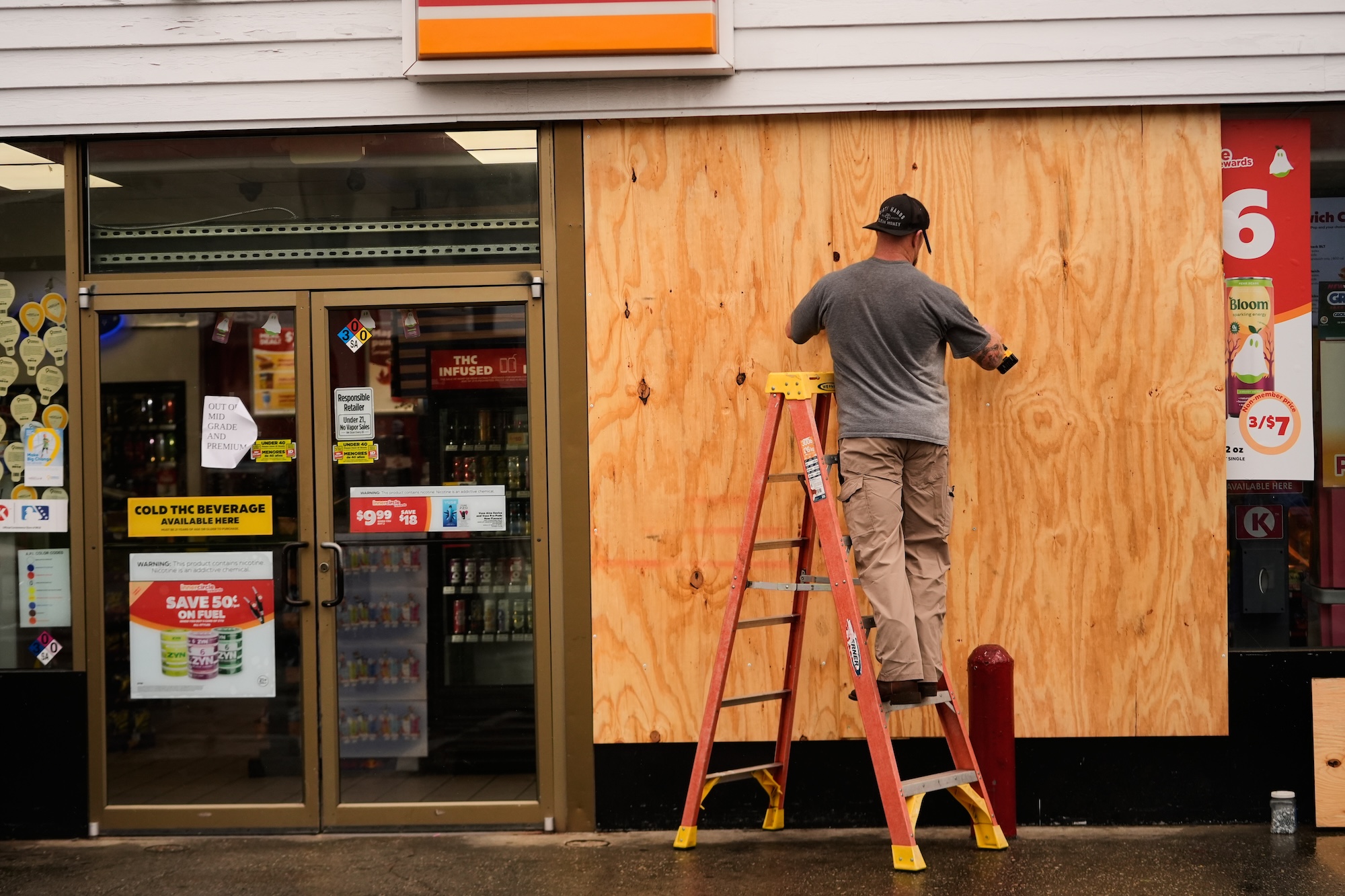 A man boards up a convenience store as Hurricane Isaias approaches Pensacola Beach, Fla., Oct. 9, 2026. (Gerald Herbert/AP Photo)
“These swells are likely to cause life-threatening surf and rip current conditions,” the agency warned.
Rainfall was expected throughout the weekend. Between four and eight inches of rain were forecast across southern Alabama, the Florida Panhandle and Big Bend, and southwest Georgia, with localized totals of up to 15 inches.
Across much of the remainder of the Southeast, two to five inches were expected, with isolated totals up to 10 inches.
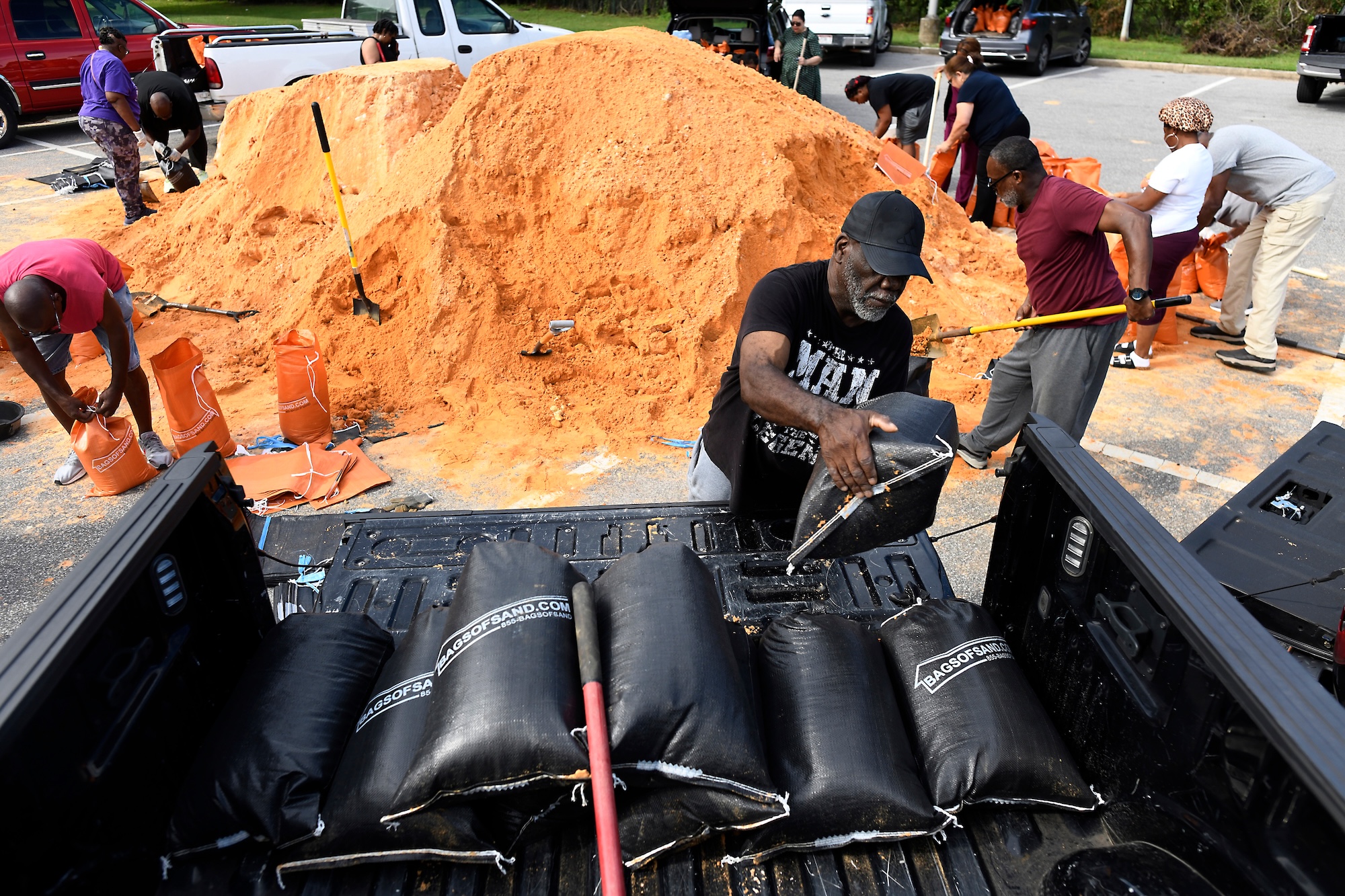 Residents pick up sandbags for storm preparation in Mobile, Ala., Oct. 8, 2026. (Octavio Jones/AP Photo)
Florida Gov. Ron DeSantis said early Saturday that more than 16,000 utility linemen had been pre-staged before the storm made landfall in an effort to restore power quickly once conditions allow.
“As soon as that thing passes, they’re going to get in there and do it,” DeSantis told Fox News.
“So you’re going to see a lot of activity on the power front, you’re going to see the roads and bridges cleared, and then as it gets light out, then we’ll get a better sense of the overall damage assessment.”
“Clearly, it was a strong storm.”
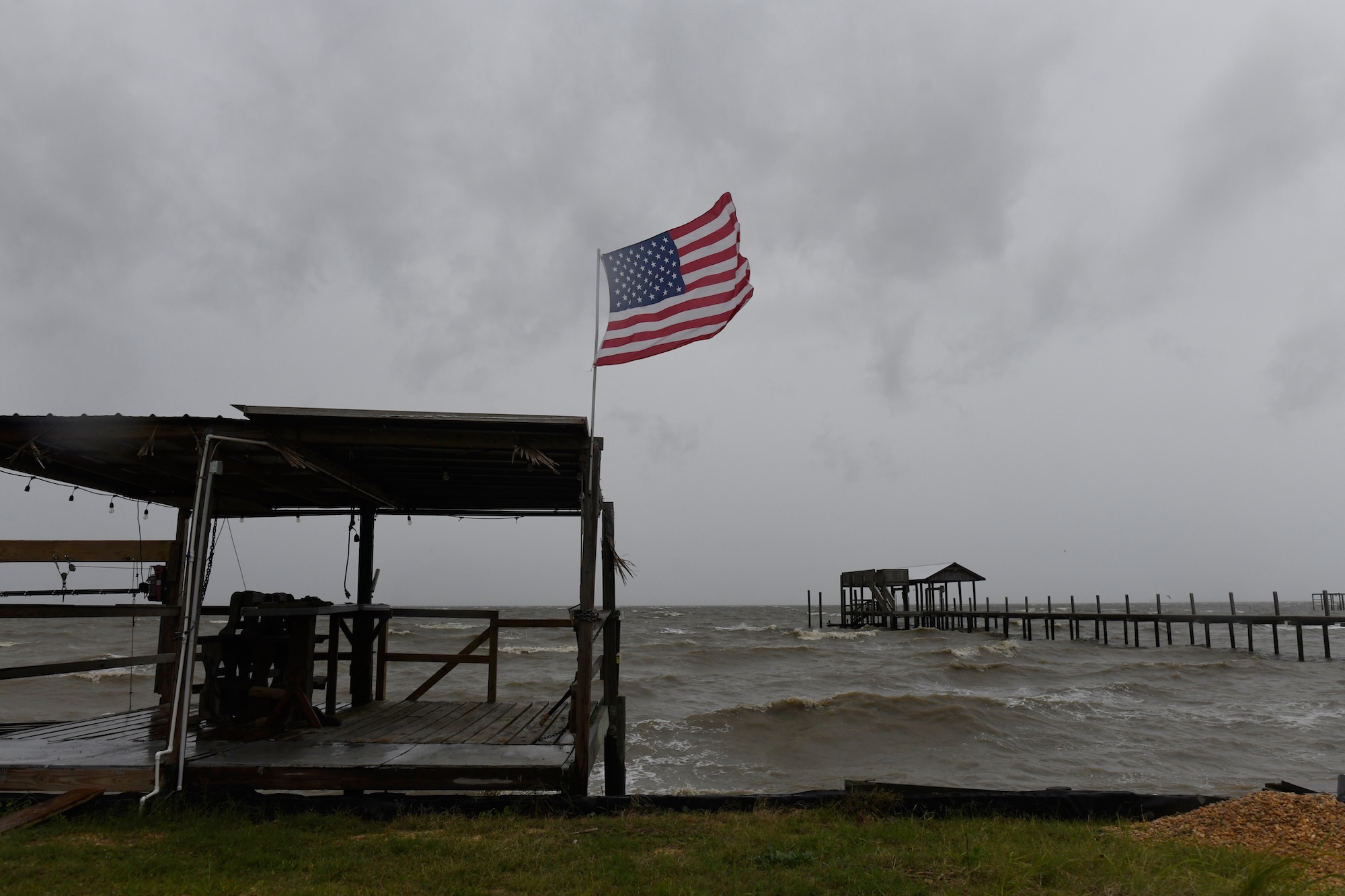 An American flag flaps in the wind generated by the effects of Isaias on a beach in Mon Louis Island, Ala., on Oct. 9, 2026. (Octavio Jones/AP Photo)
“We’re watching it very closely, the hurricane,” Trump said at the White House after arriving on Marine One.
“We think we have it under control, but we’re watching very, very closely.”
Gulf Oil Production Disrupted
Several energy majors, including Chevron and Shell, temporarily curtailed offshore operations in the Gulf and evacuated staff on Friday ahead of the hurricane.
Workers had been evacuated from 129 of the 371 manned platforms in the Gulf, the U.S. Marine Minerals Administration said Friday.
“After the storm has passed, facilities will be inspected,” the agency said in a statement. “Once all standard checks have been completed, production from undamaged facilities will be brought back online immediately.”
Ahead of the storm, analysts forecast modest fuel-price increases and temporary oil production losses, but said damage could worsen the impact.
“For now, fuel prices in Gulf states may be impacted a few cents per gallon, but we’ll have to await any potential damages to see if the impact increases,” GasBuddy analyst Patrick De Haan said in a post on X.
Assessing the potential loss of crude supply, analyst Tom Kloza estimated that, at its worst, Isaias might halt production of 5 million barrels of Gulf crude over 48 to 72 hours.
“For perspective, that might be the equivalent of five VLCCs [very large crude carriers] not exiting the Strait of Hormuz,” he said in a social media post.
“Not a big deal.”
 Friends Read Free
Copy
Facebook
Tweet
Friends Read Free
Copy
Facebook
Tweet