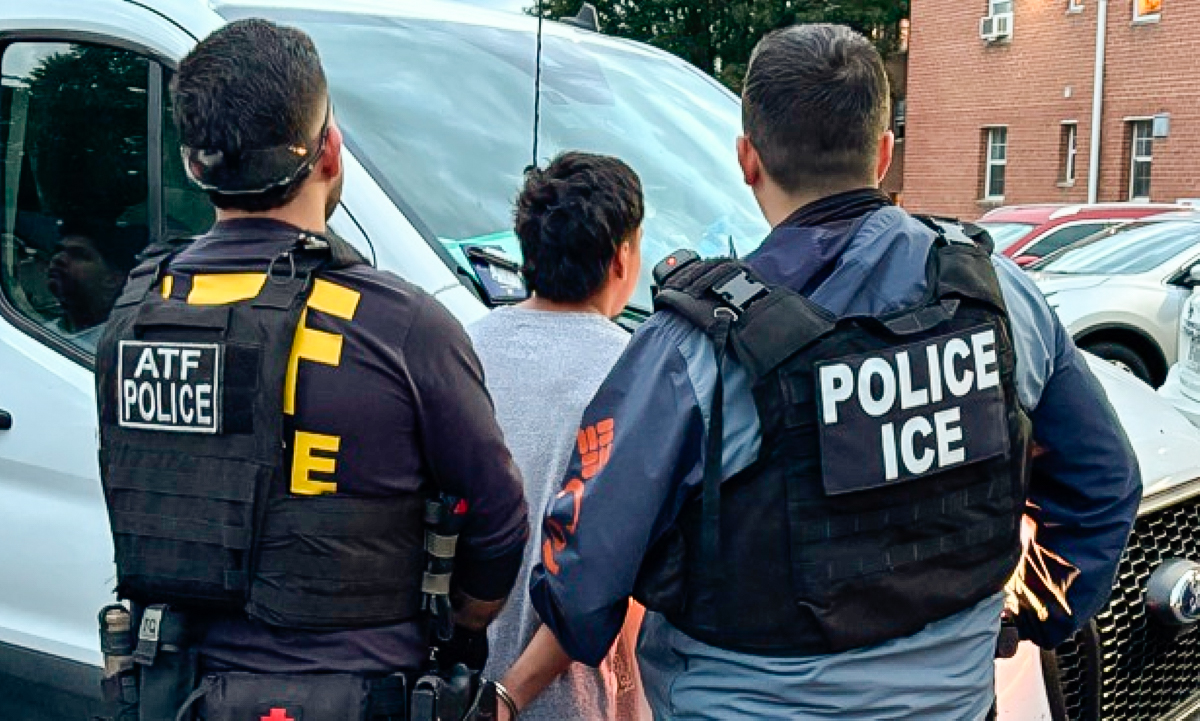

A federal judge dismissed on July 25 the Trump administration’s lawsuit over Illinois’s sanctuary policies, holding that the policies either didn’t violate federal law or were protected by state sovereignty.
Filed in February, the administration’s lawsuit alleged that the state of Illinois, the city of Chicago, and Cook County had each implemented policies that illegally interfered with federal immigration enforcement. By restricting the flow of information to federal authorities, these policies conflicted with the Immigration and Nationality Act and unconstitutionally stepped on federal power, the administration argued.
In her 64-page opinion, U.S. District Judge Lindsay Jenkins said that even if the state and local government actions impeded federal law enforcement, those entities weren’t acting illegally because of the power states receive under the 10th Amendment. She also denied that the federal government had standing to sue certain public officials, such as Illinois Gov. JB Pritzker, but said it did have standing to sue the state and local governments.
Jenkins said that while the Immigration and Nationality Act allowed states to cooperate with federal immigration enforcement, it didn’t require that cooperation.
“There’s no doubt—particularly at the motion to dismiss stage where well-pleaded allegations are presumed true—that, absent the Policies, it might be easier for immigration agents to discharge their obligations under the [Immigration and Nationality Act],” she said.
“But because the [Immigration and Nationality Act] merely offers States the opportunity to assist in civil immigration enforcement, the Policies don’t make [Immigration and Customs Enforcement’s] job more difficult; they just don’t make it easier.”
The administration’s lawsuit focused on two state laws and two local ordinances from Chicago and Cook County, respectively. Each generally restricted cooperation with federal immigration enforcement, including through communication about detainees.
A portion of the Immigration and Nationality Act states that state and local governments “may not prohibit, or in any way restrict, any government entity or official from sending to, or receiving from, [federal immigration enforcement] information regarding the citizenship or immigration status, lawful or unlawful, of any individual.”
According to Jenkins, the phrasing of “information regarding the citizenship or immigration status” didn’t include things like noncitizens’ contact information or release dates.
Chicago’s Welcoming City Ordinance, Jenkins said, restricted sharing of information about citizenship or immigration status and therefore ran “headlong” into Congress’s prohibition on that type of restriction. She added, however, that regulating states and local governments in that way was unconstitutional.
The administration has challenged similar state and local policies across the country. These lawsuits were part of a broader strategy to beef up immigration enforcement amid what President Donald Trump described as an emergency at the southern border.
Outside of lawsuits, Trump has also attempted to target sanctuary jurisdictions’ funding. That move was halted by a federal judge in California, who similarly cited the 10th Amendment in April when he ruled against the Trump administration. U.S. District Judge William Orrick said that Trump’s “directives to withhold or freeze federal funding to sanctuary jurisdictions also violate the 10th Amendment because they impose coercive condition intended to commandeer local officials into enforcing federal immigration practices and law.”
In a subsequent executive order, Trump directed the Justice Department and Homeland Security Department to pursue legal remedies for jurisdictions that refuse to comply with federal law. Citing what he said was an “invasion” at the southern border, Trump said the federal government had an obligation to defend the states.
“Some State and local officials nevertheless continue to use their authority to violate, obstruct, and defy the enforcement of Federal immigration laws,” he said. “This is a lawless insurrection against the supremacy of Federal law and the Federal Government’s obligation to defend the territorial sovereignty of the United States.”
 Friends Read Free
Copy
Facebook
Tweet
Friends Read Free
Copy
Facebook
Tweet