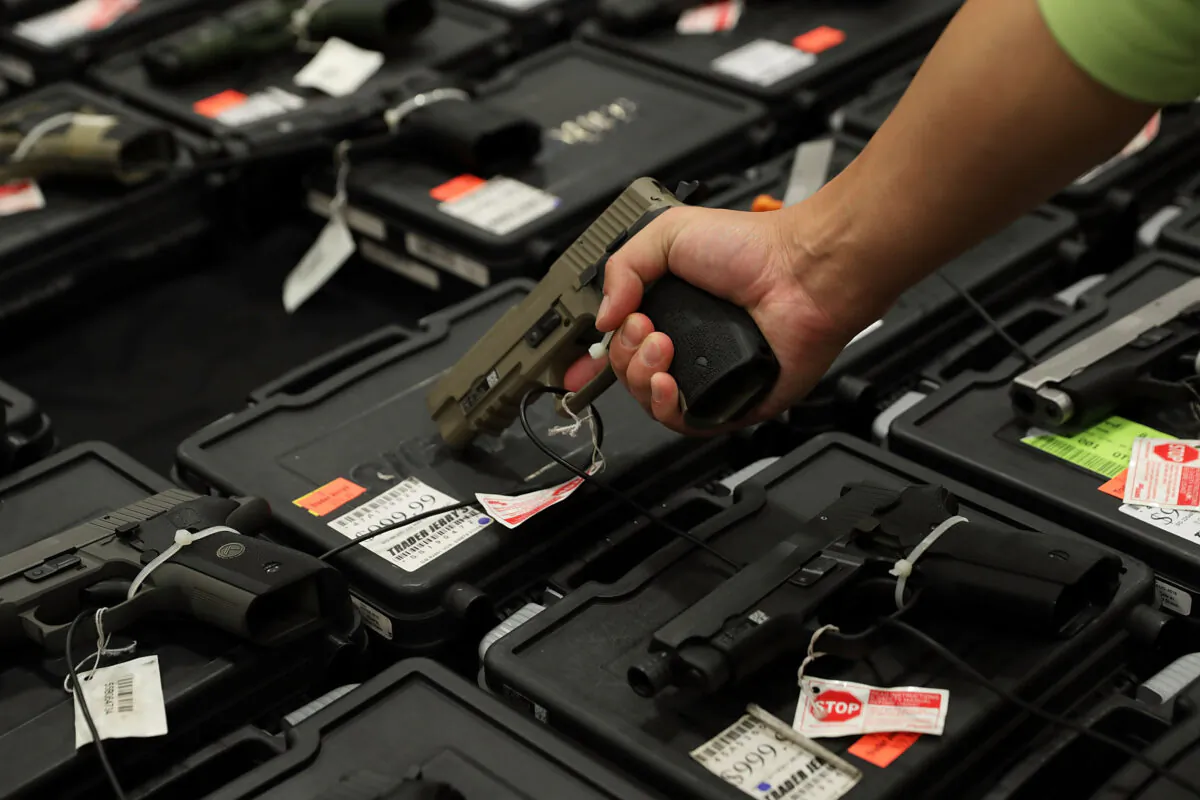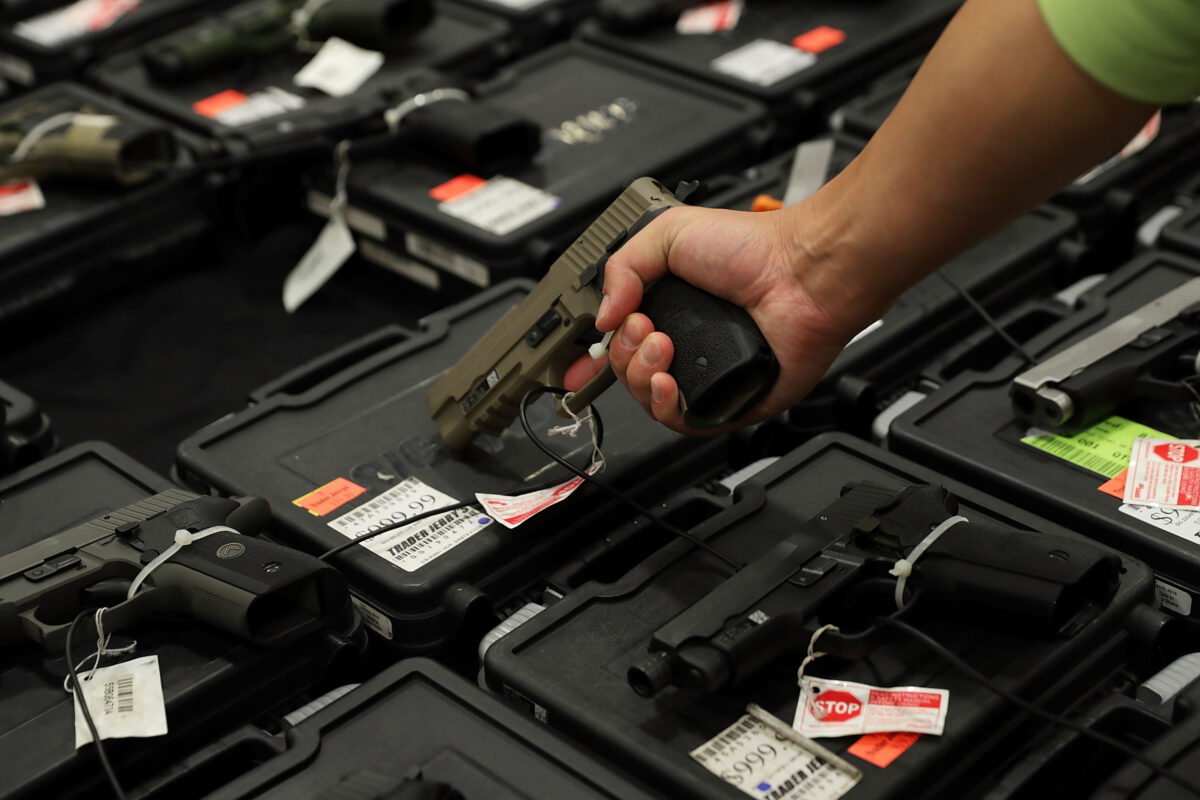

A judge for the 24th Judicial Circuit Court in Virginia struck down a law requiring background checks for all gun sales, including private transactions, in a decision filed on Oct. 29.
In an Oct. 16 letter explaining his decision, Judge, F. Patrick Yeatts cautioned that his ruling was not on the constitutionality of criminal background checks and that the law was so flawed that the only solution was to scrap it altogether.
“Let it be clear, the Court today is not holding that background checks are unconstitutional. That is a question for another day, perhaps another court,” he wrote. “Today the Court holds that the manner in which Virginia [law] is applied cannot pass constitutional muster.”
On April 10, 2020, then Gov. Ralph Northam signed a suite of gun control laws. These included an extreme risk protection order law, reinstatement of a one-handgun-per-month purchase limit, a requirement to report lost or stolen guns to law enforcement within 48 hours, an increased penalty for leaving guns where children can access them, and the universal background check law.
The following July, Gun Owners of America, the Gun Owners Foundation, the Virginia Citizens Defense League, Raul Wilson, and Wyatt Lowman sued Col. Matthew D. Hanley in his official capacity as Superintendent of the Virginia State Police, alleging that the law violated the Virginia and U.S. Constitutions.
The law required a background check through the federal National Instant Criminal Background Check System for all firearms transactions in the state. However, the federal background check system rejects any request for buyers under 21. Yeatts said this makes the law unworkable.
Under Virginia state law, people between the ages of 18 and 20 may legally own handguns, but they cannot legally purchase them from federally licensed dealers. They can, however, obtain them through private sales.
The implementation of the universal background check law for all gun sales effectively banned 18- to 20-year-olds from owning handguns, Yeatts wrote. He said an age-based prohibition is arbitrary and likely violates the Equal Protection Clause in the U.S. Constitution’s 14th Amendment.
“Such a distinction would be as arbitrary as exempting any age range, such as 57 to 59, without justification,” Yeatts wrote.
He said a state proposal to exempt 18- to 20-year-olds from the private sales background checks was equally unworkable.
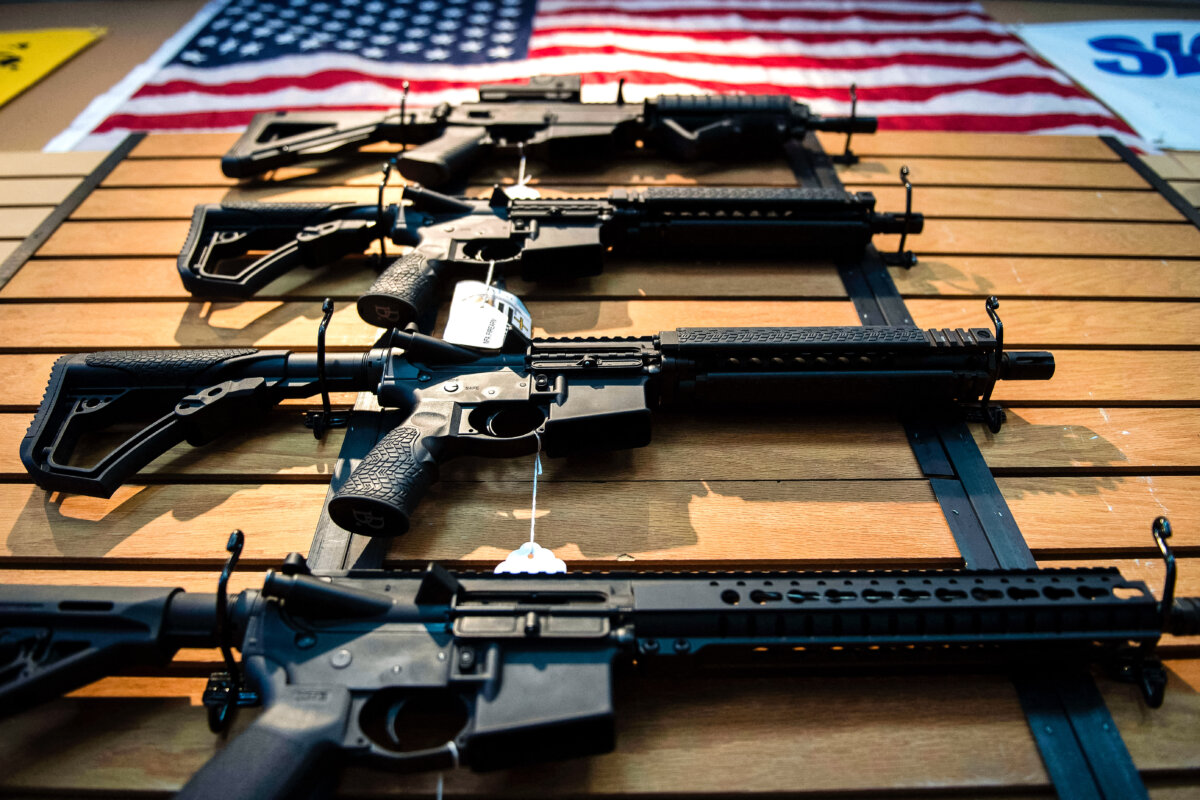
In his letter, Yeatts pointed out that the 18- to 20-year-old demographic is statistically more likely to commit violent crime.
“Given these grim statistics, there seems to be no justification for a statute that would allow those ages 18 to 20 years of age to purchase a handgun through a private sale without a background check but require all others to do so,” he wrote.
In 2020, gun control organizations praised Virginia’s adoption of the background check law. The Epoch Times reached out to some of these groups for comment on the court decision, but they did not respond by publication.
Gun rights proponents praised the decision and said it could serve as a reference for challenging such laws in other states.
“So, it is limited to Virginia, but that said, it will set a good precedent that other courts can reference in other states,” Aidan Johnston, director of Federal Affairs for Gun Owners of America, told The Epoch Times.
Johnston said the decision addressed another concern his organization held.
“[Universal background checks] end up creating a de facto gun registry of every purchase,” Johnston said, “Now gun owners will no longer have to go get those government records and government permission before buying and selling firearms in private transactions. So, that’s an outstanding win for liberty here.”
 Friends Read Free
Copy
Facebook
Tweet
Friends Read Free
Copy
Facebook
Tweet