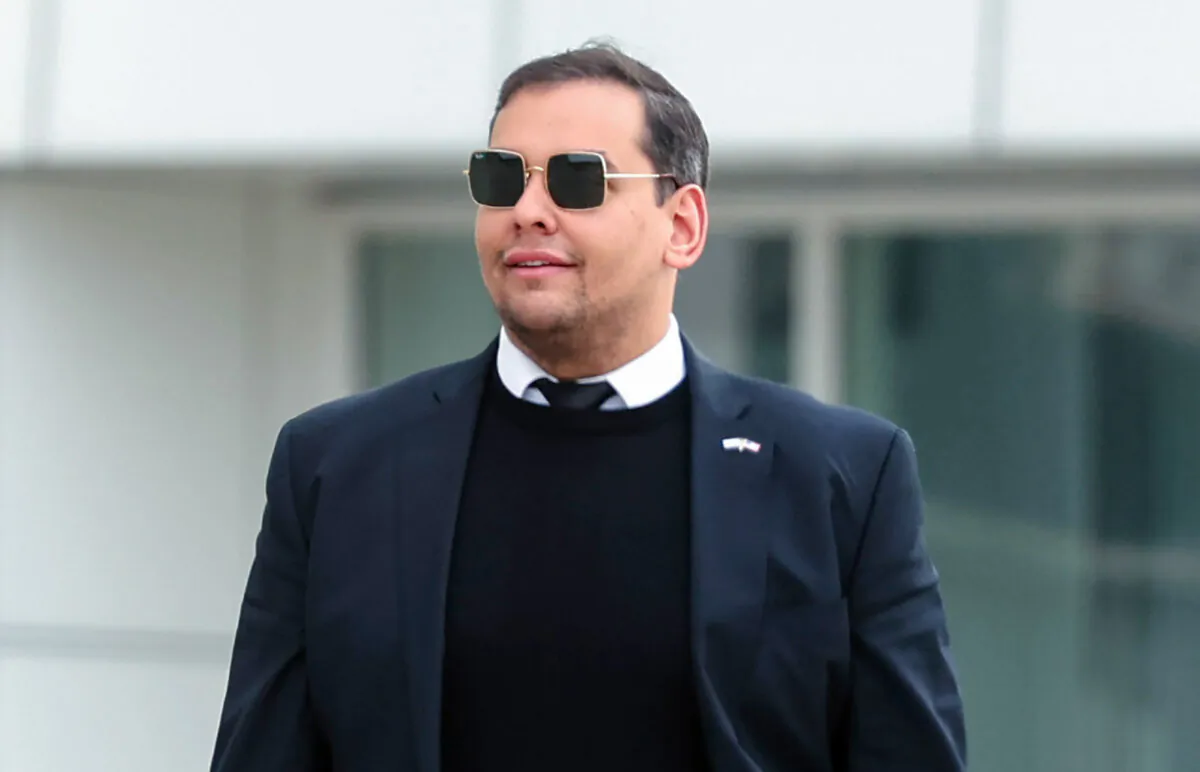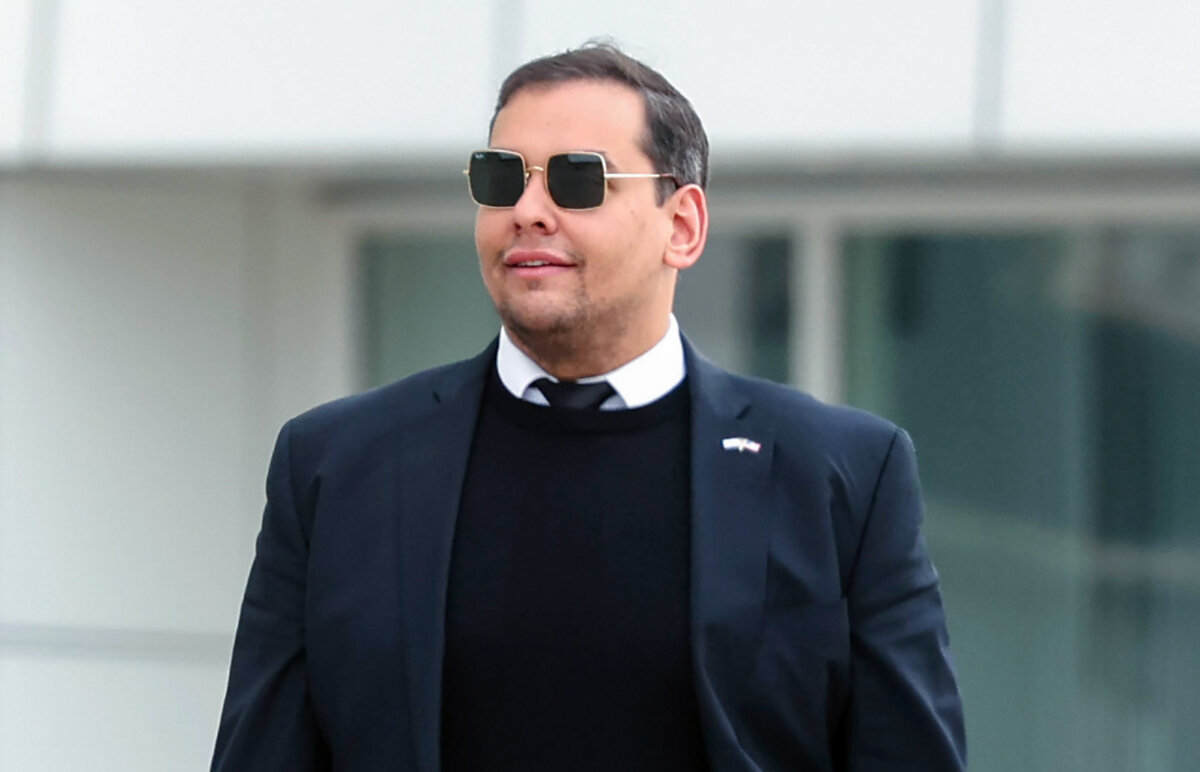
Former Rep. George Santos has received a first-of-its-kind lifetime ban from prediction market platform Kalshi after the ex-congressman made bets on his own attendance at a Trump speech.
Kalshi said on Aug. 28 that it had imposed a penalty of more than $71,000 on Santos and permanently banned him from its platform for betting on his own attendance at President Donald Trump’s 2026 State of the Union address.
Santos, who was expelled from the House of Representatives in 2023, was also fined by the U.S. Commodity Futures Trading Commission (CFTC) a month ago over market manipulation over the incident.
Kalshi spokesperson Elisabeth Diana said it was the first permanent ban in the company’s history.
She said those affected by four other new enforcement cases announced on Monday would be banned from trading temporarily because they cooperated with Kalshi’s probe.
It also has fined and temporarily banned North Carolina congressional candidate Laurie Buckhout for bets she now calls a “dumb mistake.”
On July 31, the CFTC said that between Feb. 12 and Feb. 25 this year, Santos traded a contract titled “Who will attend the State of the Union [SOTU]?” and more specifically, traded on whether he would attend the 2026 State of the Union or not.
It said that while buying and selling positions in this market, Santos posted on social media about his plans to attend or not attend the SOTU.
In his social media posts, he allegedly made a series of material misrepresentations and omissions about whether he would appear.
After these posts, the SOTU contract prices moved in a direction favorable to Santos’s positions, which allowed him to make more than $17,500.
Joe Murray, a lawyer for Santos, told The Epoch Times by email, “We do not have any comment at this time, but I anticipate that we may in the coming days.”
Trump commuted the prison sentence of Santos in 2025, who pleaded guilty in August 2024 to fraud and identity theft after inflating fundraising figures and falsifying donor names during the 2022 election cycle.
He served briefly as a U.S. representative for New York’s Third Congressional District after winning the seat in 2022, but soon faced public vitriol due to inconsistencies on his resume.
He was revealed to have fabricated his education, work history, and personal heritage.
In his financial misconduct case, some of the identities he stole to make donations to his campaign—totaling thousands of dollars—belonged to his own family members.
He was sentenced in April 2025 by U.S. District Judge Joanna Seybert, who imposed a term of 87 months, or more than seven years, plus three years of supervised release and restitution payments in excess of $373,000.
“George Santos was somewhat of a ‘rogue,’ but there are many rogues throughout our country who aren’t forced to serve seven years in prison,” Trump said on Truth Social in October 2025.
Laurie Buckhout, the current Republican nominee for North Carolina’s First Congressional District, said in an email that wagering on herself had been “a dumb mistake” that she had quickly worked to correct after learning that it was improper.
Kalshi imposed a fine of about $2,600 and a three-year suspension on Buckhout.
Diamond Resorts International founder and former Democratic donor and California gubernatorial candidate Stephen Cloobeck, as well as Republican former gubernatorial candidate Ben Midgley, were also penalized by Kalshi for violating the platform’s insider trading rules by purchasing event contracts related to their own gubernatorial campaigns.
The Epoch Times contacted Midgley for comment and attempted to contact Cloobeck but was unsuccessful.
CFTC on Aug. 28 ordered White House teleprompter operator Gabriel Perez to pay more than $172,000 after finding that he used nonpublic information from his White House job to trade event contracts for personal gain.
In his position, Perez had access to presidential speeches before those speeches were delivered.
He misappropriated that information, officials said in the order, “in breach of his duty of trust and confidence,” to trade the contracts, generating more than $107,500 in profits.
The settlement with Perez closes the CFTC’s action, and he is no longer working for the federal government.
Perez could not be reached for comment.
Kimberly Hayek and Reuters contributed to this report.
 Friends Read Free
Copy
Facebook
Tweet
Friends Read Free
Copy
Facebook
Tweet