




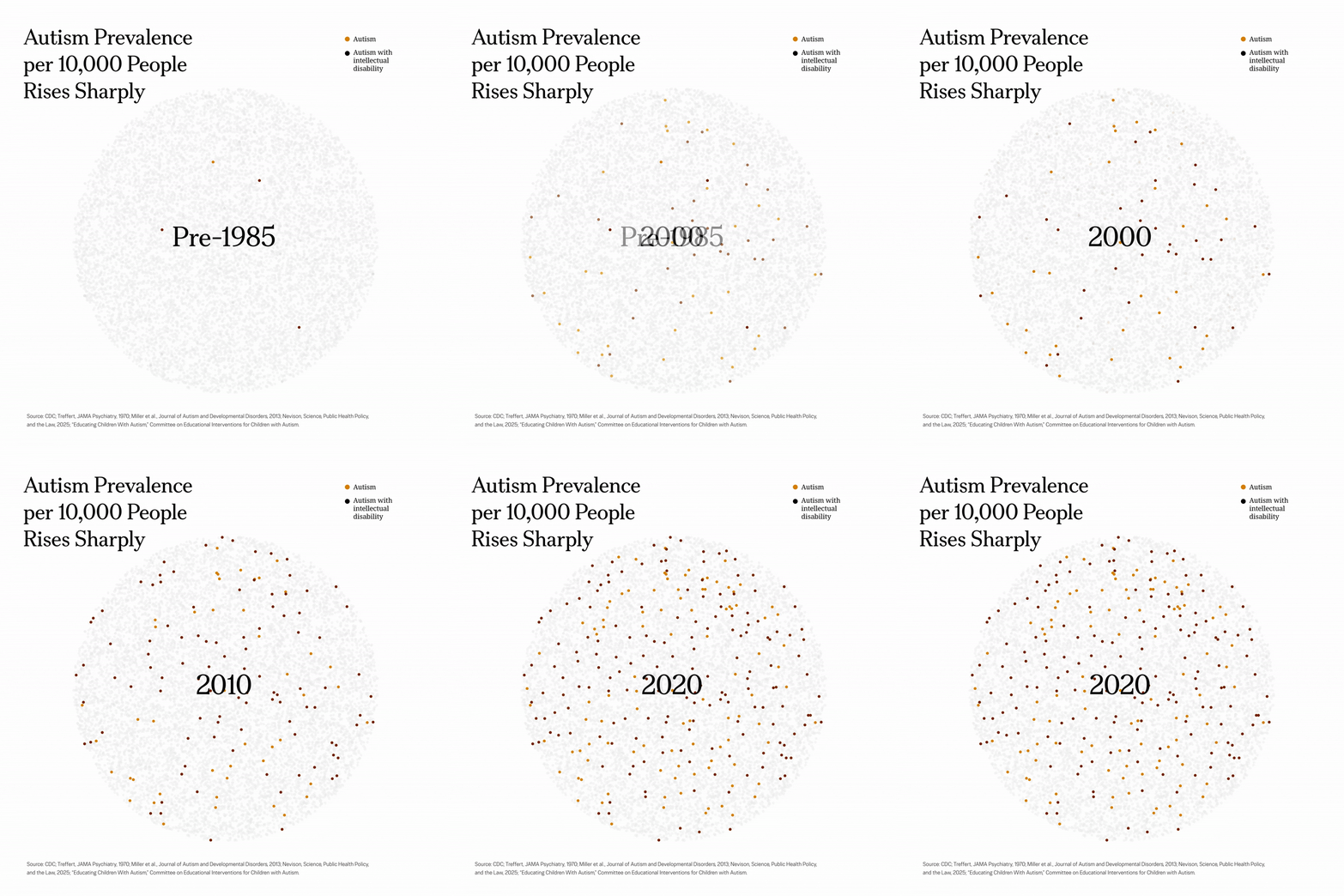
Autism is often considered to have a strong genetic basis. However, since the 1970s, cases have risen in a way that can’t be explained by genetics.
“Genetics is stable, and it’s very infrequent when it does change,” Michael Skinner, Eastlick distinguished professor and founding director of the Center for Reproductive Biology at Washington State University, told The Epoch Times.
To explain the rise, experts often point to two things happening in tandem: broadening diagnostic criteria and the environment.
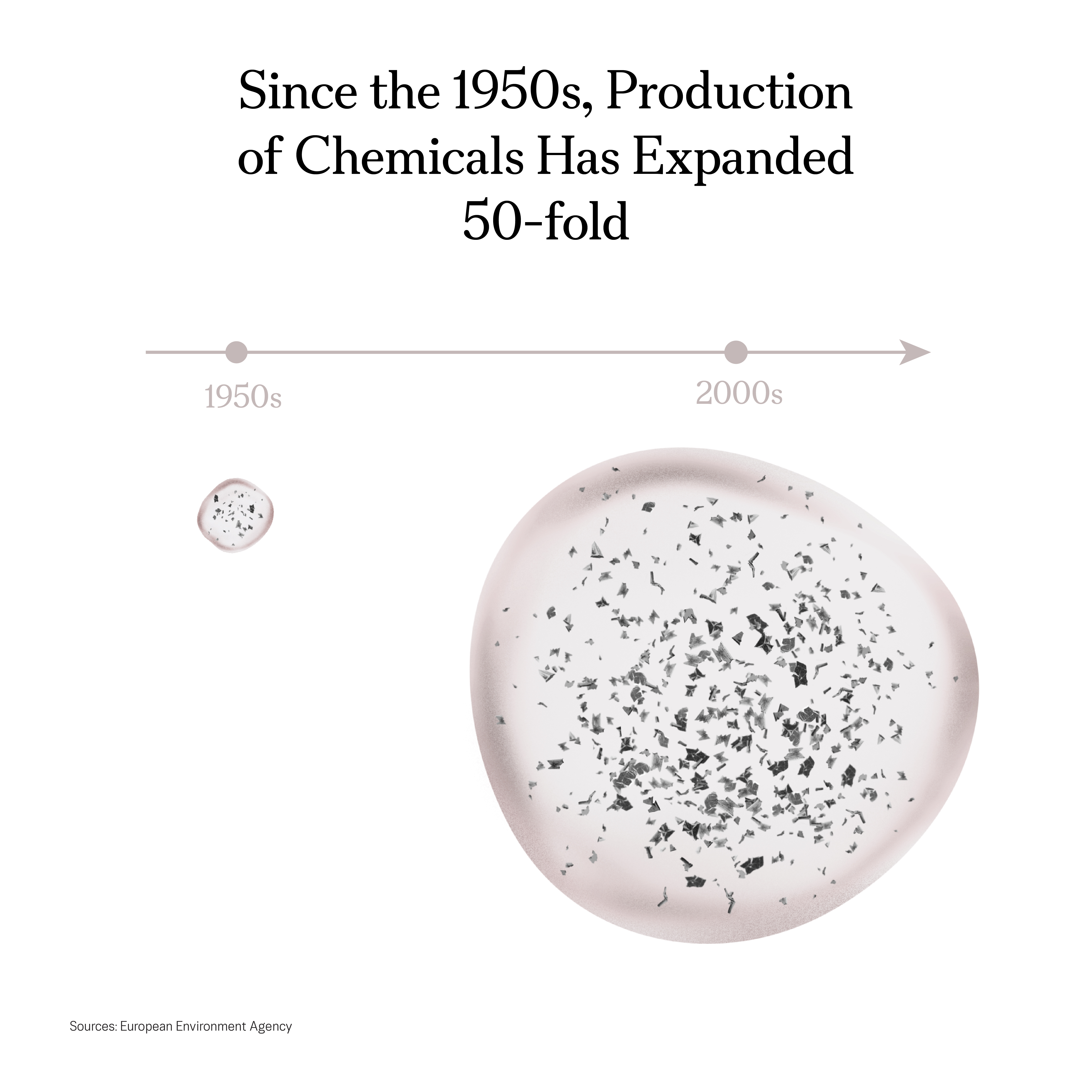
Since the 1950s, worldwide chemical production has expanded 50-fold, with 350,000 different types of manufactured chemicals, chemical mixtures, and plastics.
“The number of chemicals that we’re using continues to increase,” Deborah Bennett, associate professor and exposure scientist at the University of California, Davis, told The Epoch Times. “[Yet] so many of them haven’t been assessed for their relationship to autism.”
 (Illustration by Lumi Liu)
Ruling Out the Many Suspects
The search for environmental factors linked to autism can feel like a game of whack-a-mole.
Air pollution has been shown to increase risks of autism development, Bennett said.
However, from the 1970s to 2020, overall air pollution in the United States decreased by more than 75 percent, contrary to the increasing trend in autism.
While major components of air pollution, such as carbon monoxide and particulate matter, have decreased, certain chemical components may not be decreasing and may be contributing, Bennett said.
Another widely studied class of chemicals is organophosphate ester pesticides. Commonly used in agriculture, these organic chemicals are made by reacting phosphoric acid with alcohol.
The EPA has been regulating some of these pesticides. Beginning in the late 1990s, the EPA began regulating the use of chlorpyrifos, limiting it initially from both indoor and outdoor residential use to outdoor-only use, and finally to agricultural use only. It is currently still allowed on crops such as apples, citrus, soybeans, cotton, and wheat.
Other organophosphates linked to autism are commonly used in flame retardants and plasticizers—these chemicals are present in flame-resistant building materials, bedding, furniture, and clothes made with plastic. However, research is still limited.
Plasticizers such as phthalates, used in food packaging and scented products, have also been linked to autism. While that evidence isn’t as strong, the EPA announced plans in 2025 to regulate and reduce phthalate exposure.
As one chemical is regulated after another, new chemicals continue to emerge.
The Rise in Chemicals
Children’s health is progressively worsening by the decade, with more than 40 percent of children in the United States suffering from neurodevelopmental or other chronic conditions.
In 2025, 25 scientists from the top institutions across the United States and Europe jointly published a paper linking chronic diseases in children, such as autism, to the rise of synthetic chemicals.
 (Illustration by Lumi Liu)
“Exposure to many individual compounds has gone down over time, but we, as a society, keep developing new compounds. So there are always new things being introduced,” Bennett said.
A separate study Bennett participated in compared toddlers’ chemical exposure to their mothers’ during pregnancy, using urine samples.
The study found that 2-year-olds tended to have higher chemical concentrations than 3- and 4-year-olds.
Toddlers had higher levels of several pesticide- and phthalate-related biomarkers than their mothers had during pregnancy.
Later-borns also tended to have higher concentrations of several chemicals than firstborns. However, the authors caution that this could be due to confounding or chance.
“Children in general are exposed to more chemicals than adults. When they’re little, they explore their environment with their hands and mouth,” Bennett said.
Epigenetics: The Fingerprints of the Environment
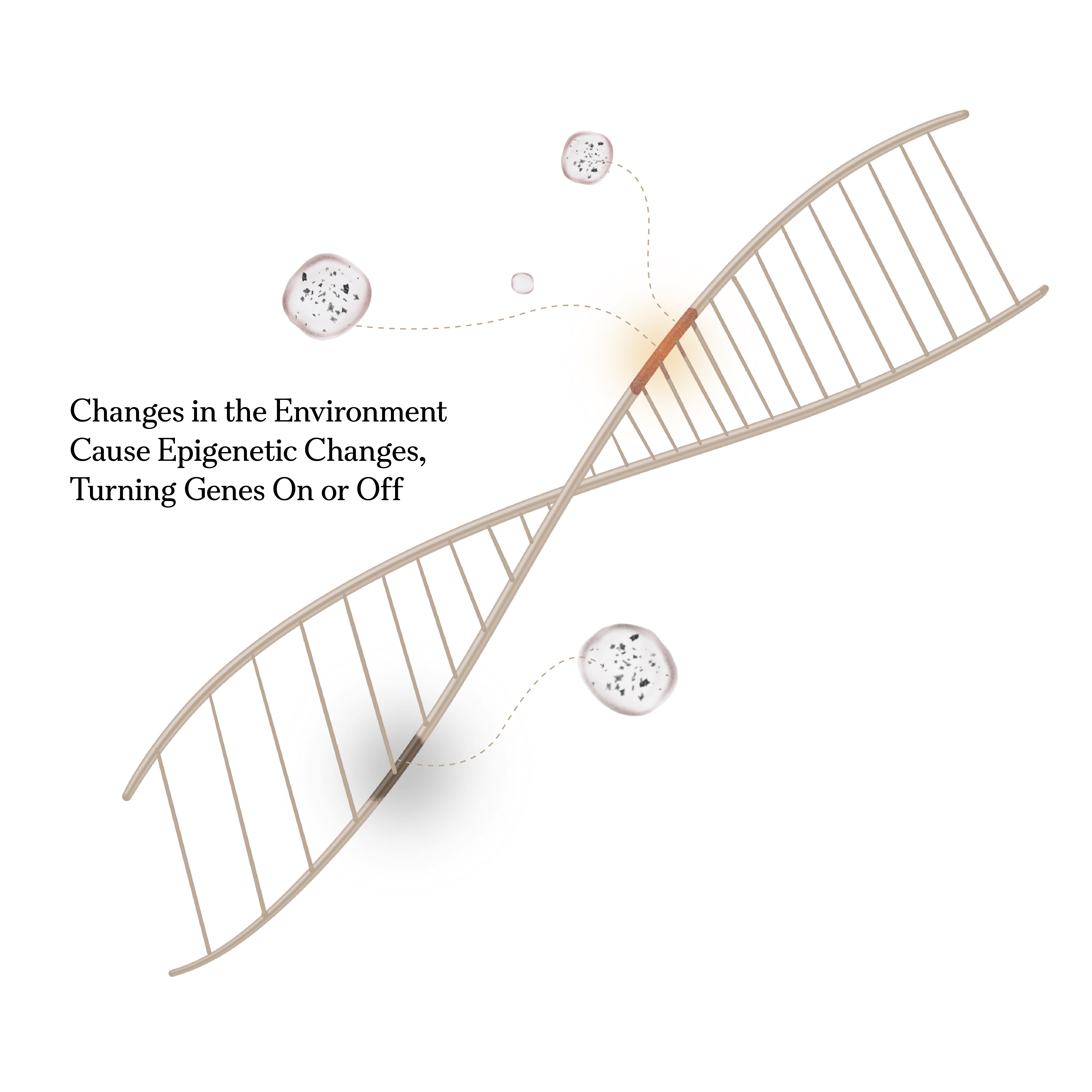
When we are exposed to environmental changes, be they toxins, stress, or even nutrition, they leave marks on our genomes. These marks are called epigenetic changes and can directly affect the behavior of our genes.
The rise in environmental chemicals may be driving autism cases through epigenetics, Skinner said.
“You have certain genes that need to be activated when you’re younger, and then as you get older, there are specific genes that need to be turned on and off,” he said.
If genes are not activated at the right time, development can become abnormal.
 (Illustration by Lumi Liu)
Exposing animals to toxins such as heavy metals, organophosphates, and plasticizers during the perinatal period has been shown to increase the risk of autism symptoms in offspring. Some studies also found epigenetic changes resulting from the exposures.
Among identical twins, which are twins who share the same genes, researchers identified pairs in which one twin developed autism while the other did not. The autistic twin had a different epigenetic pattern.
Scientists still don’t know what these different patterns mean or what causes them—only that they appear to differ between people with and without autism.
Epigenetic changes not only affect the individual; they can also be passed down through generations, from grandparent to parent, and from parent to child—what Skinner calls “transgenerational epigenetic inheritance.”
[series_posts_list][/series_posts_list]
Transgenerational Inheritance
Skinner and his colleagues tested this concept by injecting gestating mother rats with vinclozolin, an anti-androgenic pesticide now largely out of use, and then followed the rats’ offspring for more than 20 generations.
In the first generation, rats showed physical and epigenetic abnormalities that persisted over generations. By the 16th generation, researchers found more signs of disease and epigenetic change; mothers and pups often died during childbirth.
Although vinclozolin does not cause neurodevelopmental effects, the fact that its effects could persist over generations raises the question of whether other chemicals, such as those being studied in relation to autism, may also persist.
“Though genetic inheritance is important, you also inherit baseline epigenetics from your parents through their sperm or egg,” Skinner said.
Unlike rats, humans have long lifespans, so the effects of these exposures are much slower to appear.
In 2021, Skinner and his team published a study in Clinical Epigenetics examining the sperm of 36 fathers and their epigenetic patterns.
Fathers whose sons developed autism had different epigenetic profiles. It’s possible that they passed on different epigenetic changes to their sons, “making the offspring susceptible to develop autistic characteristics later in life,” Skinner said.
A larger study looking at fathers’ sperm collected during pregnancy also found that fathers whose children later developed autistic traits tended to present different epigenetic profiles.
However, the epigenetic patterns may not have originated with their father—they could have originated during their father’s birth, or even in prior generations.
“Every generation pretty much has two or three or four dozen new environmental toxicants that affect us, and so essentially we’re just compounding it,” Skinner said.
The Vaccine Debate
When it comes to autism and the environment, the most debated subject is vaccines.
Despite safety reviews from the Institute of Medicine and large studies done both in the United States and abroad not linking vaccines to autism, some doctors and parents have asked for further investigations.
Early concerns about vaccines and autism came from Dr. Andrew Wakefield’s research on the measles vaccine, which raised the public’s concerns about thimerosal, a mercury preservative then common in vaccines. While Wakefield’s study was later retracted and thimerosal was mostly phased out, new concerns about vaccine safety have surfaced regarding aluminum adjuvants.
Studies have shown that aluminum adjuvants—often added to vaccines to incite an immune response—can cause inflammation, and because children with autism often have brain inflammation, aluminum could be a potential mechanism of autism, Dr. James Neuenschwander, the president of the Medical Academy of Pediatric Special Needs, told The Epoch Times.
A 2025 Danish study comparing children who received low doses of vaccines containing aluminum adjuvants with those who received high doses found no link between aluminum adjuvants and the development of autism.
Neuenschwander, an emergency doctor who cares for children with autism, said that there have not been studies comparing fully unvaccinated children to those who are vaccinated.
Another issue he raised is that, as with much medical research, the raw data behind vaccine studies are often not available to the public. Neuenschwander suggested a Framingham-type study, in which all newborns in a state or city would be followed and evaluated every three months, with data anonymized and publicly available for analysis.
He pointed to his state of Michigan, where he practices medicine, as a potential site for such a study. Many parents there vaccinate their children, and some homeschool and don’t need to vaccinate their kids, he said.
“Within five years, we’d have an answer.”
He is open to the possibility that such a study wouldn’t show a link.
“I want to know the truth,” he said. “Even today, I’m waiting for somebody to show up at my office and hand me the study on how vaccines don’t cause autism.”
For the medical majority, the argument is that the research has been done, though perhaps not to everyone’s liking.
“I actually think that many of the critiques of individual studies are valid,” Dr. William Schaffner, professor of preventive medicine at Vanderbilt University Medical Center, told The Epoch Times. However, the authors acknowledge the limitations of the studies.
“What I have not heard them say is that these are honest investigators doing the best they can,” Schaffner said. “No matter who did the study, who tried to do it as rigorously as possible, there are limitations.”
Maya J. Goldenberg, professor of philosophy at the University of Guelph, wrote in her book “Vaccine Hesitancy” that the issue is a crisis of public trust rather than a war on science, and that having strong scientific support for vaccine efficacy and safety is not enough; what is needed is open communication.
Culprit Still Unclear
Epigenetic changes suggests that environmental factors may contribute to autism, but it’s difficult to trace them back to a specific exposure or event, Grayson said.
In the meantime, however, we can try to prevent or reduce environmental exposures that increase the risk of autism.
“The entire population in the past couple of generations has been exposed to multiple environmental exposures; if we stopped all exposures right now, we would have a chance of not compounding it,” Skinner said.
Men can test their sperm to see if they carry signatures, he said. Or, if they find that their children are at risk of developing autism, get them into early intervention within the first two years of life to minimize their risks.
“Researchers are doing their best to understand,” Bennett said.
In the meantime, the search for the driver of autism continues.