

WASHINGTON—Lawmakers on both sides of the political aisle have expressed dismay that some U.S. troops have been pulled back from the eastern edge of the NATO alliance space, and they have questioned why they weren’t consulted about the move.
On Oct. 29, Romania’s Defense Ministry was the first to draw attention to a decision to cancel a brigade-sized rotation of U.S. troops through Romania, Bulgaria, Hungary, and Slovakia.
The Romanian military said this decision “took into account the fact that NATO had strengthened its presence and activity on the Eastern Flank, which allows the United States to adjust its military posture in the region.”
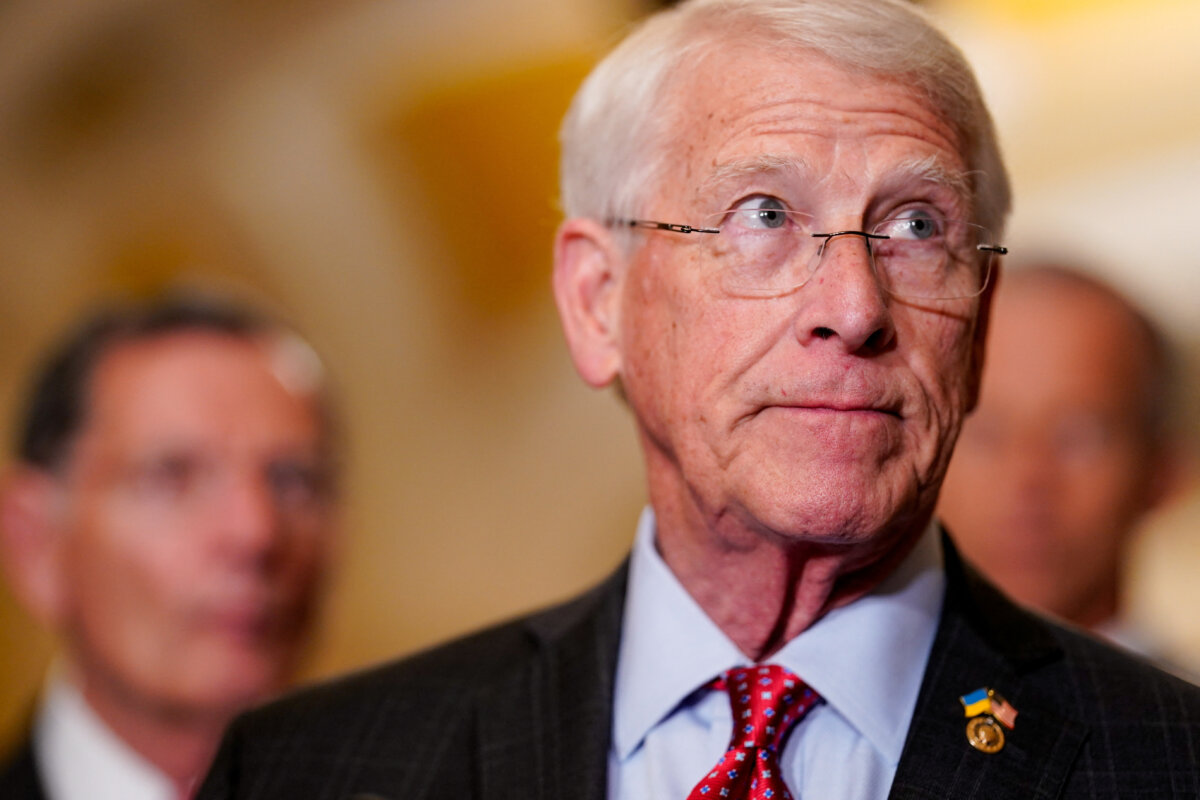
Sen. Roger Wicker (R-Miss.) and Rep. Mike Rogers (R-Ala.), who respectively chair the Senate and House Armed Services Committees, expressed concerns about the canceled troop rotation in a joint press statement on Oct. 29.
Both Republican lawmakers said the decision is at odds with a commitment President Donald Trump articulated two weeks prior, to not withdraw any U.S. forces from Europe.
Wicker and Rogers both acknowledged that while Trump had committed not to pull any U.S. troops out of the continent, he may “move some around a little bit.”
“The president is right that U.S. force posture in Europe needs to be updated as NATO shoulders additional burdens and the character of warfare changes,” the statement from Wicker and Rogers states.
“But that update must be coordinated widely both within the U.S. government and with NATO.”
About 1,000 U.S. troops were stationed at an air base in Romania until they were rotated out a month ago.
Earlier on Oct. 29, the U.S. Army’s component for Europe and Africa announced that the Second Infantry Brigade Combat Team of the 101st Airborne Division, which had been slated to rotate in after the last eastern European deployment, would instead return to its home unit in Kentucky “without replacement.”
“This is not an American withdrawal from Europe or a signal of lessened commitment to NATO and Article 5,” the U.S. Army’s European component said of the decision.
“Rather, this is a positive sign of increased European capability and responsibility.”
Article 5 of the North Atlantic Treaty, NATO’s foundational document, describes a mutual defense commitment among the member nations of the alliance.
Although the U.S. Army and the Romanian Defense Ministry offered assurances that NATO had sufficiently strengthened its eastern flank to not need the U.S. brigade rotation, Wicker and Rogers said the decision sends the wrong message at a key moment in Trump’s efforts to help settle the Russia–Ukraine war.
“The president has it exactly right: now is the time for America to demonstrate our resolve against Russian aggression. Unfortunately, the Pentagon’s decision appears uncoordinated and directly at odds with the president’s strategy,” the Republican lawmakers wrote.
Wicker and Rogers also said they were not consulted closely enough on the decision.
Sen. Jeanne Shaheen (D-N.H.), the ranking member on the Senate Foreign Relations Committee and a member of the Senate Armed Services Committee, echoed those concerns in her own comments to reporters on Oct. 29.
“I haven’t actually seen the notification in Congress. So maybe that’s happened, but I haven’t seen it,” Shaheen said.
Shaheen raised particular concern about the U.S. troop cut in light of recent Russian drone incursions into the airspaces of NATO members on the alliance’s eastern edge.
“They are pushing on NATO countries in a way that suggests that they’re trying to see how far we will let them go before we take action,” she said.
“And pulling out troops from Romania is … almost the worst message we could send.”
 Friends Read Free
Copy
Facebook
Tweet
Friends Read Free
Copy
Facebook
Tweet