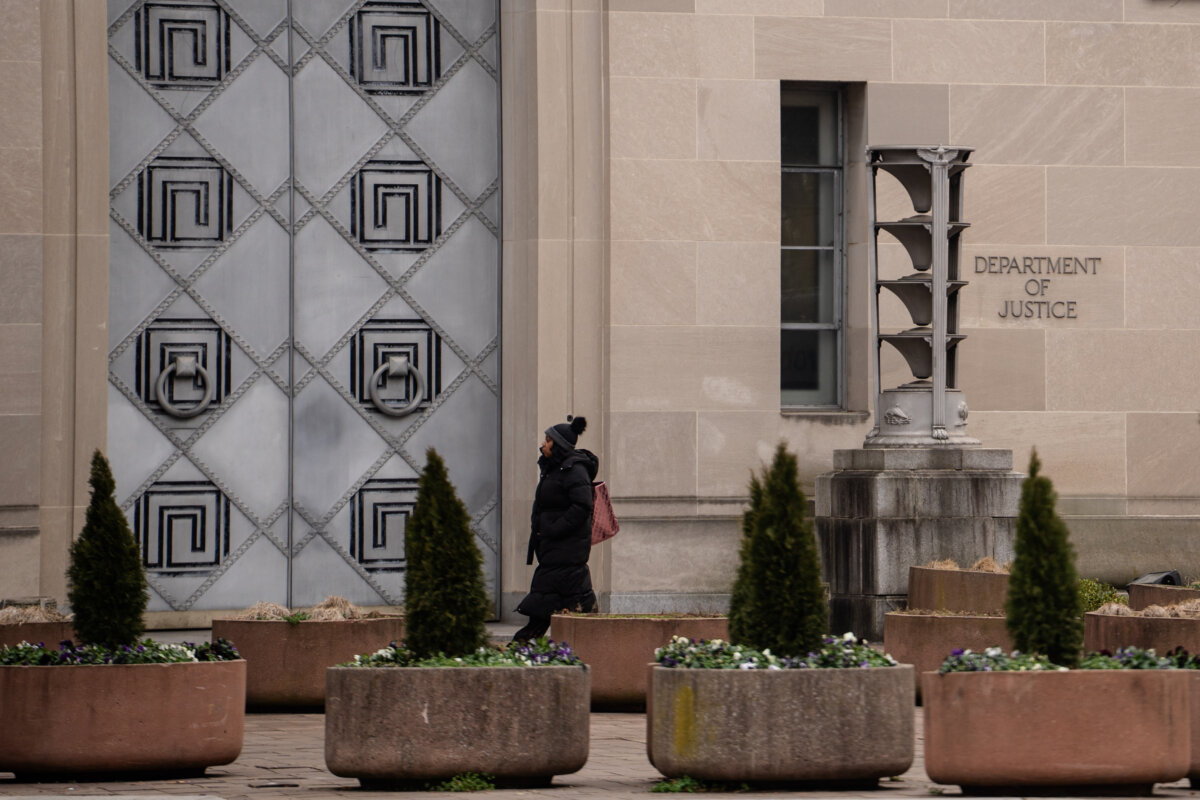

Four individuals from Detroit, including a sitting judge and an attorney, have been charged for partnering in a multiyear scheme to allegedly embezzle funds from incapacitated people, the Department of Justice (DOJ) said in a Jan. 30 statement.
Charges were filed against Andrea Bradley-Baskin, 46, a district judge in Michigan; Avery Bradley, 72, an attorney who is the father of Bradley-Baskin; Dwight Rashad, 69; and Nancy Williams, 59.
Williams owned Guardian and Associates, an agency appointed as a fiduciary for incapacitated wards of the state in more than 1,000 cases. Rashad was the owner of several group homes and residential facilities for elderly people who needed care and support, including wards. Bradley and Bradley-Baskin also ran a law firm that often represented Guardian and Associates.
The case revolves around money allegedly embezzled from wards. Courts can appoint a person or entity as guardians of adults deemed unable to make decisions for themselves. These guardians are given the authority to decide their wards’ personal and property decisions. Guardians can be individuals, lawyers, and professionals working at for-profit and nonprofit entities.
“The indictment alleges that the four defendants conspired to systematically embezzle funds from wards, and to obtain and retain money for themselves that rightly belonged to the wards and the wards’ estates,” the DOJ said.
In one instance, Bradley-Baskin allegedly used $70,000 in funds from a ward to buy a stake in a local bar. In another case, Bradley, Rashad, and Williams allegedly took $203,000 from a ward’s legal settlement.
In a third instance, Bradley-Baskin is alleged to have used funds from the estate of a ward to pay for a two-year lease on a new Ford Expedition she got for herself, according to the department.
Attorney General Pam Bondi thanked Eastern Michigan prosecutors in a Jan. 31 post on X for filing charges in the case.
“Using the power of the bench to allegedly take advantage of vulnerable people is a particularly vile crime,” she said.
All four defendants have been charged with conspiracy to commit wire fraud. Bradley, Bradley-Baskin, and Rashad were charged with multiple counts of money laundering. The indictment charged Bradley with a count of wire fraud, and Bradley-Baskin with a count of making a false statement to a federal law enforcement agent.
“Regardless of a person’s position in society, no one is above the law,” said Jennifer Runyan, special agent in charge of the FBI Detroit Field Office.
“These four defendants allegedly conspired to steal from some of our most vulnerable citizens—looting bank accounts, exploiting legal authority, and profiting off those who relied on them for care and protection,” Runyan said. “Let me be clear: if you prey on the vulnerable, we will find you and bring you to justice.”
The Epoch Times contacted the legal representatives of Bradley and Bradley-Baskin for comment but did not receive a response by publication time. The Epoch Times was unable to reach legal representatives of Williams and Rashad.
In a February 2025 post, Brothers Henderson Durkin, P.S., a law firm specializing in elder and disability law, said a guardian is deemed to break their duty toward a ward if they act in a manner that is not in the best interest of the individual under care.
This can include misusing the ward’s funds or ignoring the needs of the ward, such as failing to fulfill their medical requirements or allowing them to live in unsafe conditions.
Guardians failing to fulfil their legal obligations can face serious penalties, it said, while recommending that family members and friends of wards remain involved in their affairs to ensure that guardians act responsibly.
According to the DOJ, courts with jurisdiction over guardianship cases can take steps against the caretakers accused of financial abuse.
This includes restricting a guardian’s access to the ward’s money and property, ordering the repayment of lost assets, issuing orders allowing wards to communicate with their loved ones, removing a guardian from their post, or appointing a co-guardian to oversee the ward’s assets.
In addition to courts, several other entities can help tackle the issue of guardians abusing wards, including adult protection services, advocacy systems, and professional boards that license guardians.
 Friends Read Free
Copy
Facebook
Tweet
Friends Read Free
Copy
Facebook
Tweet