
The Department of War (DOW) has awarded defense contractor Raytheon a multi-year deal worth up to $6.3 billion to produce ballistic missile interceptors, as the Pentagon seeks to boost weapons production and replenish stockpiles.
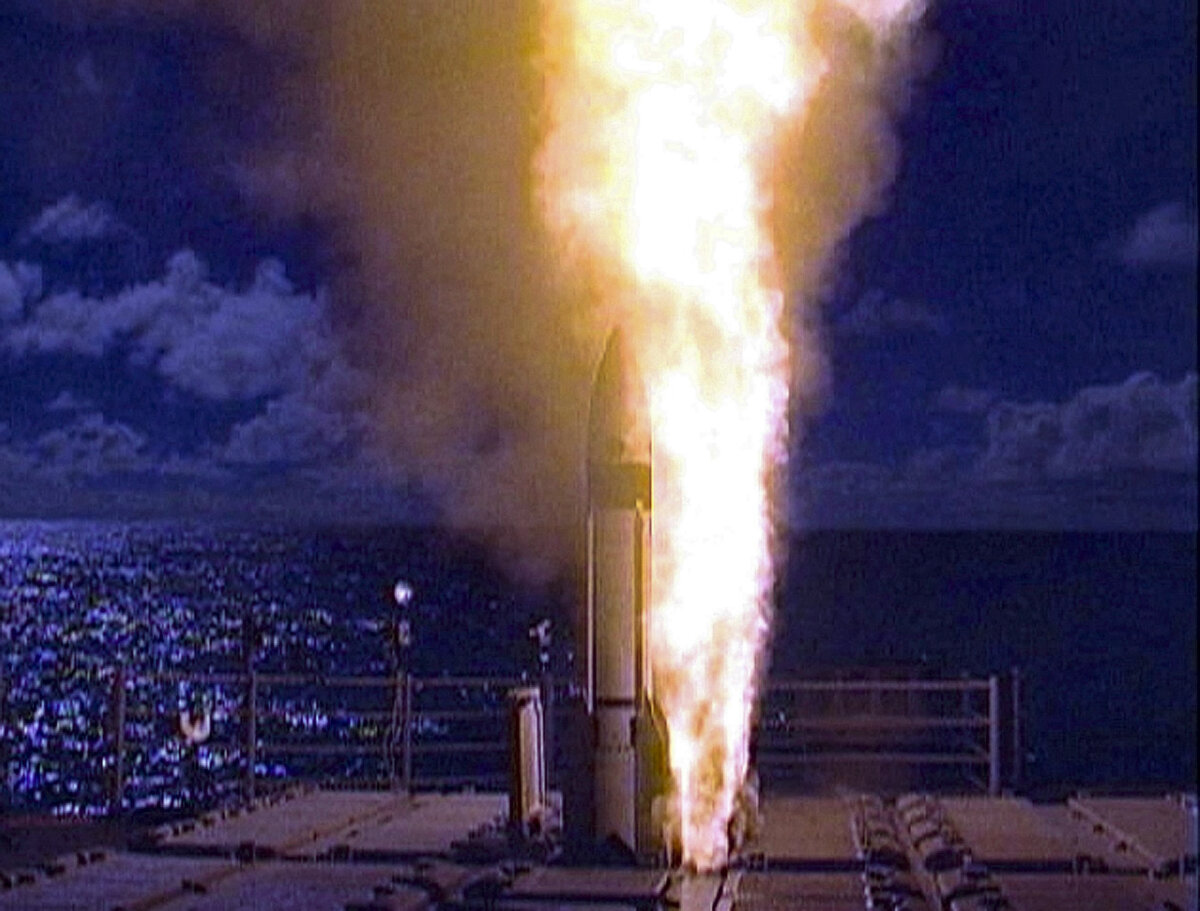
The department said in an Oct. 8 statement that Raytheon, part of the RTX Corporation, will be building the Standard Missile-3 Block IB (SM-3 Blk IB) missile-defense interceptor, which is used by the U.S. Navy against short- and intermediate-range ballistic missile threats.
The agreement will last five years with an option to extend for an additional two years, the DOW said.
“Our warfighters must never face a fair fight, and the SM-3 Blk IB has proven its operational superiority to dominate any adversary across the globe,” said Under Secretary of War for Acquisition and Sustainment Michael P. Duffey.
“This contract provides production certainty to our defense industrial base, breaks sub-tier manufacturing bottlenecks, and ensures that our fleets and combatant commands have the interceptors required to dominate the battle space—air, sea or land.”
The defense contractor said in a statement on Thursday that it has made investments to expand its capacity to produce munitions essential for defending U.S. and allied forces and critical infrastructure.
Raytheon President Phil Jasper said the contract underscores the company’s commitment to ensuring that customers have the defensive capabilities they need.
“SM-3 Block IB has proven its relevance in combat and this contract helps ensure we can replenish inventories and keep pace with the evolving threats the U.S. Navy, [the Missile Defense Agency,] and their partners face around the world,” Jasper said.
Raytheon said production of the SM-3 Blk IB will be undertaken primarily at facilities in Huntsville, Alabama, and Tucson, Arizona.
The contract comes as the DOW looks to meet the growing demand for air and missile defense systems and replenish stockpiles that have been depleted by conflicts in the Middle East.
Recent Contracts
This is the latest contract that Raytheon has won, after the Department of the Navy announced on Oct. 1 that it had awarded the company a five year deal worth up to $24.4 billion to produce Standard Missile-6 (SM-6) interceptors for the U.S. Navy.
SM-6 is primarily intended as an extended-range air-defense missile with a range of 230 miles, though it can also protect against ballistic missiles or hit a surface target.
On Sept. 28, Raytheon said it had secured a contract to produce the Advanced Medium-Range Air-to-Air Missile, known as AMRAAM, valued at up to $20.7 billion. That deal also runs for five years with two option years.
RTX said the pact follows an earlier agreement supporting annual production of at least 1,900 of the missiles. Production nearly doubled in 2025 from 2024, the company said.
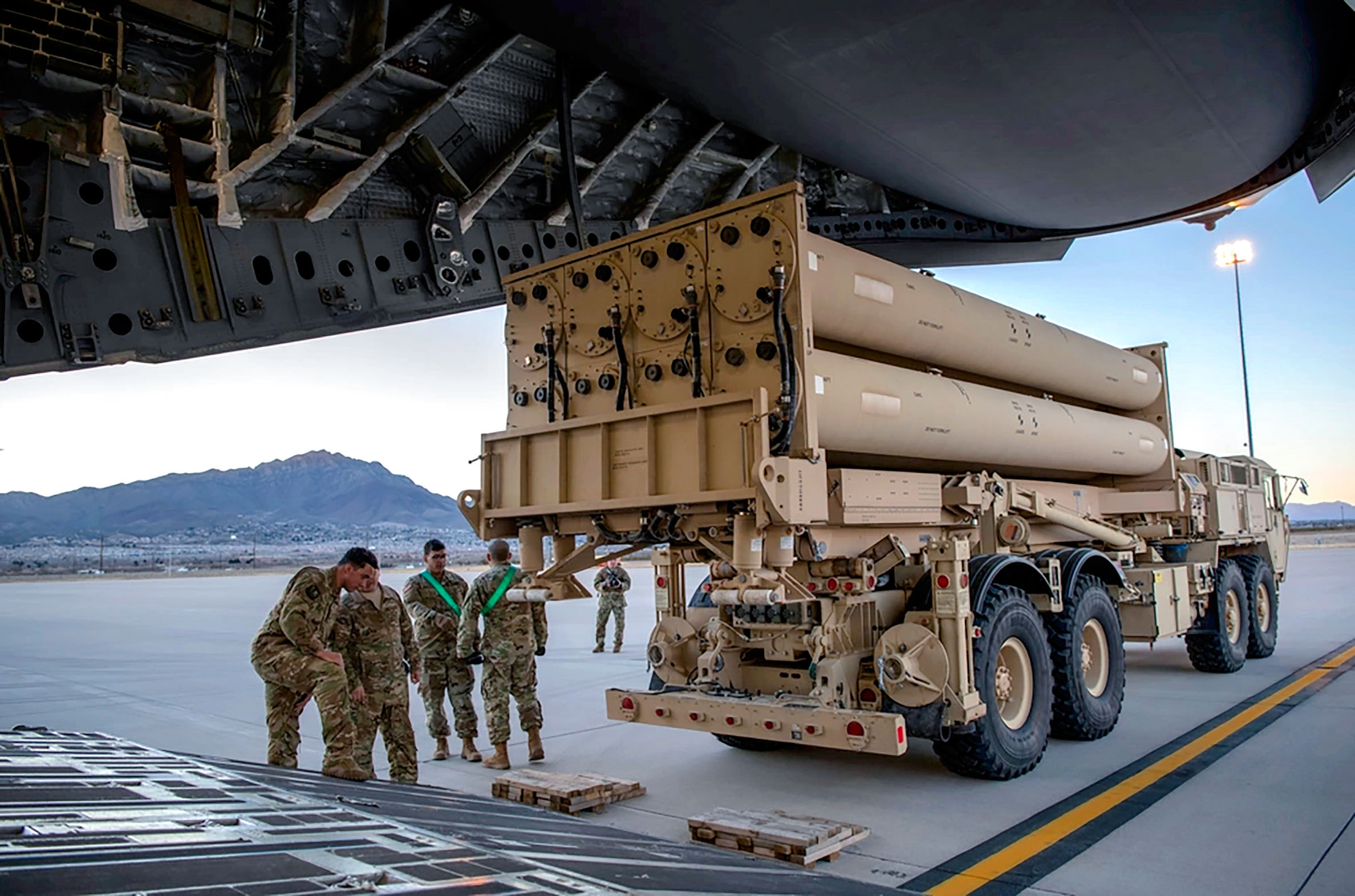 A crew prepares to load a Terminal High Altitude Area Defense (THAAD) launching station onto a C-17 transport plane at Fort Bliss, Texas, on Feb. 23, 2019. (Staff Sgt. Cory D. Payne/U.S. Air Force via AP)
The same month, the Pentagon also awarded Raytheon a $22.9 billion contract to lift Tomahawk production to more than 1,000 missiles a year. Previously, Raytheon made about 60 a year.
Reuters and Kimberly Hayek contributed to this report.
 Friends Read Free
Copy
Facebook
Tweet
Friends Read Free
Copy
Facebook
Tweet