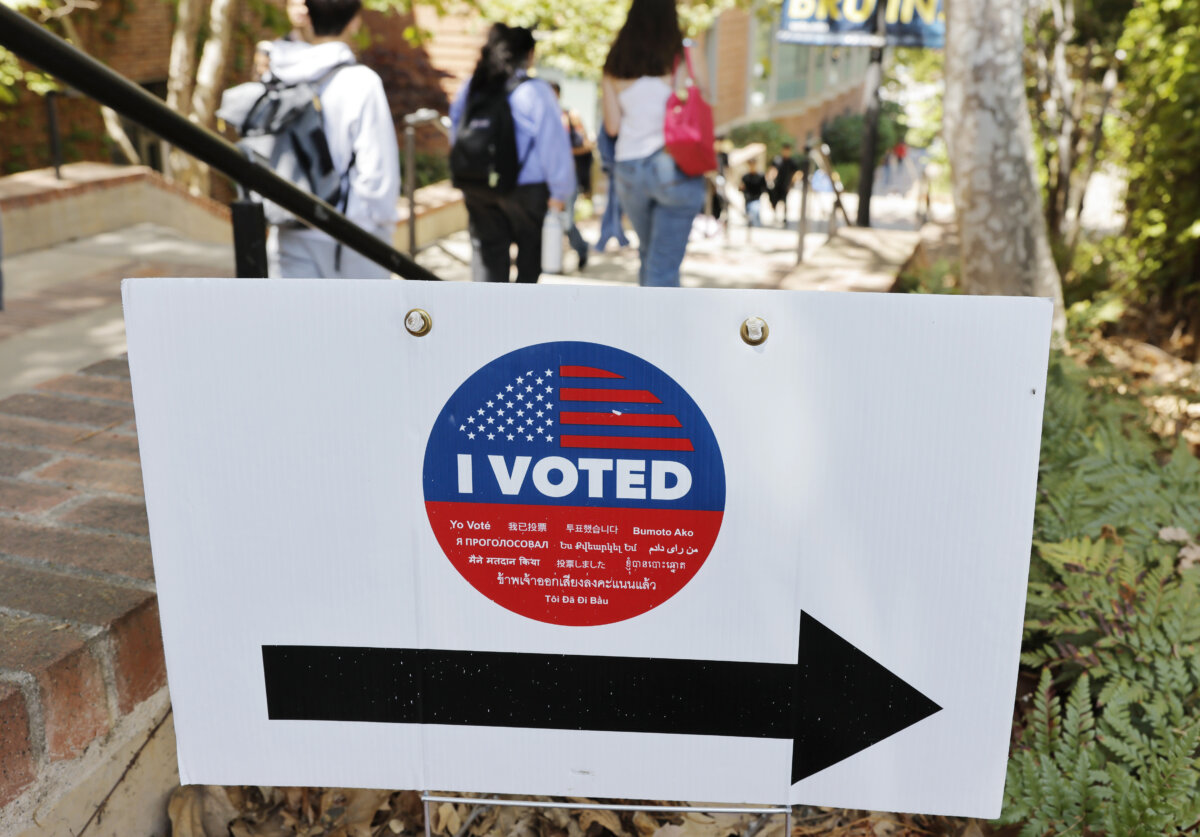

Democratic incumbent U.S. Rep. Derek Tran will face Republican challenger Chuong Vo in the November election for California’s 45th Congressional District.
Vo came second in the primary, topping a field of five Republicans. The Associated Press called Vo’s advancement on June 6, four days after the primary.
With 89 percent of votes counted, Tran held 53.4 percent of the votes to Vo’s 15.5 percent.
In the state’s jungle primary—in which the top two vote-getters advance to the general election, regardless of party affiliation—that sets Tran up for a tougher fight in November, when the Republican Party will throw its full weight behind Vo, a former Cerritos mayor and 28-year law enforcement veteran.
Tran far outraised his challengers, with around $4.2 million in total contributions as of June 1; the four top Republican contenders did not breach $1 million.
The result was expected among Republican strategists, who saw the primary as a testing ground for the best chance to beat Tran in November.
Will O’Neill, chairman of the Orange County Republican Party, told The Epoch Times it didn’t endorse a candidate in the primary “because we have quite a few good candidates who can go present their case to voters and have the voters tell us who they’d prefer.”
“You have Republicans honing their arguments and getting out and competing. … Whoever ends up running against Derek Tran will be a better candidate than when they started,” O’Neill said.
“We’re going to end up with a Republican versus Derek Tran—and then we’ll be fully behind that Republican.”
While the Orange County Republican Party didn’t endorse any candidates, Vo racked up the most major conservative endorsements, including from the Los Angeles County Republican Party, LA and OC County Lincoln Clubs, and the California Republican Assembly.
In 2024, Tran—a veteran, personal injury attorney, and political newcomer—ousted two-term Republican incumbent Michelle Steel by a margin of less than 700 votes.
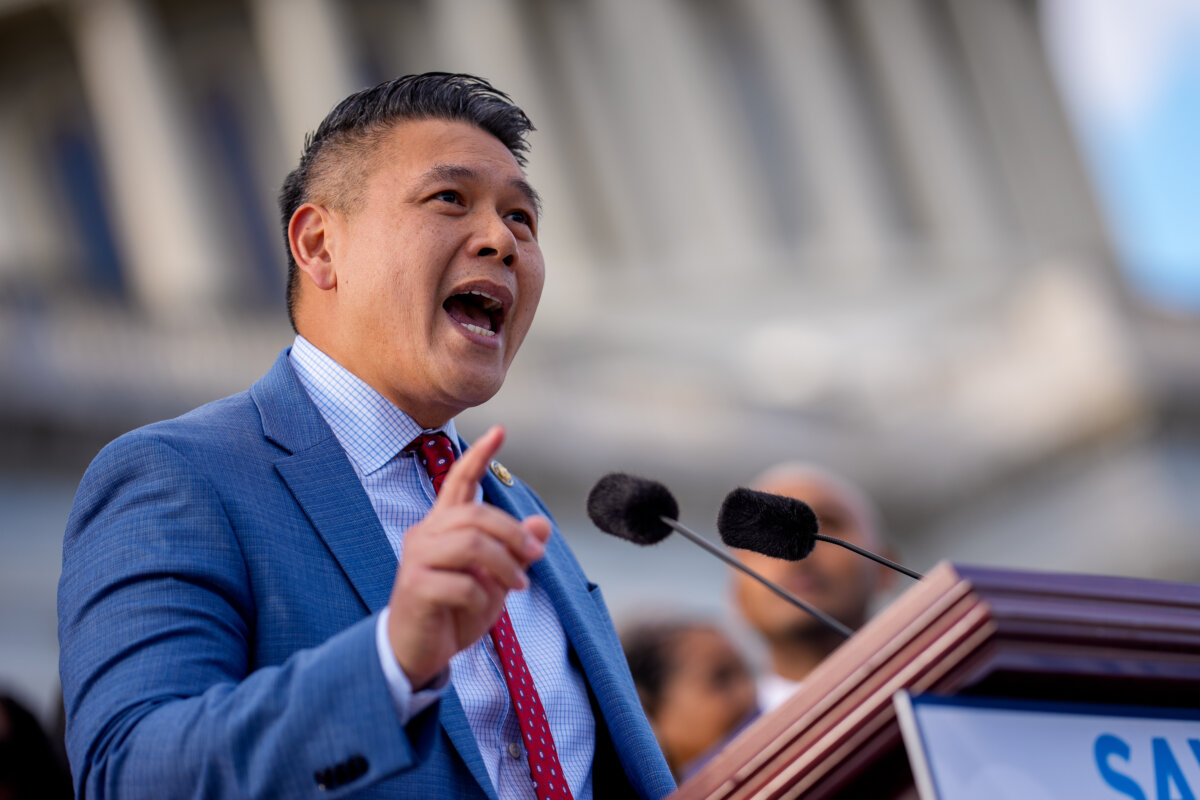
At the time, it was the most expensive U.S. House race in history, and a contentious one, in which both candidates traded accusations of Chinese Communist Party affiliation in their scramble for the historically conservative Vietnamese vote anchored in the district.
In 2026, all four of Tran’s top challengers were Vietnamese Americans who came to the United States as refugees after the Fall of Saigon, a background that aligns them with many residents, but also made for a crowded field in which candidates struggled to distinguish themselves.
Orange County is home to the largest Vietnamese community outside Vietnam, around 240,000 people—most of whom live in and around the Little Saigon neighborhood spanning Garden Grove, Westminster, Fountain Valley, and Santa Ana.
Largely settled by refugees after the 1975 Fall of Saigon, the Little Saigon area was previously split into three districts, but the state’s 2020 redistricting process consolidated its Vietnamese-American voter base in a jagged semi-circle spanning 18 cities and straddling Los Angeles and Orange Counties.
Vo told The Epoch Times before the primary that he expected to have an advantage in the race over his Orange-County based Republican rivals.
“I’m a Republican Vietnamese, so the conservatives in Little Saigon have an option of Vietnamese representation. But I was also mayor of Cerritos … I’m the only one from the L.A. side where Michelle [Steel] lost some of those votes,” he said, referring Democrat-leaning cities in the district.
Democrats gained a slight advantage in CD-45 following Prop 50, Democratic Gov. Gavin Newsom’s 2025 voter-approved redistricting initiative, heading into June with around 38 percent of registered voters to Republicans’ 30 percent.
But 25 percent of registered voters are “no party preference,” making the district one of few remaining competitive battlegrounds for the U.S. House—which Republicans control by a thin majority.
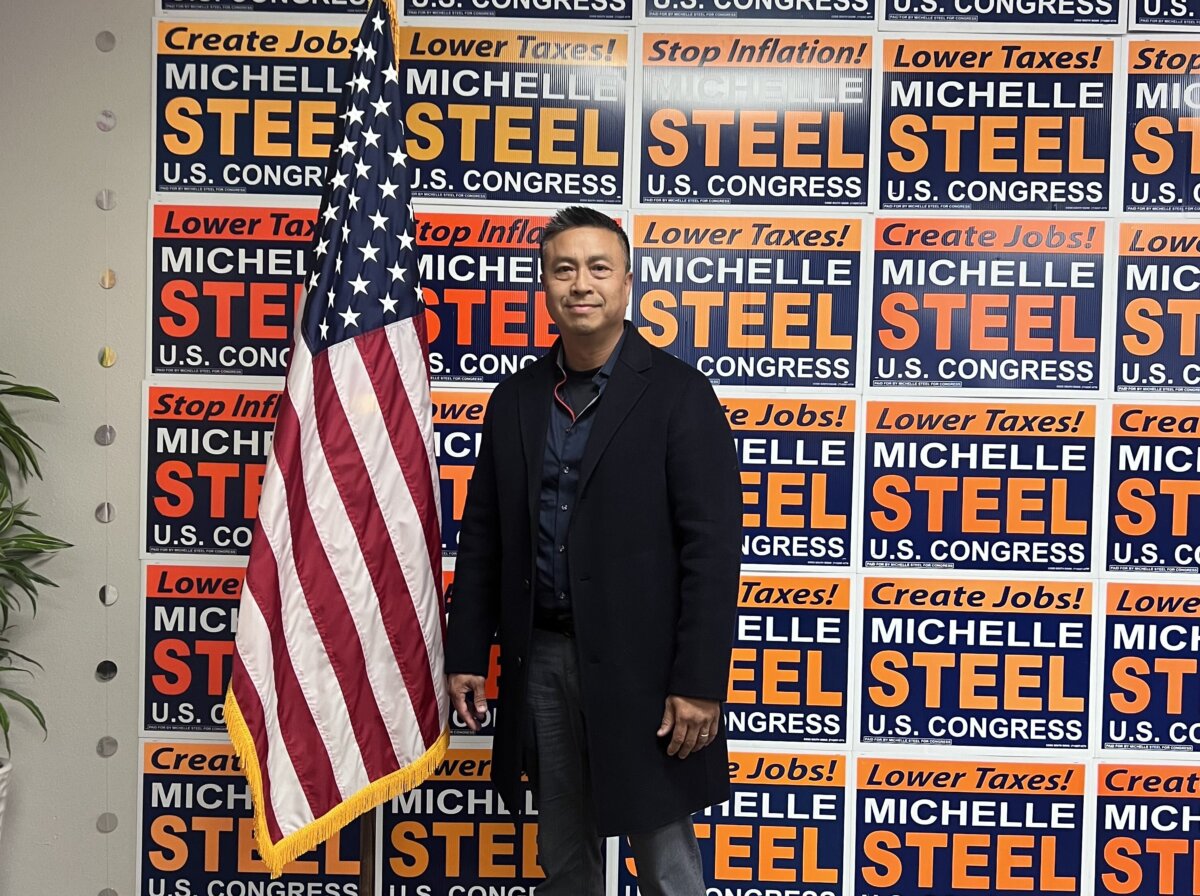
“Vietnamese voters, whether they are registered as Republican, non-party-party preference or Democrats, they tend to vote for the Vietnamese,” Chi Charlie Nguyen, mayor of Westminster and a candidate for the congressional seat, told The Epoch Times.
And non-party preference voters, he added, tend to lean Republican.
Nguyen’s campaign raised around $473,000, coming in third behind Tran and Tom Vo, a largely self-funded political newcomer who highlighted his experience as a fighter pilot during the Vietnam war in campaign messaging. He raised $755,910.
As of June 1, 14 percent of registered voters had returned their ballots early—with Republicans returning at a higher rate, around 39 percent, compared to their 30 percent share of registration, while Democrats returned ballots at around the same rate, 39 percent, as their share.
Republicans led with an 18 percent early turnout rate, compared to Democrats’ 14 percent, with non-party-preference voters at 10 percent, according to the nonpartisan tracker politicaldata.com.
The vast majority, around 350,000 of CD-45’s 450,428 voters, live in Orange County—a former Republican stronghold that in recent years has shifted purple: Vice President Kamala Harris narrowly won it in 2024 with 49.7 percent of the vote, compared to President Donald Trump’s 47.1 percent.
But in CD-45’s Orange County cities, Trump garnered 140,830 votes to Harris’s 139,400.
 Friends Read Free
Copy
Facebook
Tweet
Friends Read Free
Copy
Facebook
Tweet