
The six prospective additions to the U.S. Department of the Interior’s Critical Minerals List are vital “commodities” that domestic manufacturers—including in defense industries—are import-reliant on today, but won’t have access to in the future without dramatic boosts now in mining and refining investment, analysts and industry groups warn.
Copper, silver, potash, silicon, rhenium, and lead are recommended by the department’s U.S. Geological Survey for inclusion on the list, posted in the Federal Register on Aug. 26 for a 30-day public comment period before adoption by year’s end.
Arsenic and tellurium, included in the Geological Survey’s 2022 Critical Minerals List, are recommended for removal, bringing to 54 the number of critical minerals, defined in the Energy Act of 2020 as “essential to the U.S. economy or national security, with a supply chain vulnerable to disruption, and without which the absence would have significant consequences.”
Uranium and metallurgical coal could also be added at Interior Secretary Doug Burgum’s discretion, although uranium is a metal, and coal a sedimentary rock.
According to the survey’s 2024 Mineral Commodity Summaries, the United States is 100 percent net import reliant for 12 of the 50 critical minerals on the 2022 list, and more than 50 percent net import reliant for an additional 29.
In 2023, according to the survey, China was the leading producer of 29 of the 50 critical minerals on the 2022 list.
“Reliance on critical minerals from other countries and China’s dominance in producing and refining them raises concerns about critical mineral supply chain disruptions in the United States,” it said. “The dominance varies by mineral, but China’s control over certain critical minerals is so pronounced that the U.S. relies on China for a significant portion, or even all, of its supply for several of these materials.”
The six prospective additions, especially of copper, silver, and potash, are “more than a small policy update,” said Rahman Butts, who owns Bullion Hub, an Australian-based gold and precious metals brokerage.
“It signals where the pressure points are likely to be in the years ahead,” he said.
Copper is in accelerating demand in a rapidly electrifying planet, he told The Epoch Times.
“Every power line, charging station, and data center depends on it,” Butts said. “The difficulty is not only in mining. Much of the world’s refining is concentrated in China, which means even ore mined in friendly countries often still passes through the same chokepoints.”
The ‘Copper Gap’
According to the New York-based Copper Development Association, the United States “faces a ‘copper gap’ where its domestic mining and processing can’t meet demand, despite having sufficient resources, due to slow permitting and limited refining infrastructure.”
In 2024, U.S. consumption was 1.6 million tons, with 1.2 million tons domestically mined and 585,000 tons smelted, according to the association. S&P Global projects that U.S. demand for copper will double by 2035 to 3.5 million tons.
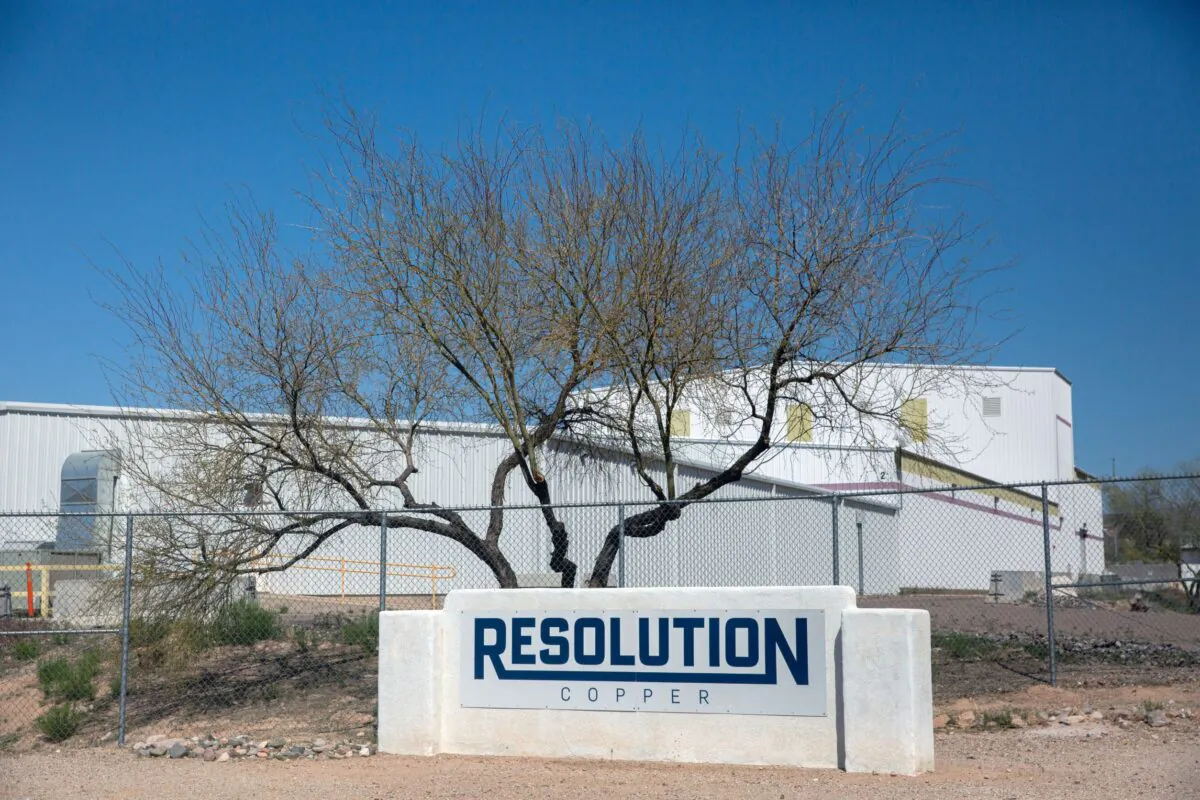
There are at least seven U.S. copper projects on tap; one in California, two in Michigan, and four in Arizona, including Resolution Copper near Superior, one of North America’s largest undeveloped copper deposits, which is stymied by a federal appeals court injunction.
Resolution Copper is one of 10 “first wave” projects approved for accelerated review in April by the Federal Permitting Council in accordance with President Donald Trump’s March executive order.
“New domestic projects are underway, but the U.S. won’t achieve self-sufficiency by 2035 due to long development timelines for mines and a lack of primary smelters and refineries,” the Copper Development Association said, noting the nation “faces a refining bottleneck, as the number of copper refineries has declined from nine in 2000 to just five in 2023, reducing refined production by 40 percent.”
Avadh Nagaralawala, an Arizona-based mining consultant, said, “The ultimate risk is if the U.S. moves too slowly, we end up simply trading one dependency for another; trading Middle East oil for Chinese copper and lithium.”
Private investment is key, as is regulatory speed, he told The Epoch Times.
“Streamlined permitting initiatives” have momentum “although the pace is still slow compared to mining nations like Canada, Australia, or China,” he said.
“Silver plays a double role,” Butts said. “Investors treat it as a precious metal, yet it’s also essential in solar panels, electronics, and medical gear. Silver is locked into growth sectors … so demand remains resilient even if ‘thrifting’ continues.”
He projects that “the bigger effect could be midstream,” in refining, smelting, and processing.
“Expect more pressure to refine copper and silver inside the U.S. or allied countries rather than shipping concentrates abroad,” he said.
The ‘Original’ Critical Mineral
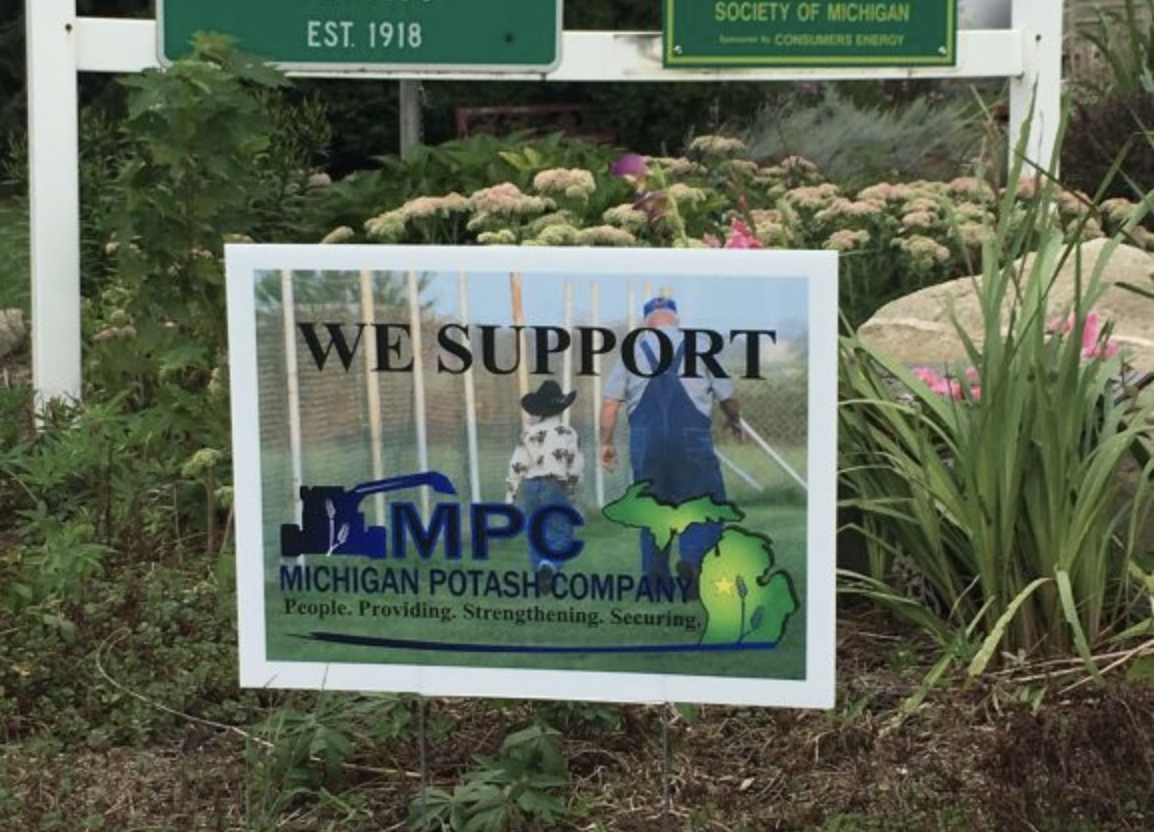
Potash could be the most fundamental of the commodities and most critical, according to Michigan Potash & Salt Company founder and CEO Theodore Pagano.
“Arguably,” he told The Epoch Times, “potash is the original strategic and critical mineral,” noting the United States has more than enough of the potassium-based mineral but, nevertheless, imports 90 percent to 95 percent of the 5.3 million tons of fertilizer—mostly from Canada—that the nation’s farmers use annually.
The company is sitting on up to “150 million tons of recoverable K2O [potassium oxide] product” with mineral rights on 15,500 acres—about 24 square miles—in Osceola County, Michigan, Pagano said.
The project is among the 10 being “fast-tracked” under Trump’s March executive order. In January, the Department of Energy announced a conditional loan guarantee of up to $1.26 billion to build the mine and processing plant to produce 800,000 tons of potash and about 1 million tons of salt per year.
According to the company, the project will employ 1,400 and create 200 full-time jobs.
“We got a three-year build ahead of us,” Pagano said. “We do things a little different. We’re not sending people underground. We’re more of a manufacturing facility than, say, what you would call a traditional mining facility. We’re really brine-handlers.”
That’s the speed of light in relative regulatory time.
“The long-dated time associated with bringing on new facilities in the U.S. is one of those hurdles. I think it’s on average, 28 years,” he said.
That makes the designation of potash as a critical mineral, and the federal financing commitments, a big deal in lowering fertilizer costs for the nation’s farmers and, ultimately, keeping food costs down, Pagano said.
“We all feel” the cost of imported potash, he said.
“We all feel it at the grocery store. Food inflation is a real thing,” he said.
“Certainly, the tide is turned just at the right time when folks were awakened out of complacency. We’ve got a chance to do something unique in Michigan at a time where it’s front-and-center.”
 Friends Read Free
Copy
Facebook
Tweet
Friends Read Free
Copy
Facebook
Tweet