
The U.S. State Department issued updated travel advisories for three African nations—Mali, Tanzania, and Niger—this week, citing security concerns in these countries.
Mali has been classified as “Level 4: Do Not Travel”—the highest among the four travel advisories issued by the State Department—because of crime, terrorism, kidnapping, unrest, and health challenges in the region, the department said in an update on Oct. 30.
“On October 30, 2025, the Department of State ordered non-emergency employees and their family members to leave Mali due to safety risks. The U.S. government cannot offer routine or emergency services to U.S. citizens outside of Bamako due to safety risks,” the update stated.
Bamako is Mali’s capital.
According to the department, violent crime is “common” throughout the West African country, including assault, armed robbery, kidnapping, and home invasion. In Bamako, violent crime is a “major concern” during seasonal events and holidays, it warned.
In September, terrorists affiliated with the Jama’at Nusrat al-Islam wal-Muslimin (JNIM) group blockaded fuel imports into the nation and have since attacked fuel tankers attempting to reach Bamako. This week, the Malian government suspended school and university classes in the nation because of fuel shortages.
The State Department designated JNIM as a foreign terrorist organization in 2018. The group describes itself as the official Mali branch of the al-Qaeda terrorist group and has claimed responsibility for numerous attacks and kidnappings since it was formed in 2017.
“Roadblocks, including by armed groups, occur throughout the country,” the department stated. “In cities, police checkpoints are possible, especially at night. Highways across the country often face attacks on government, civilian, and commercial targets.”
Medical services for emergency or routine procedures are limited in Mali, as public medical clinics often lack basic resources and supplies, it added.
In an Oct. 31 update, the State Department classified the East African nation of Tanzania with a “Level 3: Reconsider Travel” designation, citing terrorism, crime, unrest, and targeting based on sexual orientation.
Terrorist violence in the country is most common in the Mtwara Region. Limited resources impair local police departments’ responses to serious crime.
Tanzania is experiencing unrest, with protests frequently occurring in response to political or economic issues. The government has boosted security during demonstrations, including setting up roadblocks and checkpoints.
“Members of the gay and lesbian community have been arrested, targeted, and harassed,” the department stated. “People who identify as gay or lesbian may experience a higher likelihood of being targeted by police. People detained under suspicion of same-sex sexual conduct may face invasive physical exams.”
In another Oct. 31 update, the State Department raised the advisory level for Niger to “Level 4: Do Not Travel.” Niger is located in West Africa and borders Mali.
There is a risk of terrorist violence in Niger, as terror groups have resorted to kidnapping people for ransom as a business model, targeting vulnerable people and American interests.
“A state of emergency and movement restrictions are in place in many regions throughout Niger. Nigerien authorities require military escorts for any foreigners traveling outside Niamey, including U.S. government personnel,” the update said.
Niamey is Niger’s capital.
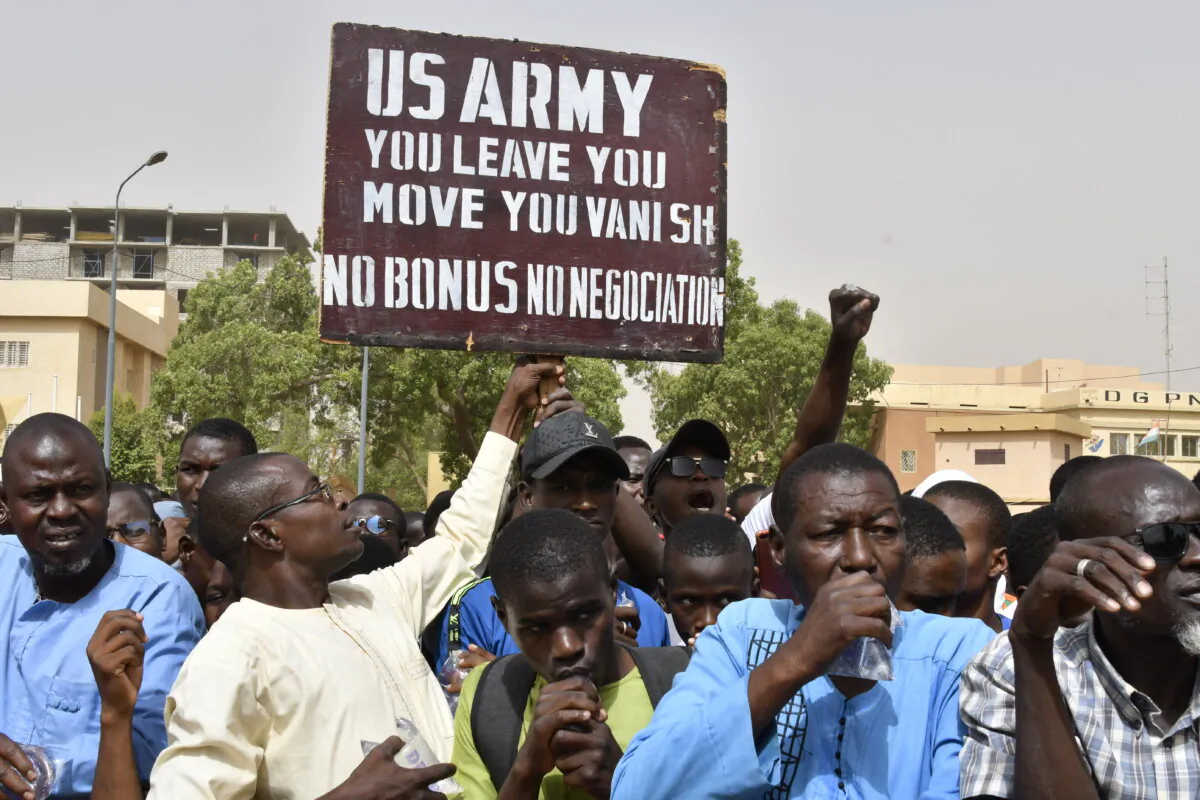
In August 2024, U.S. troops vacated their last major outpost in Niger after the country’s government demanded that American soldiers be pulled out of the nation.
Niger’s military government had earlier forced French troops to leave the country and has been expanding ties with Russia.
Washington’s allies, such as the UK and Canada, have also issued similar travel warnings for these African nations.
For Mali and Niger, the British government advises citizens “against all travel.” Similarly, the Canadian government asked citizens to “avoid all travel” to the nations.
As for Tanzania, both the UK and Canada advise people to avoid all non-essential travel.
U.S. President Donald Trump said in an Oct. 31 Truth Social post that he was designating Nigeria a “country of particular concern,” because of ongoing, violent persecution of Christians.
The designation was made under the International Religious Freedom Act of 1998, adding Nigeria to a list of nations whose governments have “engaged in or tolerated ‘particularly severe violations of religious freedom.’” Other nations on the list include China, Saudi Arabia, North Korea, Russia, Pakistan, and Iran.
“Christianity is facing an existential threat in Nigeria. Thousands of Christians are being killed. Radical Islamists are responsible for this mass slaughter,” Trump wrote.
“The United States cannot stand by while such atrocities are happening in Nigeria, and numerous other Countries. We stand ready, willing, and able to save our Great Christian population around the World!”
Reuters contributed to this report.
 Friends Read Free
Copy
Facebook
Tweet
Friends Read Free
Copy
Facebook
Tweet