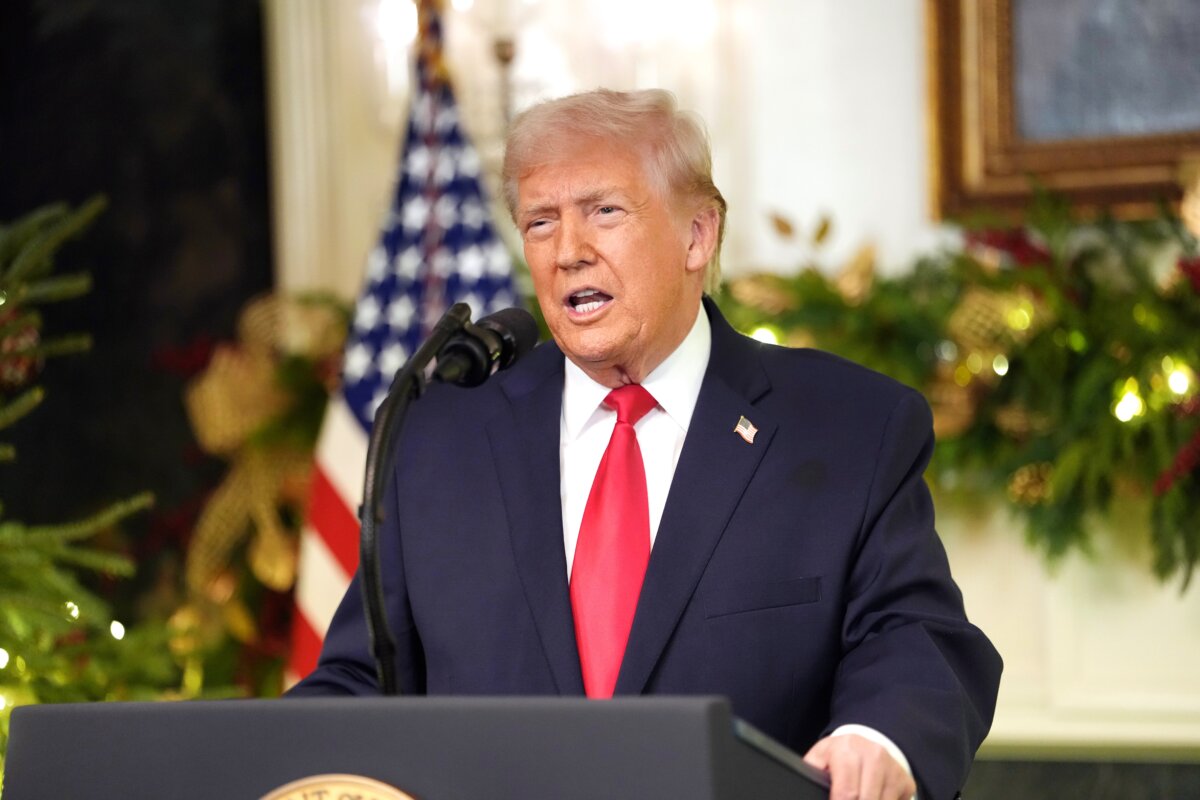

President Donald Trump’s Dec. 17 primetime speech touting his economic record landed with an added tailwind after fresh inflation data on Dec. 18 showed a sharp decline.
Affordability has been top of mind for Americans as prices remain persistently high. A recent poll conducted by National Public Radio, Public Broadcasting Service News, and Marist found that 70 percent of respondents said the cost of living is not very affordable or not affordable at all.
Democrats have highlighted consumers’ economic concerns, but the Trump administration has pushed back.
“When I took office, inflation was the worst in 48 years, and some would say in the history of our country, which caused prices to be higher than ever before, making life unaffordable for millions and millions of Americans,” the president said in his 18-minute address.
“This happened during a Democrat administration, and it’s when we first began hearing the word ‘affordability.’”
In addition to the data that Trump shared during his prepared remarks, new numbers came out a day later, supporting his case that progress is being made on inflation.
November’s annual inflation rate cooled to 2.7 percent from 3 percent in September, according to the Bureau of Labor Statistics. Additionally, core inflation, which strips out energy and food because of their volatility, slowed to 2.6 percent from 3 percent, the lowest level since March 2021.
These numbers came in below economists’ expectations of 3 percent.
“Just as President Trump told Americans last night: inflation continues to fall, wages continue to rise, and America is trending towards a historic economic boom,” White House press secretary Karoline Leavitt said in a statement following the November consumer price index (CPI) report.
In the president’s first 10 months in the Oval Office, consumer inflation has risen by just 2.03 percent. By comparison, the CPI surged by about 6.3 percent in President Joe Biden’s first year.
The White House has been betting on lowering energy costs to curb inflation.
“It’s exciting to see President Trump’s policies are absolutely working on bringing prices down,” Interior Secretary Doug Burgum told The Epoch Times.
“President Trump’s on the right track, and lower energy prices, of course, lead to lower prices across the board.”
Crude oil prices have fallen by 21 percent this year to about $56 per barrel. Easing geopolitical tensions and record output—domestic production is close to 13.9 million barrels per day—have helped bring down energy costs.
Because oil accounts for about half of the retail gasoline price, motorists are experiencing less pain at the pump. The national average price for a gallon of gas, as of Dec. 18, is $2.90, down by 4.5 percent from a year ago, according to the American Automobile Association.

This could set the stage for further easing heading into 2026, according to Jeffrey Roach, chief economist at LPL Financial.
“We may have some more hot readings as demand ticks higher from larger-than-expected tax returns in early 2026, but we should expect inflation to cool in the latter part of next year,” Roach said in a note emailed to The Epoch Times.
Although price pressures may be cooling across the U.S. marketplace, workers’ real (inflation-adjusted) earnings have also risen, giving households greater purchasing power.
Real median income is up by 4 percent, according to data gathered by the Committee to Unleash Prosperity.
Although short-term challenges exist because of uncertainty in Venezuela and strong demand, energy market analyst Phil Flynn said he remains optimistic about the long-term outlook.
“We’re in a new golden age of lower gasoline prices,” Flynn told The Epoch Times, pointing to several new refineries and major expansions already in the pipeline.
With regulatory cuts, according to him, projects will advance more smoothly, boosting production.
“It’s going to take some time,” he said. “There are definitely positive signs.”
CPI Data Defy Tariff Fears
Trump’s sweeping global tariffs have not led to a material increase in aggregate inflation levels, contradicting many of the negative prognostications earlier this year.
A broad array of tariff-sensitive items has either flatlined or risen modestly since April’s comprehensive unveiling of the president’s trade agenda.
According to the November CPI report, the indexes for apparel and new vehicles rose by 0.2 percent and 0.6 percent, respectively, over the 12 months ending in November. The cost of smartphones has declined by 9.4 percent, while footwear prices have slipped by 0.1 percent on an annual basis.
Similar findings could be ahead.
The latest producer price index, a pipeline inflation indicator that tracks price changes at the wholesale and producer level, rose by just 0.3 percent. Core producer inflation edged up by just 0.1 percent.
Prices at U.S. ports have also shown little change this year. The 12-month rate for import prices rose by 0.3 percent in September.
Surveys suggest that businesses have been reluctant to pass on their higher costs to price-conscious consumers.
“Several consumer-facing firms shared that, even in the face of cost pressure, they could not raise prices further or they would lose customers,” Federal Reserve Bank of Richmond economists said in a Dec. 12 report.
“With little ability to raise prices, a few firms shared they were trying harder to negotiate down vendor prices to reduce costs.”
A ‘Bountiful Year’ Ahead
The inflation data provided relief to markets, boosting stock and bond markets and increasing optimism for larger Federal Reserve rate cuts in 2026.
During his address to the nation, Trump said 2025 was laying the groundwork for “bringing [the U.S.] economy back from the brink of ruin.”
Ahead of third-quarter gross domestic product (GDP) data, the Federal Reserve Bank of Atlanta estimates growth at 3.5 percent. Fourth-quarter GDP growth is expected to be about 2 percent, according to the New York Fed Staff Nowcast.
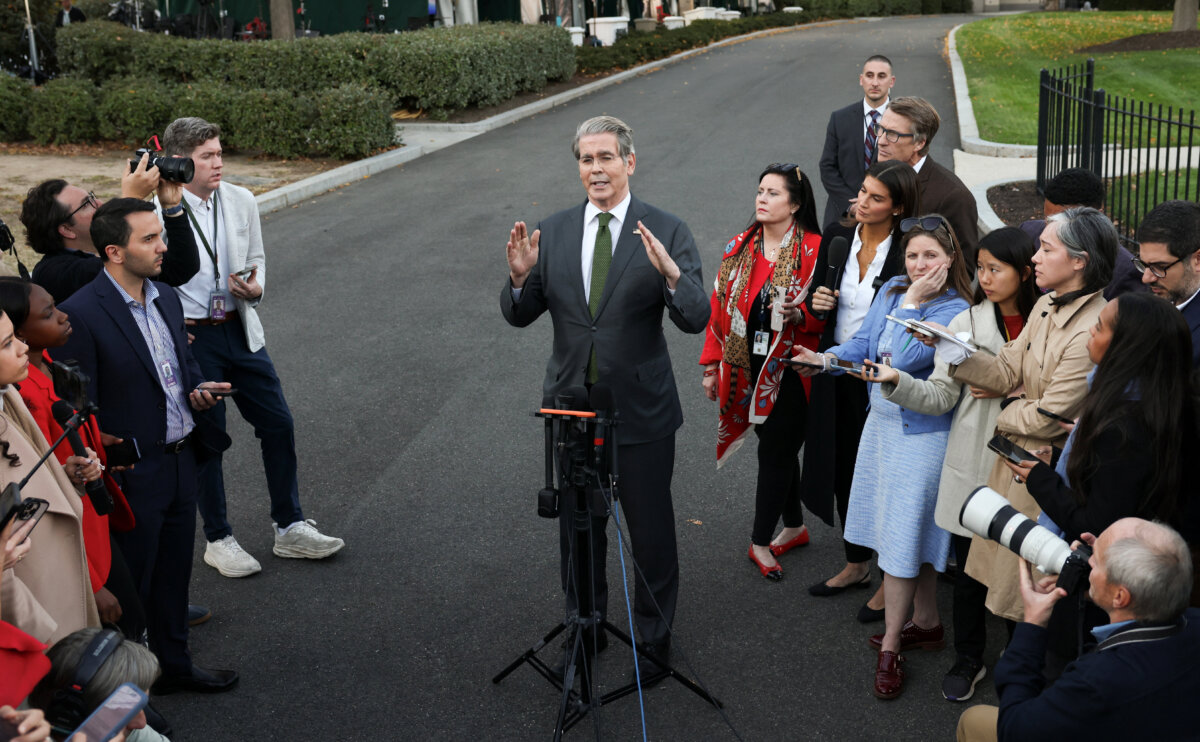
Trump officials are optimistic that 2026 will be a solid year for the U.S. economy, including Main Street.
“We should think that 2025 was setting the table; 2026 is going to be a bountiful year,” Treasury Secretary Scott Bessent said in a Dec. 16 Fox Business interview.
Next year’s non-inflationary growth, he said, will be bolstered by solid tax refunds in the first quarter, greater capital expenditure investments, and higher real wages where “working Americans” and “lower-income households” do well.
The Fed is also more upbeat about growth prospects, revising its 2026 real GDP forecast to 2.3 percent from the initial projection of 1.8 percent.
As for affordability, progress will continue.
“I suspect that we are going to see a substantial drop in inflation in the first six months of next year,” Bessent said.
Emel Akan contributed to this report.
 Friends Read Free
Copy
Facebook
Tweet
Friends Read Free
Copy
Facebook
Tweet