

President Donald Trump signed an executive order Oct. 5 during a rally in Nebraska to waive federal restrictions and allow red-dyed diesel fuel to be used on U.S. highways until the end of the year.
The order is expected to free up more domestic fuel for the public and reduce prices at the pump by supplying truckers with tax-free diesel typically used in tractors and off-road machinery.
The White House estimates the action will save truckers about $100 per refill, according to a fact sheet.
Texas, Louisiana, Alabama, North Carolina, Tennessee, Nebraska, and Missouri have waived red-dye diesel restrictions in recent weeks. Trump’s action will create a national suspension that is expected to help reduce prices until the end of the year.
Here are five things to know about the order.
When Will Prices Start to Drop?
The waiver took effect Monday night, temporarily allowing the fuel for on-road use and lowering costs for truckers by 24.4 cents per gallon.
Trump’s order directed Treasury Secretary Scott Bessent to defer certain diesel fuel tax payment obligations and to provide penalty relief, as allowed by law.
The president also directed Agriculture Secretary Brooke Rollins and Transportation Secretary Sean Duffy to help implement the policy.
Red-dyed diesel will be available for on-road use through Dec. 31.
What Is Red-Dyed Diesel?
Red-dyed diesel is fuel colored with solvent red 164 dye. The fuel is typically used only in agricultural or off-road operations and sold without a federal motor fuel tax.
The tax status makes it a practical choice for industries such as agriculture, construction, forestry, mining, marine operations, oil and gas extraction, and power generation, where heavy equipment is operated mostly on private property, according to Synergy Petroleum.
 Van Wolfe, farmer, harvests soybeans in Tallahatchie County, Miss., on Oct. 4, 2025. (Samira Bouaou/The Epoch Times)
“Mechanically, there is little difference between dyed diesel and clear diesel when both meet the same fuel specifications,” the company stated. “Both fuels can provide similar engine performance, fuel economy, and reliability.”
Penalties Started With Clinton
For more than three decades, farm vehicles, construction equipment and other off-road vehicles have used red-dyed diesel fuel.
The Omnibus Budget Reconciliation Act of 1993, signed into law by President Bill Clinton, increased the federal diesel excise tax by 4.3 cents per gallon starting in October 1993.
The law also created a federal penalty of $1,000 or $10 per gallon for using or selling dyed fuel for highway use, and added higher penalties for repeat offenses and altering the dye.
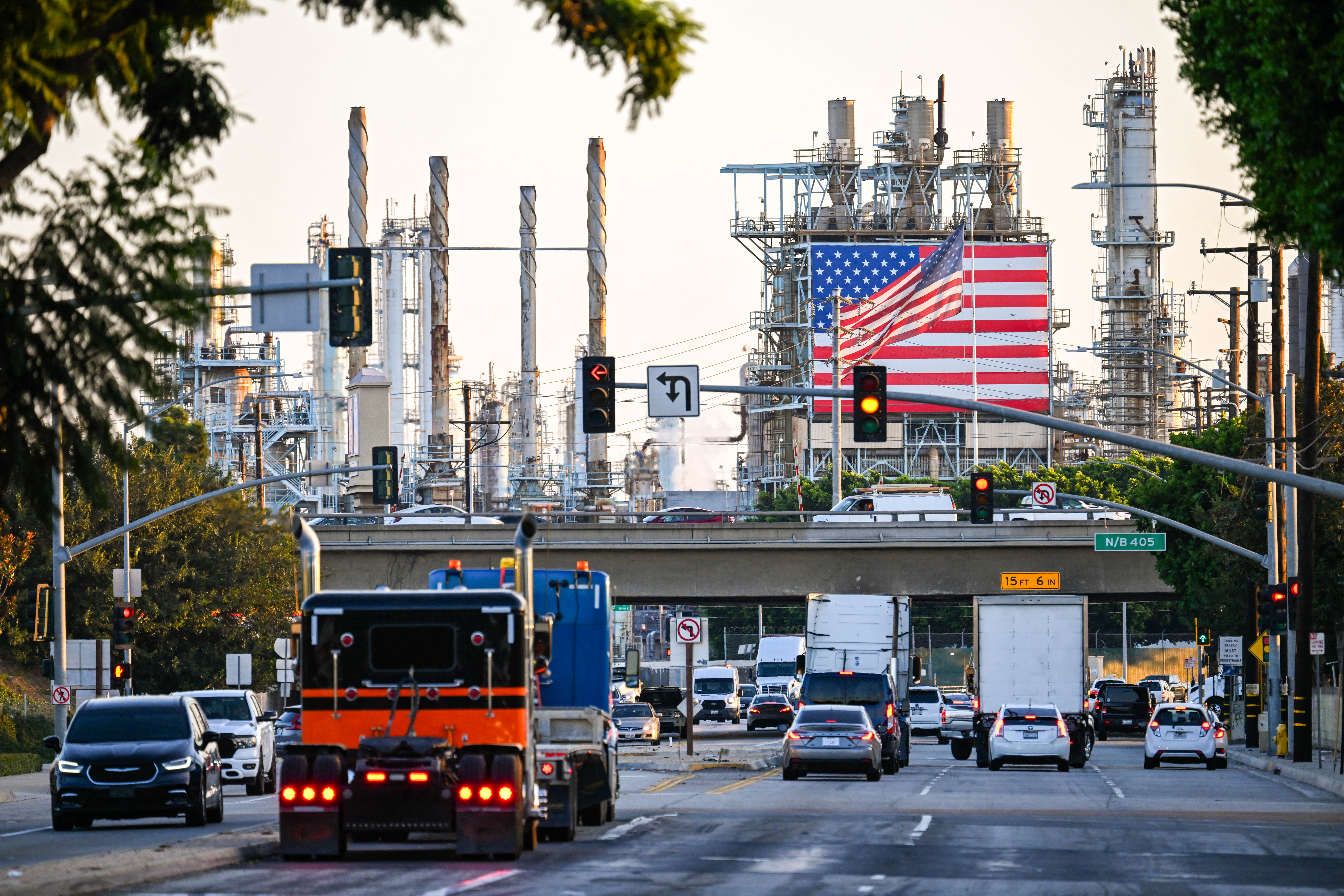 Vehicles drive on the 405 freeway (overpass) past a U.S. flag displayed outside of the Marathon Petroleum Corp. Los Angeles Refinery in Carson, Calif., on Sept. 22, 2026. (Patrick T. Fallon/AFP via Getty Images)
Will Farmers Still Have Enough?
Trump’s order directs Rollins to coordinate with agricultural cooperatives, rural fuel distributors, farm supply organizations, and other industry stakeholders to ensure farmers and ranchers have adequate dyed diesel supplies for their use in high-demand areas.
The order also encourages states to take action to further its policies.
American Farm Bureau Federation President Zippy Duvall thanked Trump for addressing fuel costs.
“Allowing dyed diesel fuel to be used over-the-road will bring welcome relief for farmers because every cent per gallon matters when you’re running a fleet of grain trucks or hauling cattle hundreds of miles,” Duvall said in a statement.
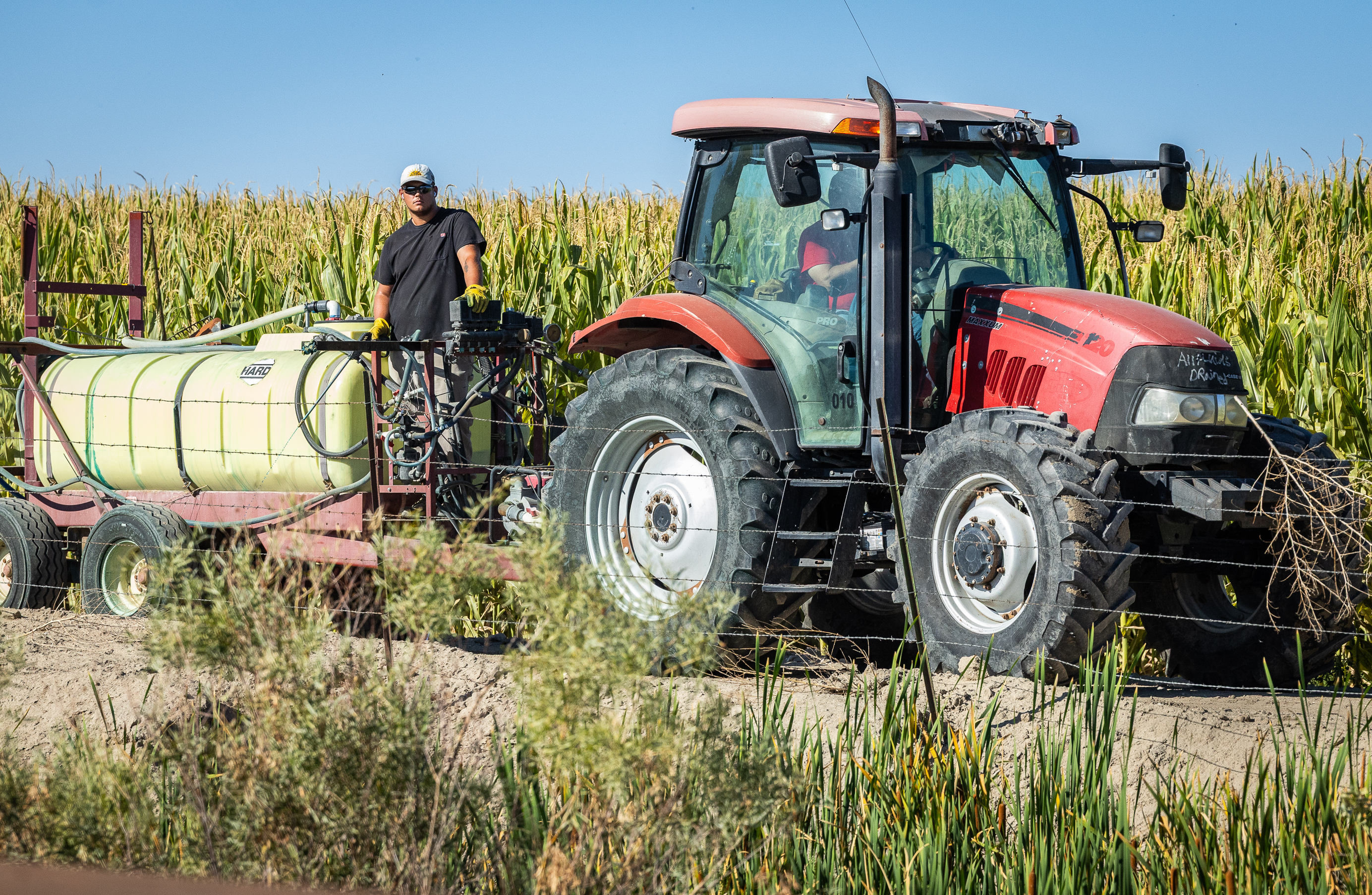 Farmers work in fields near Fallon, Nev., on Aug. 26, 2026. (John Fredricks/The Epoch Times)
Will Everyone See Lower Costs?
Fuels expert Patrick De Haan with Gas Buddy, a platform that monitors national gasoline and diesel prices, has followed developments with the dyed diesel waivers this year. He said he expects Trump’s order won’t change costs for most diesel users. Big fleets may pass on using the fuel, he said.
“Farmers already buy it tax-free for off-road use, so they don’t see much change,” De Haan said in an X post Monday. “This is really aimed at truckers, long haulers, and diesel pickup owners.”
Most states still have laws against using red dye diesel on the roadways, creating a patchwork for long-haul truckers. Many states also charge sales tax on dyed diesel instead of fuel tax, De Haan said.
 Friends Read Free
Copy
Facebook
Tweet
Friends Read Free
Copy
Facebook
Tweet