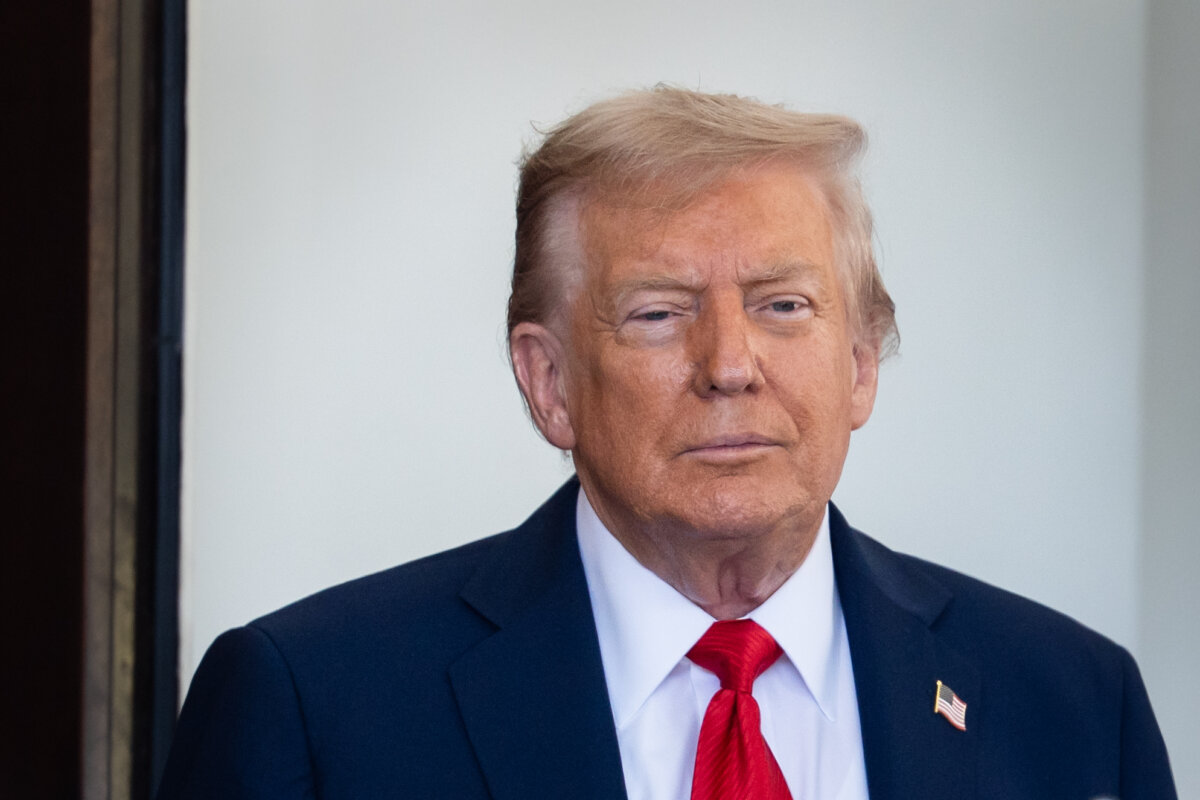

President Donald Trump said on Aug. 25 that the United States is intensifying its focus on drone warfare, calling it the most significant shift in combat since World War II.
Speaking in the Oval Office alongside South Korean President Lee Jae Myung, Trump said the Pentagon is studying “very carefully” how drones are reshaping the battlefield, pointing to the war in Ukraine as an example of how unmanned systems have become central to modern fighting.
“This is the biggest thing that’s happened in terms of warfare,” Trump said. ”There has been nothing like this since the Second World War.”
Trump said the use of drones on the battlefield has demonstrated a “whole new form of war” and hinted that the Pentagon would look to incorporate lessons from Ukraine into U.S. military planning.
“We’re actually studying it, from the standpoint of [Defense Secretary] Pete Hegseth and everybody, we’re studying it and studying it very carefully. This is a whole new form of war,” Trump said. “It’s a whole new form of fighting. It’s drone fighting. It’s a drone war.”
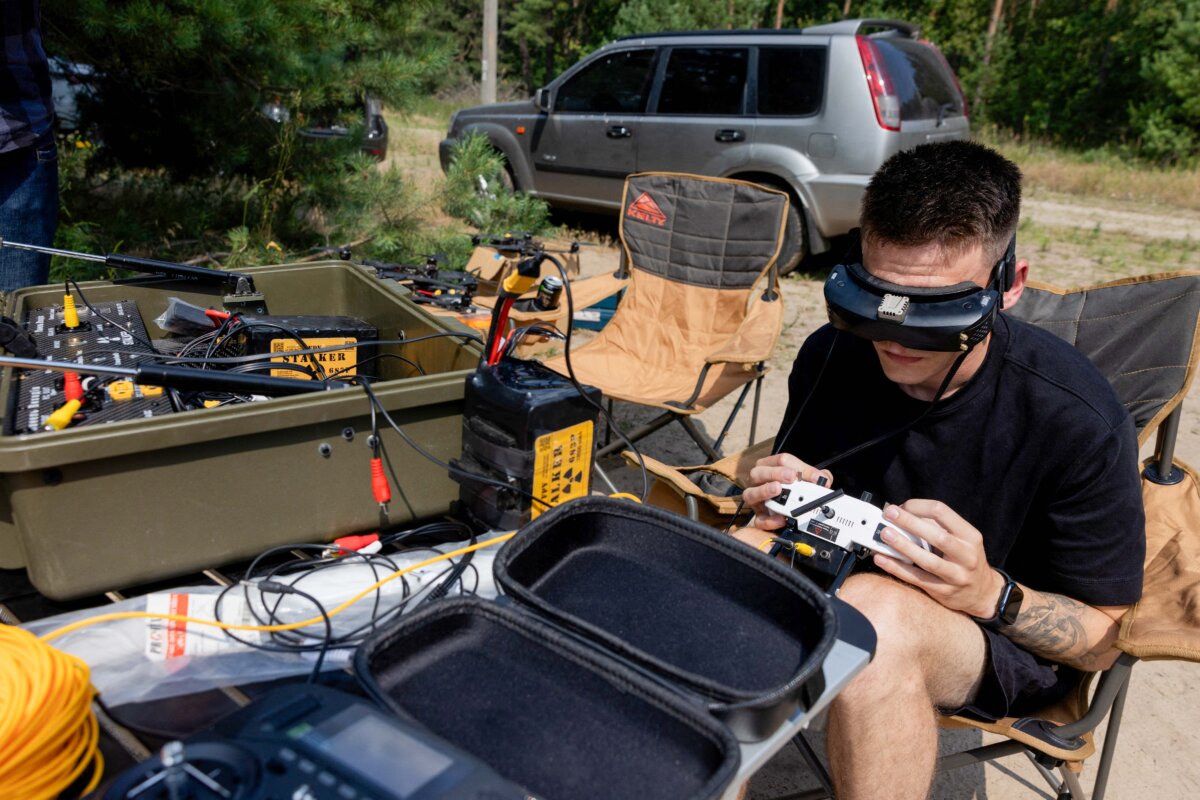
The president’s comments underscore how unmanned aerial vehicles have become a dominant factor on the modern battlefield. Examples of their use in Ukraine range from cheap quadcopters dropping grenades to long-range systems striking deep inside Russian territory.
Ukrainian units have relied heavily on swarms of small, inexpensive drones to blunt a larger Russian army, while Moscow has turned to Iranian-designed Shahed drones to strike targets in Ukraine.
Analysts say the war marks the first large-scale conflict where drones have rivaled artillery and armor in importance.
Small drones now account for 60–70 percent of damaged and destroyed Russian systems in the Ukraine conflict, far exceeding the impact of artillery, rockets, tanks, missiles, mortars, or aircraft, according to a recent report by the Royal United Services Institute (RUSI).
“And these are drones that, unlike advanced military hardware, are available to, and affordable by, everyone,” analyst David Hambling wrote in a recent paper for the Combating Terrorism Center at West Point.
David Kaye, co-founder and CEO of Airrow, a company specializing in autonomous drone infrastructure for defense, said in a LinkedIn post that drones will revolutionize the way wars are conducted.
“Bots before boots,” Kaye wrote, adding that the real future of war is autonomous unmanned intelligent systems, or A-UIs, which are drones that operate without humans nearby and can carry out around-the-clock missions “with no risk, no fatigue, and no hesitation.”
“We are on the verge of the most profound shift in warfare since mechanization, yet some are still thinking too small about drones,” he wrote.
Kaye said that treating drones as mere “tools for foot soldiers,” as if they were a rifle or a radio, “completely misses the point.”
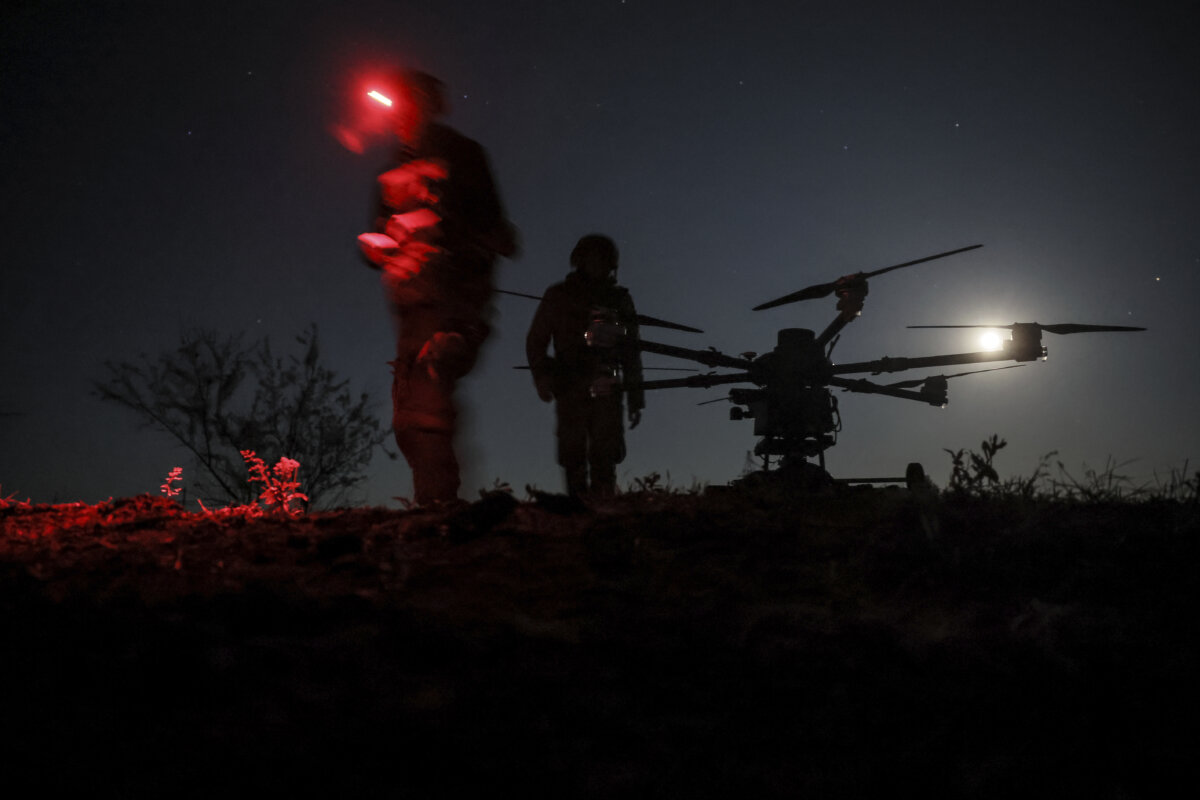
“Drones are not just an add-on to intantry—there are a replacement for entire missions that humans should no longer be doing,” he added.
Kaye said the winning side on the battlefield of the future will be the one that embraces “full-scale, robotic force projection.”
Trump has been raising the theme for months.
In May, speaking to cadets at the U.S. Military Academy at West Point, he said the Ukraine war had revealed the “terrible” devastation that drones can inflict on the battlefield, with autonomous weapons “coming down at angles and with speed and with precision.”
“We’ve never seen anything like it. And we’re learning from it,” Trump said.
The administration has moved to align U.S. defense and industry policy with those lessons. On June 6, Trump signed an executive order titled “Unleashing American Drone Dominance,” directing federal agencies to accelerate domestic drone production, ease regulatory hurdles, and prioritize U.S.-made systems in military procurement.
“Building a strong and secure domestic drone sector is vital to reducing reliance on foreign sources, strengthening critical supply chains, and ensuring that the benefits of this technology are delivered to the American people,” Trump wrote.
Push for Drone Dominance at Home
Transportation Secretary Sean Duffy followed with a proposed rule on Aug. 5 to enable routine “beyond visual line of sight” flights for commercial drones, eliminating a waiver process that industry leaders said had slowed innovation.
“We are making the future of our aviation a reality and unleashing American drone dominance,” Duffy said in an Aug. 5 statement. “From drones delivering medicine to unmanned aircraft surveying crops, this technology will fundamentally change the way we interact with the world.”
At the Pentagon, Hegseth has pledged to overhaul procurement and training policies to speed adoption of drones across the force. In a July 10 memorandum to senior leaders, he called drones “the biggest battlefield innovation in a generation, accounting for most of this year’s casualties in Ukraine.”
“Our adversaries collectively produce millions of cheap drones each year,” Hegseth wrote. “U.S. units are not outfitted with the lethal small drones the modern battlefield requires.”
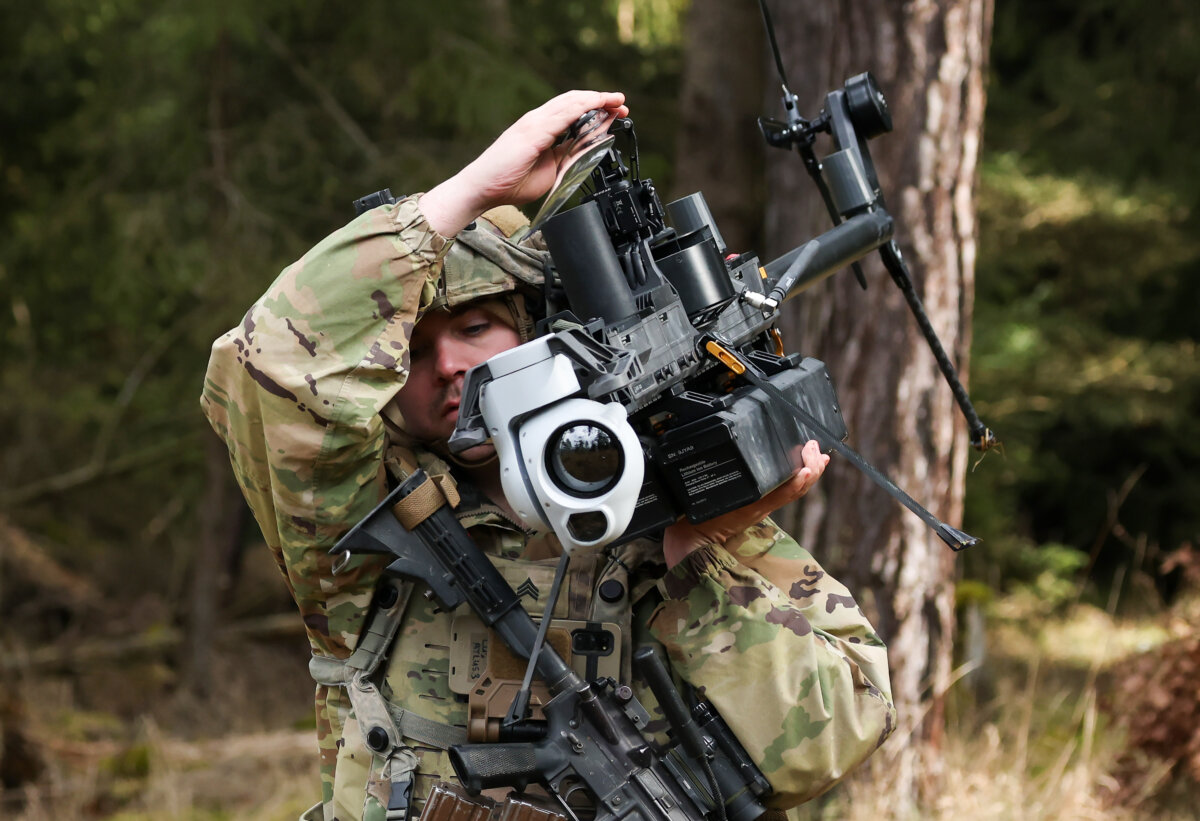
He said he was rescinding restrictive policies that hindered production and constrained access to these “vital technologies,” giving frontline commanders the ability to acquire and experiment with new systems.
“I am delegating authorities to procure and operate drones from the bureaucracy to our warfighters,” he wrote.
The Department of Defense recently showcased 18 American-made drone prototypes built with off-the-shelf components that moved from concept to development in about 18 months, much faster than the traditional six-year cycle. Officials said the prototypes demonstrated how low-cost drones could be produced at scale for combat units.
Emil Michael, undersecretary of defense for research and engineering, said the Pentagon plans to keep pushing rapid innovation and expand drone production, with cost, resilience, firepower, and range as key driving factors.
 Friends Read Free
Copy
Facebook
Tweet
Friends Read Free
Copy
Facebook
Tweet