
The Trump administration will launch Foundry School on Thursday, a national training program meant to prepare entrepreneurs, engineers, technicians, and industrial leaders for a rebuilding of U.S. manufacturing.
Vice President JD Vance is set to headline the event, according to a State Department press release. Foundry School falls under Pax Silica, the department’s multilateral effort to lock down trusted supply chains for technologies expected to shape the coming decades.
Officials say President Donald Trump’s reindustrialization push has already drawn trillions of dollars in investment to American soil. Foundry School’s focus will be to convert that capital into actual employment.
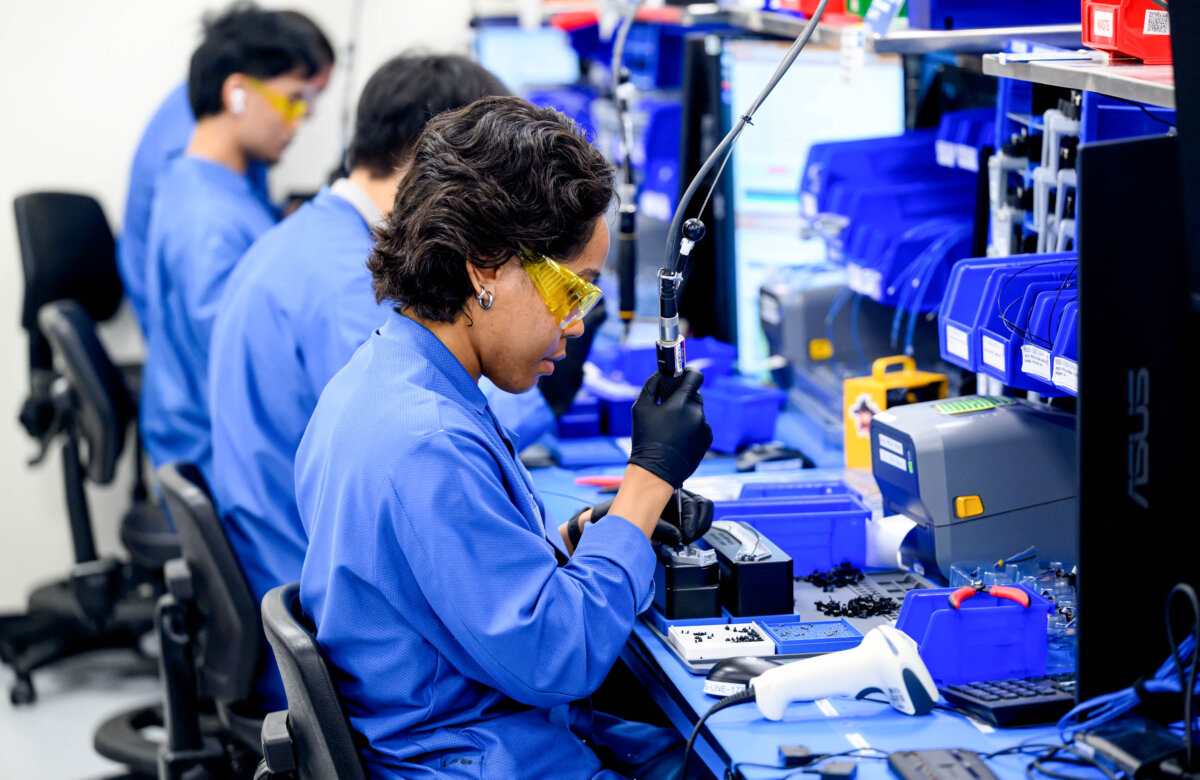
American manufacturers will need an estimated 3.8 million skilled workers by 2033 across semiconductors, defense, energy, and related fields, according to the press release. The program is designed to put American workers first by giving them the skills to bring those jobs home and build careers in sectors tied to economic security.
The launch starts at 8:20 a.m. at the Donald J. Trump Institute of Peace in Washington. Senior administration officials, university leaders, and industry executives are scheduled to speak.
Foundry School was first announced as a Pax Silica project by Under Secretary Jacob Helberg at the Pax Summit on June 25. It is structured as a workforce partnership with Stanford University, which developed the core advanced manufacturing curriculum for American students.
Keystone lectures will come from seven other universities that collaborated with Stanford. They are Arizona State University, Georgia Tech, Ohio State, Penn State, the University of Cincinnati, the University of Kansas, and Vanderbilt.
Across the eight campuses, the program will run 17 sessions. Founders and CEOs from advanced manufacturing firms will teach. Those leaders will come from the United States and from Pax Silica partner countries such as South Korea, Japan, Taiwan, and India.
The sessions are meant to cover everything required to build and run a top-tier manufacturing operation. Officials describe it as a single course aimed at making sure the American workforce shares in the industrial expansion.
“The entire Trump economic agenda is about making it easier to do business in America, to create jobs in America, to hire American workers, and to build your factories here in America, not in China, or any other country,” Trump said in April 2025.
Studies have shown a skills shortage in the United States. A 2024 Deloitte study estimated 3.8 million new manufacturing positions would open by 2033, with only about half likely to be filled without major training efforts.
The jobs of the future in the modern manufacturing sector are expected to include highly technical and specialized roles, such as in robotics, artificial intelligence, and 3D printing. Experts say that the young generation of workers lack the skills to perform these tasks.
 Friends Read Free
Copy
Facebook
Tweet
Friends Read Free
Copy
Facebook
Tweet