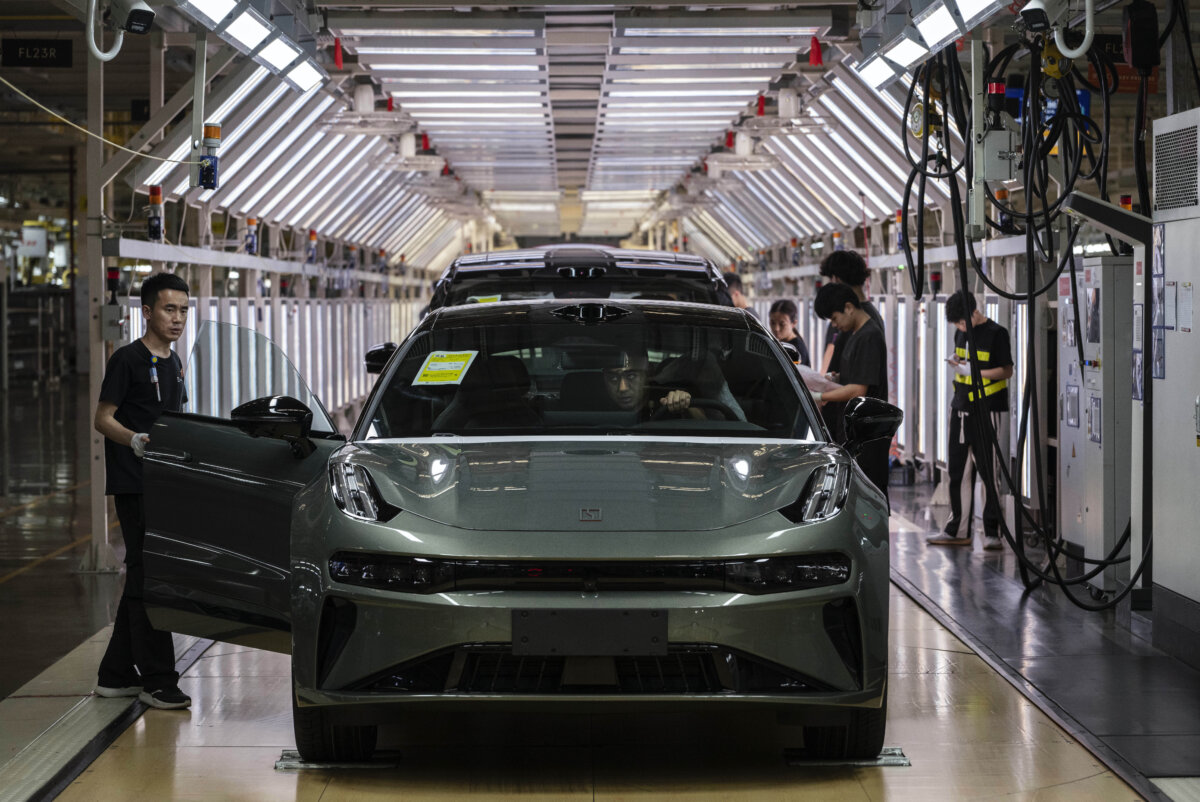

The U.S. Commerce Department won’t allow Polestar to sell vehicles in the United States beginning with its 2027 model year, in the latest restriction targeting connected vehicle technology tied to China.
Polestar, a Sweden-based electric vehicle maker majority-owned by Chinese conglomerate Geely Holding, said Thursday it would not appeal the decision. The denial falls under the Connected Vehicles Rule, which bans the import and sale of vehicles featuring certain connected technologies, including Bluetooth, Wi-Fi, cellular connectivity, and certain satellite communications, when those systems are tied to China, due to national security concerns about data collection on American vehicle owners.
The company will still sell its existing Polestar 3 and Polestar 4 models in the United States and will maintain access to its service network for current owners. No new Polestar vehicles will be authorized for sale from the 2027 model year onward.
Only 6 percent of Polestar’s first-quarter sales came from the United States, in comparison with 78 percent from Europe. Shares of the company declined 6.3 percent on the Nasdaq in the announcement’s wake.
“The automotive industry is entering a new phase, based on regional dynamics. Our strategy reflects that, with Europe being our largest growth engine and our plan to manufacture Polestar 7 in Europe,” Polestar CEO Michael Lohscheller said in a statement.
The decision sparks fresh questions about the future of the Polestar 3, the brand’s only current model with U.S. assembly. Volvo Cars, Polestar’s sister brand also owned by Geely, produces the Polestar 3 at its South Carolina plant. Volvo has noted it is consolidating Polestar 3 production there instead of also building the model in China, though a Volvo spokesperson said Thursday that Chinese production has not yet been stopped, and it is too early to determine whether the authorization denial will shift those plans.
The Connected Vehicles Rule was adopted in January 2025 and has continued to exist under the current administration. It represents part of a broader U.S. effort to address threats from vehicles with software or hardware linked to China or Russia.
Prior policy developments have underscored concerns that such linked systems could empower foreign access to sensitive driver data or create potential vulnerabilities in critical transportation infrastructure. Bipartisan legislation has been put forward in Congress to further tighten or codify restrictions on vehicles tied to adversarial nations, including measures that would lengthen examination of components and vehicles coming into the U.S. market through third countries.
“Vehicles today can collect and transmit massive amounts of data—geolocation of drivers, mapping of critical infrastructure, full-motion video, and more,” a document explaining the legislation reads. “These ‘connected vehicles’ are roving data collectors—sweeping up information that would threaten our national security if it were to fall into the hands of our adversaries.”
 Friends Read Free
Copy
Facebook
Tweet
Friends Read Free
Copy
Facebook
Tweet