

U.S. consumer inflation expectations rose for the third consecutive month in September, reaching the highest level in five months, new data from the Federal Reserve Bank of New York show.
Last month’s median inflation expectations for the year ahead rose to 3.4 percent from 3.2 percent, according to the New York Fed’s latest Survey of Consumer Expectations, released on Oct. 7. The jump was driven primarily by those with household incomes of less than $50,000 and at most a high school education.
The three-year forecast remained unchanged at 3 percent, while the five-year outlook increased to 3 percent from 2.9 percent.
Median year-ahead commodity price change expectations rose for rent, gas, and food, while the projections for college education costs declined.
“The reading for expected food price growth is the highest since March 2023,” the regional central bank stated.
The U.S. government shutdown is now in its first week, and it is unclear whether the Bureau of Labor Statistics will release the September consumer price index (CPI) report, which is scheduled for publication on Oct. 15.
With Republicans and Democrats still hashing out their differences, financial markets and policymakers have already missed key pieces of economic data, including the September jobs report, weekly jobless claims, and trade figures.
Even if Washington reopens its doors, the quality of upcoming data could be affected, according to Mark Hamrick, senior economic analyst at Bankrate.
“If the shutdown continues, data collection for the October jobs report (survey week around Oct. 12) is at risk. Mid-month inflation reports, critical to assessing the Fed’s path, may also be disrupted. That compounds the uncertainty,” Hamrick said in a statement to The Epoch Times.
Heading into the September CPI report, the Cleveland Fed’s Inflation Nowcasting model indicates that the annual inflation rate would rise to 3 percent from 2.9 percent. On a monthly basis, the CPI is expected to surge by 0.4 percent.
Labor Markets and Household Finances
Consumers anticipate spending and earning less over the next 12 months, according to the New York Fed’s numbers.
Median one-year-ahead earnings growth expectations dipped by 0.1 percent to 2.4 percent, the lowest reading in more than four years.
Household incomes are forecast to be unchanged at 2.9 percent in the year ahead, while spending growth projections fell by 0.3 percentage points, to 4.7 percent. Both readings trailed the 12-month average.
Despite consternation surrounding spending, Bank of America Institute data suggest that total credit and debit card spending per household rose by 1.7 percent year-over-year in August.
Comparable figures have indicated that consumers continue to open their wallets, although their sentiment surrounding current economic conditions has deteriorated.
The University of Michigan’s September consumer sentiment index weakened to a four-month low.
A new trend has been forming in recent months: a divergence in who is spending.
Using data from the Fed’s Financial Accounts and the Survey of Consumer Finances, Mark Zandi, chief economist at Moody’s Analytics, found that high-income households have been powering an economy that is two-thirds consumption-driven.
“The U.S. economy is being largely powered by the well-to-do,” Zandi said in a Sept. 16 X post. “As long as they keep spending, the economy should avoid recession; but if they turn more cautious, for whatever reason, the economy has a big problem.”
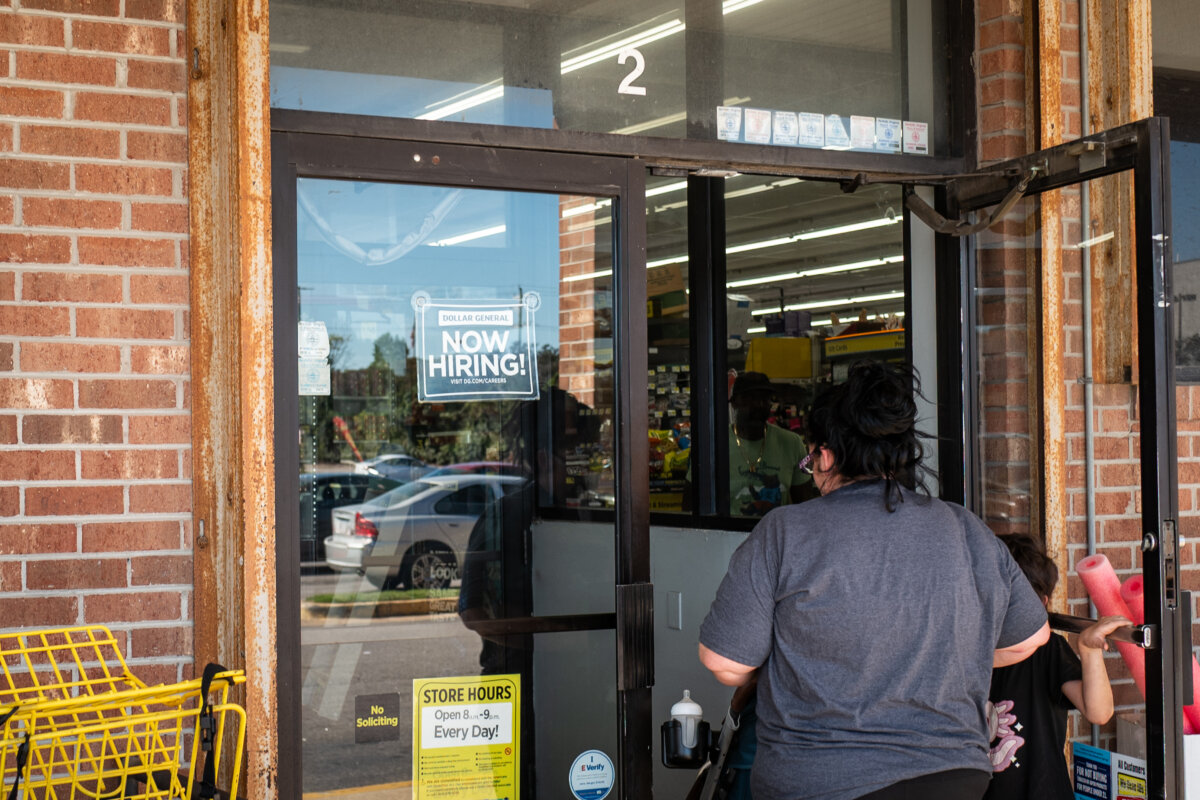
Still, household balance sheets remain in solid shape, according to Bank of America economists.
“Given the slower labor market and other cost pressures, how are people, regardless of generation, faring financially? We believe they are in fairly good shape,” they said in a report.
“For now, the recent slowdown in the labor market is not obviously being reflected in households’ overall finances.”
Individuals, meanwhile, also anticipate further weakening of employment conditions.
The mean probability that the U.S. unemployment rate will be higher a year from now rose by 2 percentage points, to 41.1 percent. The chances of losing a job in the next 12 months also climbed by 0.4 percentage points, to 14.9 percent, and the odds of leaving a job voluntarily increased by 1.8 percentage points, to 20.7 percent.
Over the past several months, the data have supported the common market refrain of a “low fire, low hire” economic landscape.
Torsten Slok, chief economist at Apollo Wealth Management, said that the hiring rate “is currently at recessionary levels” and that the quits rate also remains low.
“Combined with a declining number of job openings, rising unemployment, and slower job growth, the bottom line is that the labor market is at a standstill, where workers are not getting hired or voluntarily changing jobs,” Slok said in a note emailed to The Epoch Times.
 Friends Read Free
Copy
Facebook
Tweet
Friends Read Free
Copy
Facebook
Tweet