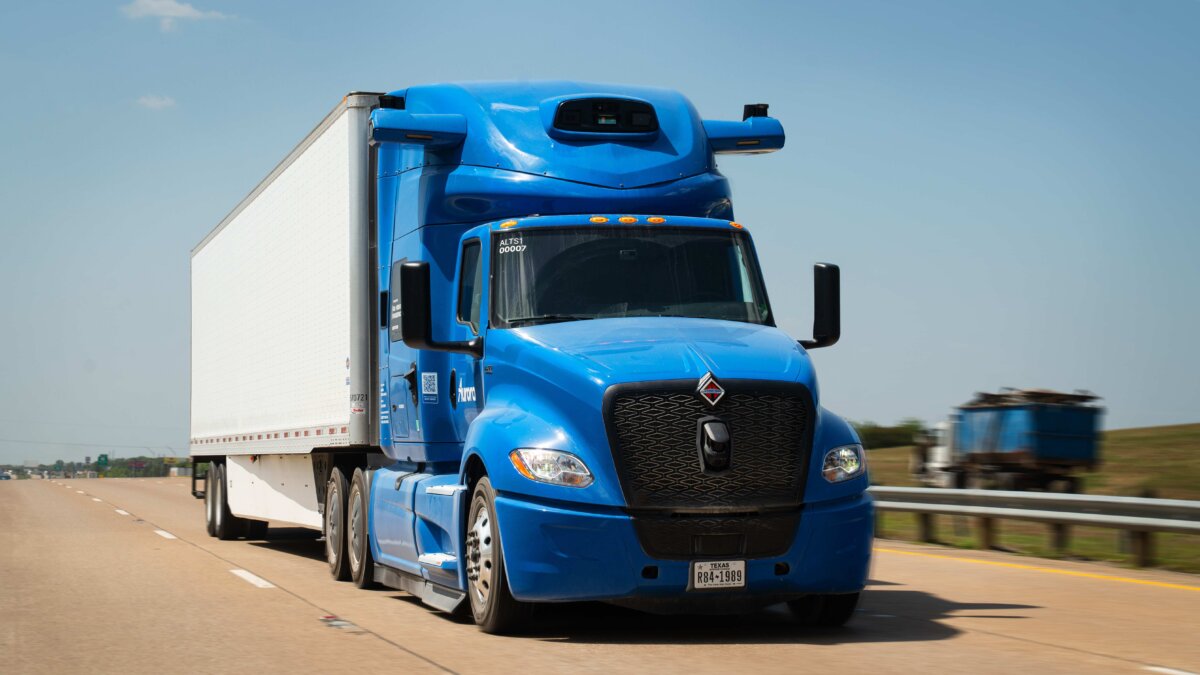

Federal regulators have approved a five-year exemption for self-driving trucking companies from rules that require drivers to place warning devices around a stopped truck.
The Department of Transportation said Wednesday it has agreed to allow autonomous trucking companies to use warning beacons mounted on the truck cab to avoid needing human drivers. The decision removes a hurdle for companies seeking to expand commercial driverless operations in the United States.
Companies must notify the Federal Motor Carrier Safety Administration (FMCSA) beforehand if they want to operate under the exemption. They must also report any crashes involving a vehicle while the cab-mounted warning beacons are activated or should have been activated.
Alphabet’s self-driving unit Waymo and Aurora jointly sought a waiver of the rule in 2023.
Pennsylvania-based Aurora sued FMCSA in early 2025 over the decision not to approve the waiver during the Biden administration. The company said in October 2025 that it was filing to dismiss the lawsuit after the department issued a three-month waiver. That waiver was extended several times.
Aurora filed a new application in April, seeking a five-year exemption to allow trucks to use beacons instead of roadside warnings.
The company, which has around 20 self-driving trucks in on-road operations, told Reuters that warning beacons enhance roadside safety without putting a person in harm’s way.
In May last year, it said it was launching a commercial self-driving truck service in Texas, hauling between Dallas and Houston. The company said it planned to expand that service to El Paso, Texas, and Phoenix by the end of 2025, adding it had briefed officials before the driverless launch.
Aurora said in its July 2026 shareholder letter filed with the SEC that it is targeting 200 driverless trucks in operation by year-end.
The International Brotherhood of Teamsters, one of the largest labor unions in the United States, said last year that its representatives testified at the Nevada Capitol in Carson City, asking lawmakers to support legislation requiring all commercial vehicles weighing more than 26,000 pounds to have a trained human safety operator behind the wheel.
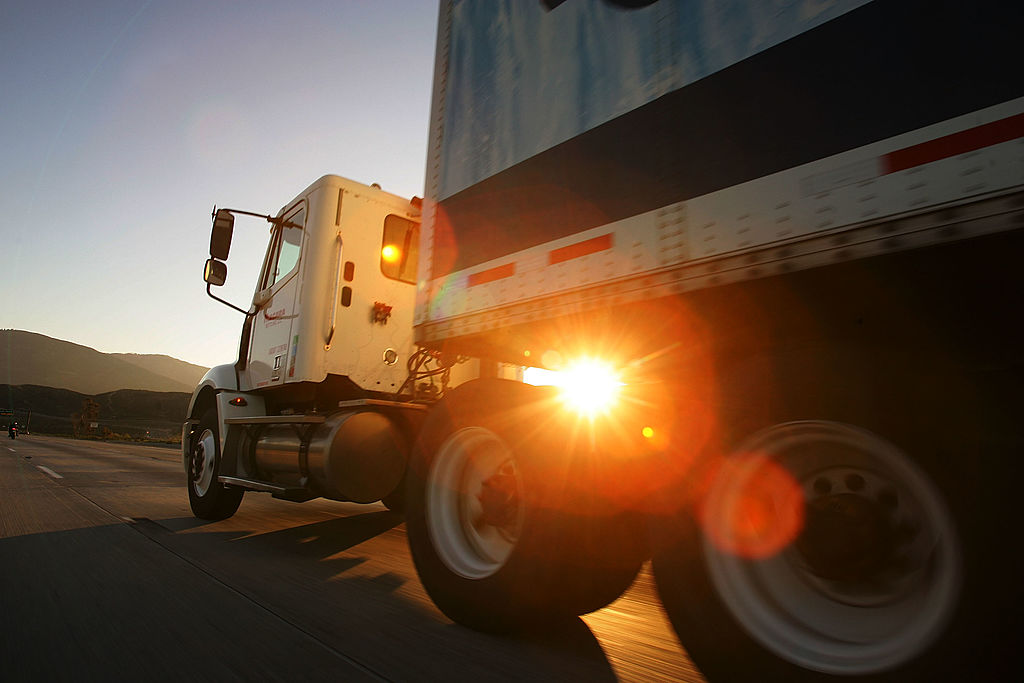 A truck on the I-210 freeway near Fontana, Calif., on March 4, 2008. (David McNew/Getty Images)
The legislation, SB 395, passed the Nevada Senate but failed to advance in the state’s assembly.
The Epoch Times reached out to Aurora for comment but did not receive a response by the time of publication.
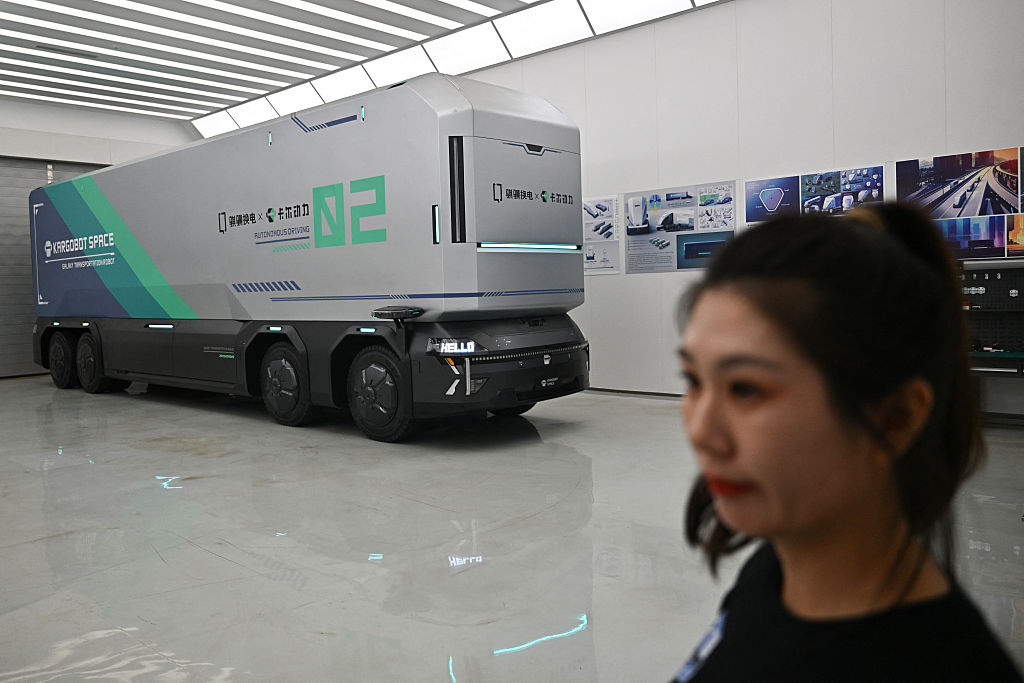 A prototype of an autonomous truck by KargoBot in Ordos, Inner Mongolia, China, on August 13, 2025. (Pedro Pardo/AFP via Getty Images)
‘Race With China’
The Department of Transportation unveiled a framework for automated vehicles that same month. It said the framework would prioritize safety, unleash innovation by removing regulatory barriers, and enable commercial deployment of automated vehicles.
“This Administration understands that we’re in a race with China to out-innovate, and the stakes couldn’t be higher,” Transportation Secretary Sean P. Duffy said at the time. “As part of DOT’s innovation agenda, our new framework will slash red tape and move us closer to a single national standard that spurs innovation and prioritizes safety.”
Reuters and Naveen Athrappully contributed to this report.
 Friends Read Free
Copy
Facebook
Tweet
Friends Read Free
Copy
Facebook
Tweet