
The U.S. Department of State has updated travel advisories for four African countries—Mali, Congo, Rwanda, and Uganda—highlighting issues such as crime, infections, and local unrest.
Do not travel to Mali for any reason due to crime, terrorism, kidnapping, unrest, and health concerns, the State Department said in a June 8 update.
“The threat of kidnapping of U.S. citizens and other foreign nationals by criminal or terrorist groups remains high throughout the region. Extortion and kidnapping for ransom are significant sources of financing for terrorist and criminal groups,” the advisory reads.
Violent crime is “common” throughout Mali, including assault, home invasion, and armed robbery, according to the advisory. There is a risk of terrorist violence, with foreigners getting kidnapped for ransom. Terrorists may strike at spots frequented by foreigners, nightclubs, places of worship, restaurants, and hotels.
Armed conflict between armed groups and the government is “common,” the advisory said. Conflicts between the armed groups also typically result in civilian casualties.
On April 25, two armed groups—ethnic Tuareg rebels of the Azawad Liberation Front and members of the al Qaeda-linked Jama’at Nusrat al-Islam wal-Muslimin—coordinated a wave of attacks throughout the country, leading to several hours of fighting against Mali’s military government. At the time, the U.S. Embassy in Mali had to issue a security alert advising Americans to shelter in place.
The department also warned U.S. citizens to stay away from street demonstrations happening in the country.
Like Mali, Congo also has a “Level 4: Do Not Travel” designation. In a June 4 advisory update, the State Department warned about crime, terrorism, kidnapping, unrest, and health risks in the country.
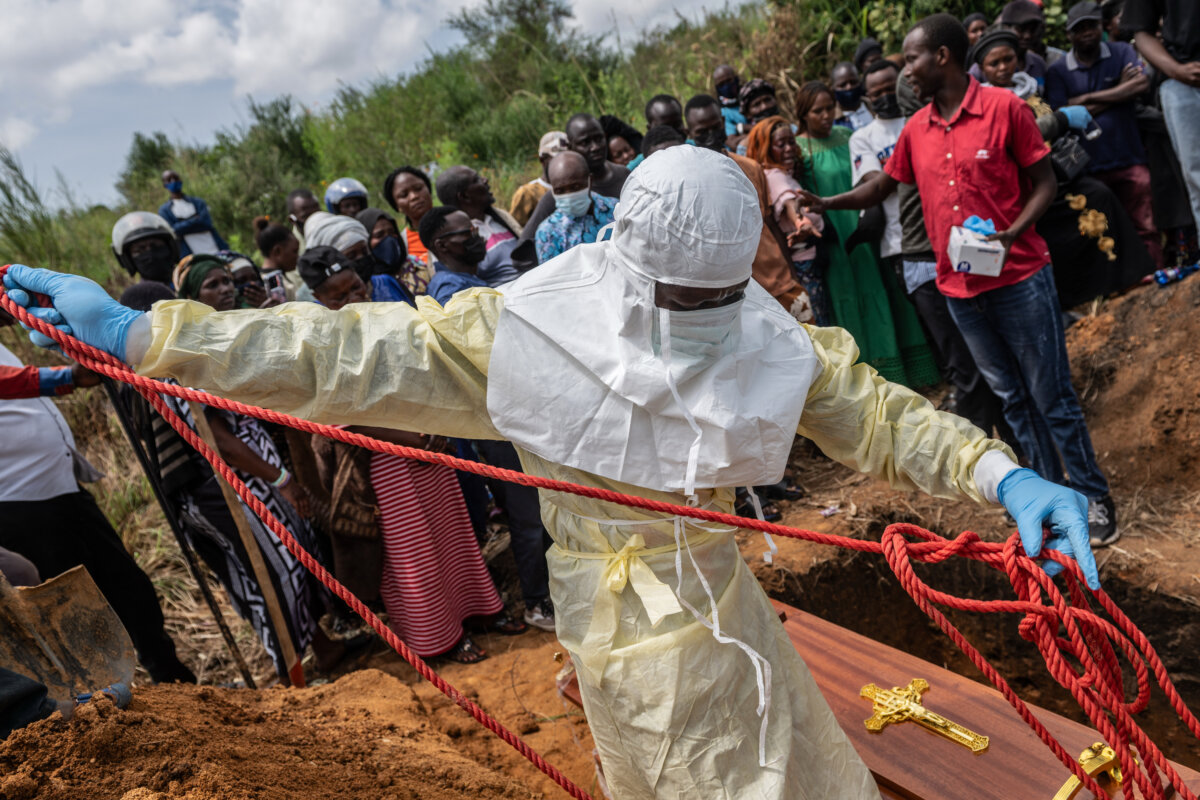
In May, the World Health Organization (WHO) declared the Ebola outbreak in Congo a Public Health Emergency of International Concern. The U.S. Centers for Disease Control and Prevention has issued a Travel Health Notice for Congo, citing Ebola.
“The local health infrastructure is inadequate. Health services, hygiene, and quality control do not meet U.S. standards of care. Pharmacies are not well regulated. Locally available medications may be unsafe,” the advisory reads.
“The U.S. government has limited ability to provide emergency consular services to U.S. citizens in the Democratic Republic of the Congo (DRC) due to the health situation.”
In a June 8 Ebola situation report, Congo’s National Institute of Public Health said that there have been 550 confirmed cases and 101 deaths as of June 7. Only 19 individuals have so far recovered after being infected.
Ituri Province is the center of the outbreak, accounting for 518 confirmed cases. Armed groups in the province are restricting humanitarian access in the region, the report said.
As for the crime situation in Congo, the advisory warned about the risks of assault, home invasion, and armed robbery. Criminals may pose as security agents or police, the department said.
“Local police do not always inform the U.S. embassy when they arrest a U.S. citizen. They may also delay access to detained U.S. citizens or use violence and threats during interrogations,” the State Department said.
Armed fighting and terrorist violence plague several regions, including in Ituri, where terror outfits and armed groups have targeted civilian sites.
Rwanda and Uganda
The State Department has designated Rwanda a “Level 3-Reconsider Travel” due to crime, unrest, and health risks.
“Do not travel within 10 kilometers [about 6 miles] of Rwanda’s border with the Democratic Republic of the Congo due to unrest,” the June 4 advisory reads.
“The U.S. government has limited ability to provide emergency consular services to U.S. citizens in Rwanda due to the Health situation.”
Rwanda and Uganda share borders with Congo.
As for Uganda, the country has a “Level 4: Do Not Travel” designation. In a June 4 update, the State Department advisory cited health, crime, unrest, and terrorism risks in the country.
U.S. government employees face travel restrictions due to the Ebola outbreak in the country. Uganda has closed border crossings with Congo. Any individual entering Uganda from Congo is required to self-quarantine for 21 days under the country’s health ministry.
In its June 8 update, the World Health Organization (WHO) said that a total of 19 confirmed cases of Ebola have been reported from Uganda as of June 6, which included two deaths. Five people have recovered. Roughly 70 percent of the cases were identified among Congolese nationals who arrived in Uganda for medical care.
The country has faced terrorist attacks, with such groups targeting schools, religious venues, government buildings, areas visited by tourists, transportation hubs, and police stations, according to the advisory.
“These attacks have resulted in the deaths of Ugandans as well as foreign visitors. U.S. citizens should remain alert and avoid large public gatherings,” the State Department said.
The department warned that protests might erupt with little to no warning over issues such as politics and that security services would respond with force.
According to the WHO’s June 8 update, the ongoing Ebola outbreak is currently limited to Congo and Uganda.
Meanwhile, an American doctor, who is the only confirmed U.S. citizen to have contracted Ebola in the ongoing outbreak in Africa, was recently released from the hospital after testing negative for the virus. The individual had tested positive for the infection while in Congo.
The person was flown to Germany for treatment and was released after Ebola symptoms subsided.
 Friends Read Free
Copy
Facebook
Tweet
Friends Read Free
Copy
Facebook
Tweet