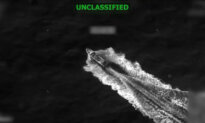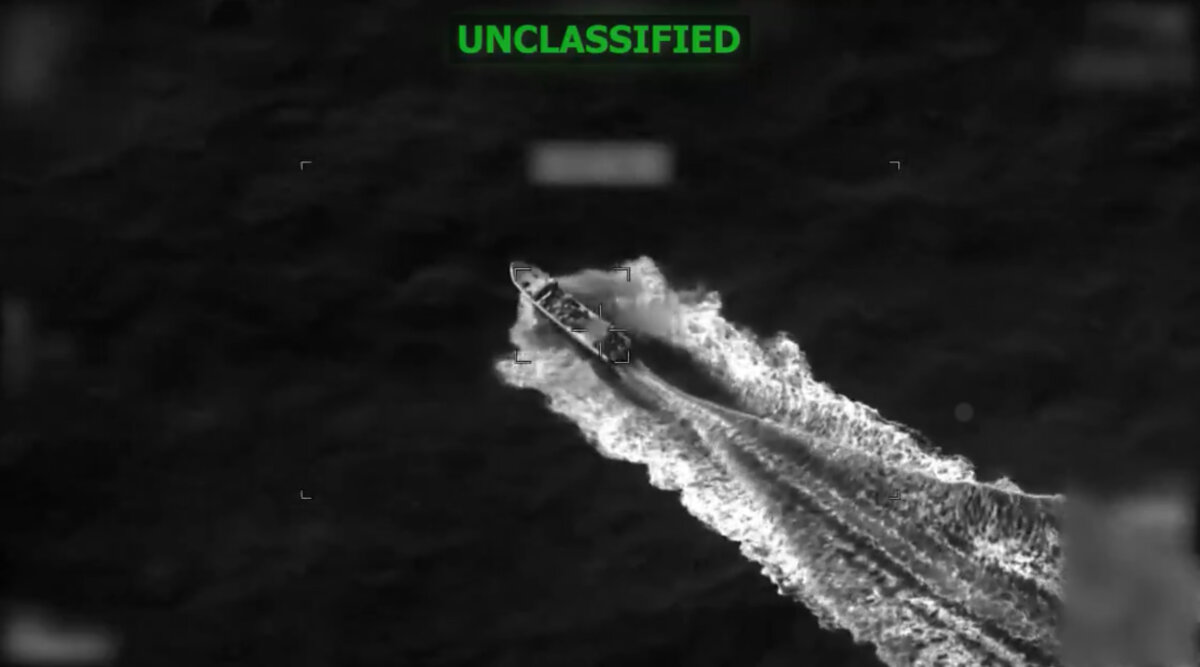

The U.S. military on May 4 struck a narco-trafficking vessel in the Caribbean, killing two, according to a statement released by U.S. Southern Command.
The strike, described as a “lethal kinetic” action, was carried out under the direction of Gen. Francis L. Donovan, commander of Southern Command, and executed by Joint Task Force Southern Spear.
Officials said intelligence confirmed the vessel was operating along known narcotics trafficking routes and was actively engaged in illicit activity.
“Two male narco-terrorists were killed during this action. No U.S. military forces were harmed,” a May 4 statement by Southern Command said.
The operation reflects a broader escalation in efforts tied to Joint Task Force Southern Spear, an initiative aimed at disrupting narcotics trafficking and related financial networks across the Western Hemisphere.
It follows several similar actions in the past month targeting drug-smuggling vessels across the Caribbean and Eastern Pacific.
In an April 25 statement, U.S. Southern Command said the task force had “significantly disrupted illicit maritime activity,” noting multiple interdictions of vessels linked to sanctioned oil transport and other illegal operations.
Donovan said in the April statement that maritime interdictions target what he described as a “dark fleet” enabling U.S. adversaries.
Officials did not disclose the precise location of the May 4 strike or identify the individuals killed, but they said the vessel was operated by a designated terrorist organization involved in narcotics trafficking.
Southern Spear
Southern Spear draws on a combination of military and interagency resources, including the U.S. Coast Guard’s Maritime Security Response Team and specialized Marine Corps units.
These forces are trained to conduct boarding operations and secure vessels suspected of illicit activity.
According to the April 25 statement, the task force has conducted multiple successful seizures targeting vessels named Skipper, Centuries, Sophia, Olina, and Veronica, which officials said were tied to illicit financing networks.
The operations are supported by larger naval assets, including the Iwo Jima Amphibious Ready Group and the 22nd Marine Expeditionary Unit, providing logistical and tactical support.
The military actions are rooted in a policy shift that began with a Jan. 20, 2025, executive order signed by President Donald Trump directing federal agencies to designate several Latin American drug cartels as terrorist organizations.
The campaign has drawn scrutiny from legal experts and human rights organizations, which have questioned both its legality and humanitarian implications.
Human Rights Watch (HRW) criticized the operations in a March 31 statement, calling on the U.S. government to halt the campaign.
Last month, 125 organizations, including HRW and Campaign Against Arms Trade, issued an open call urging all countries to end support for what they described as “U.S. extrajudicial killings in the Caribbean Sea and Pacific Ocean.”
“All States must immediately cease or refrain from providing any assistance that could contribute to these unlawful killings,” the April 23 statement said.
 Friends Read Free
Copy
Facebook
Tweet
Friends Read Free
Copy
Facebook
Tweet