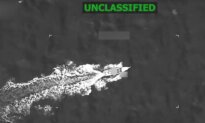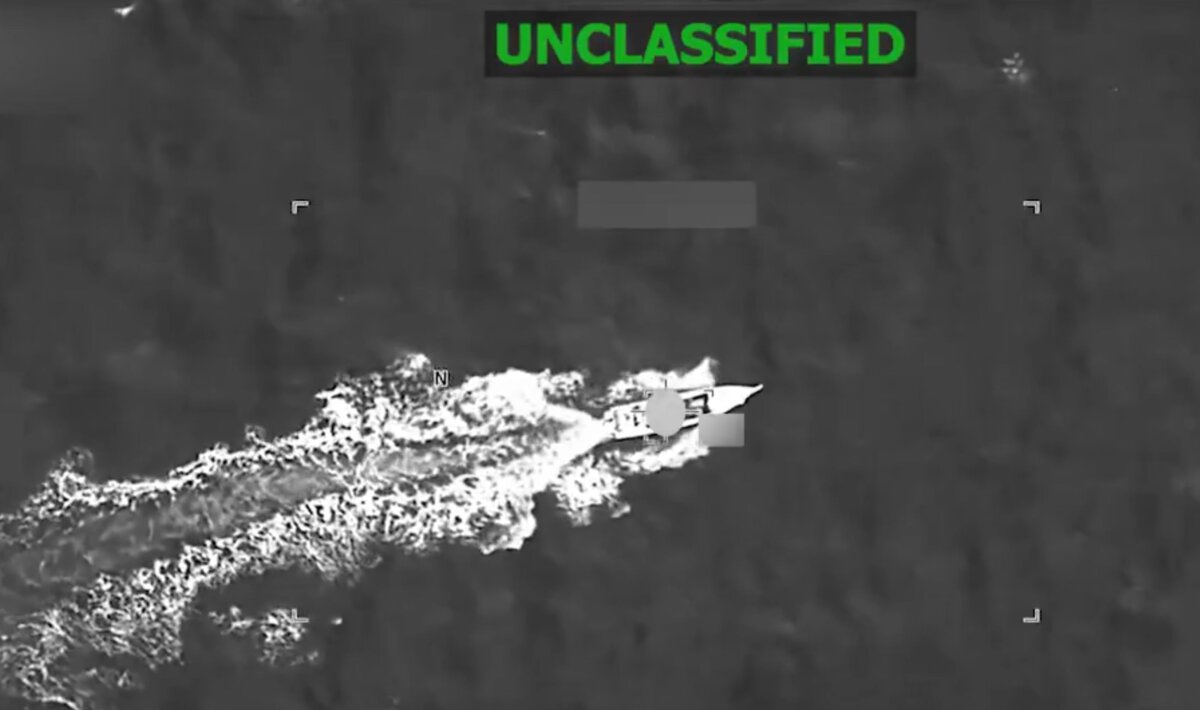

The U.S. military said it carried out a strike on a vessel in the Caribbean on April 19, killing three people it identified as drug traffickers and marking the latest in a string of operations targeting maritime narcotics routes.
In an April 19 post on X, U.S. Southern Command said the vessel was operated by designated terrorist organizations and was moving along known trafficking routes.
The U.S. military said the strike killed “three male narco-terrorists” and no U.S. personnel were harmed in the operation.
The April 19 strike follows several similar actions in recent days as part of a broader campaign under the Trump administration targeting suspected drug-smuggling vessels across the Caribbean and Eastern Pacific.
In an April 16 statement, Southern Command said it conducted a separate strike on April 15 in the Eastern Pacific.
“Intelligence confirmed the vessel was transiting along known narco-trafficking routes in the Eastern Pacific and was engaged in narco-trafficking operations,” the command said.
That operation resulted in the deaths of three individuals described as “narco-terrorists.”
Earlier, in an April 14 post, Southern Command reported another strike in the Eastern Pacific that killed four individuals it identified as traffickers.
The command also confirmed that, in two strikes announced on April 13, it destroyed two suspected drug-smuggling vessels, killing five individuals.
One person survived an initial strike, and Southern Command said it “immediately notified U.S. Coast Guard to activate the Search and Rescue system for the survivor.”
Since September 2025, U.S. forces have carried out dozens of such operations across key maritime transit zones used for drug trafficking.
The command has described its approach as applying “total systemic friction on the cartels,” a phrase used in its April 13 statement to characterize efforts to disrupt illicit networks.
The operations are rooted in a policy shift that began with a Jan. 20, 2025, executive order signed by President Donald Trump, directing federal agencies to designate several Latin American narcotics cartels as terrorist organizations.
In an October 2025 memo, the White House said the United States is engaged in a “non-international armed conflict” with such groups, asserting that they “conduct ongoing attacks throughout the Western Hemisphere as organized cartels.”
The campaign has drawn scrutiny from legal experts and human rights organizations, which have questioned both its legality and humanitarian implications.
Human Rights Watch criticized the operations in a March 31 statement.
Sarah Yager, the group’s Washington director, said the strikes “aren’t one-off incidents, they’re part of a pattern of using military force where the law does not permit it, over and over again.”
The organization urged the U.S. government to halt the campaign, stating that it “should immediately end this campaign of lethal strikes,” and called on Congress to pursue “independent investigations and accountability” if the administration does not act.
 Friends Read Free
Copy
Facebook
Tweet
Friends Read Free
Copy
Facebook
Tweet