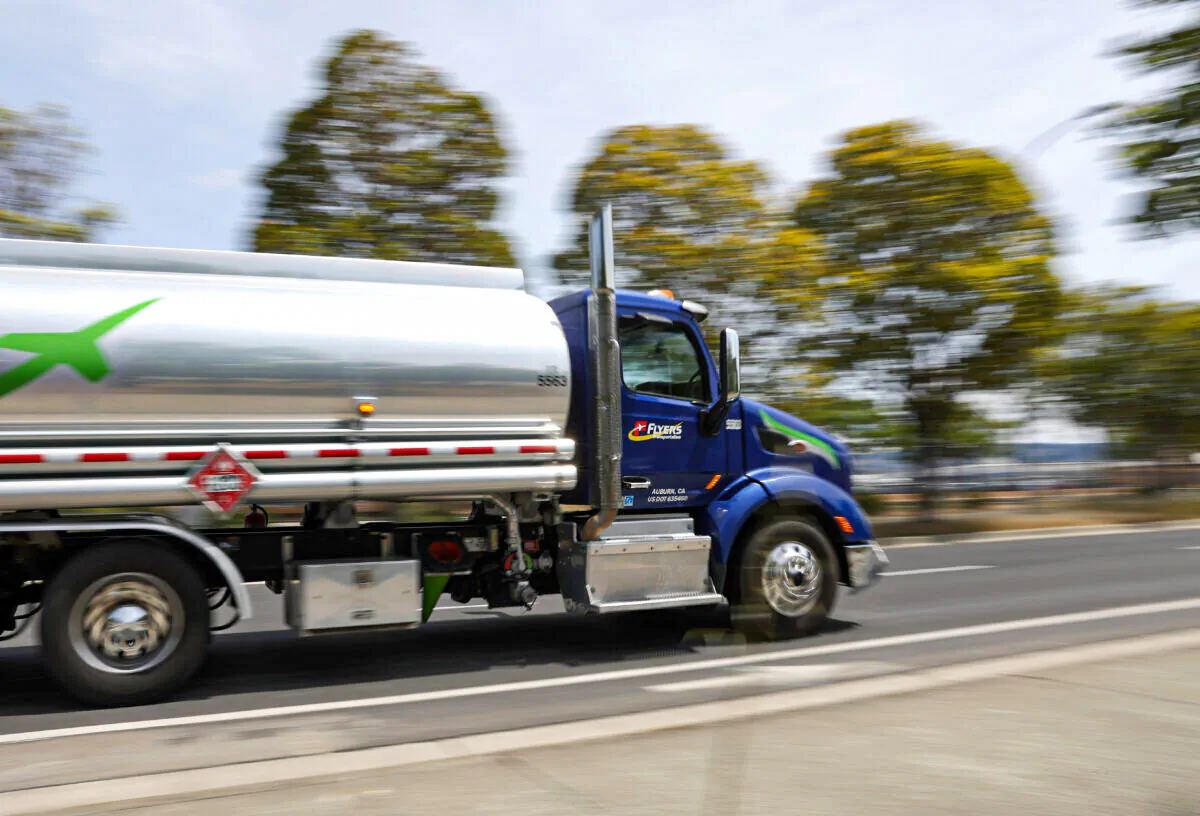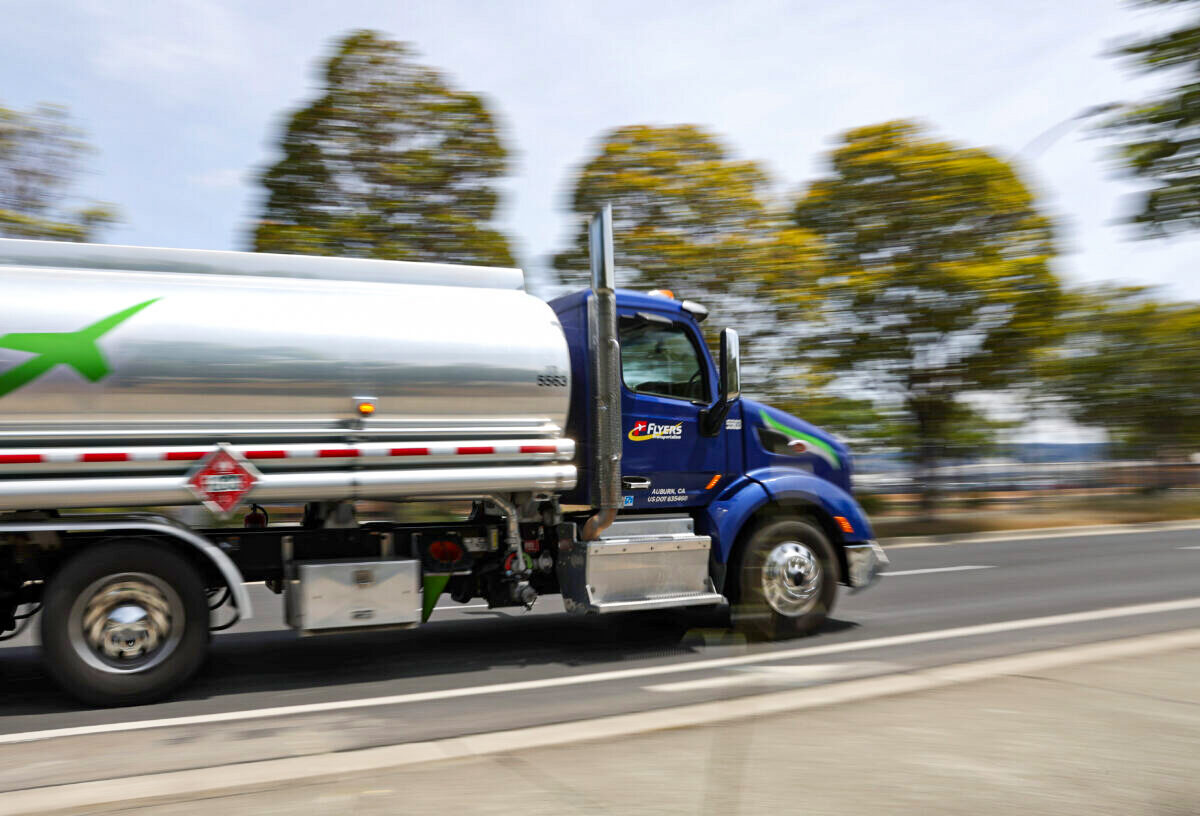

The federal government is temporarily easing limits on how many hours American fuel truck drivers can drive, citing supply and cost concerns.
The 90-day waiver, effective Sept. 16, allows drivers to operate up to 16 hours within a 24-hour window, instead of 14 under existing rules, as long as they take required rest breaks.
U.S. Transportation Secretary Sean Duffy said on Wednesday that the Federal Motor Carrier Safety Administration (FMCSA) “will temporarily add flexibility to its hours of service (HOS) rules for truck drivers handling gasoline and diesel shipments.”
The department said the move was taken to prevent short-term supply chain disruptions delaying gasoline and diesel deliveries, which can have a knock-on effect on freight shipments, adding that this would help protect against shortages, keep pump prices low, and ease strains on U.S. agricultural producers.
Under the waiver, a driver needing immediate rest must still be allowed 10 consecutive hours off-duty before resuming work, the FMCSA said.
Duffy said the administration “is constantly taking action to lower fuel prices,” and as a result of the move, “American truckers will continue to haul the products that power America and keep our economy moving.”
Similar orders have previously been issued to tackle natural disasters or emergencies such as wildfires, hurricanes, or winter storms.
In March 2020, a national emergency order waived service requirements for commercial vehicle drivers transporting emergency coronavirus relief, including emergency food restocks, supplies, and equipment.
The Epoch Times contacted the International Brotherhood of Teamsters, the union representing American truckers, for comment but did not receive a response by publication time.
The National Transportation Safety Board previously warned that exemptions from federal hours-of-service rules can create fatigue risks. That warning followed a fatal 2021 multi-vehicle crash involving a driver operating under an agricultural exemption.
“Drivers operating under an hours-of-service exemption are at a greater risk of fatigue: an unacceptable — and avoidable — danger to every road user,” NTSB Chair Jennifer Homendy said in March 2023.
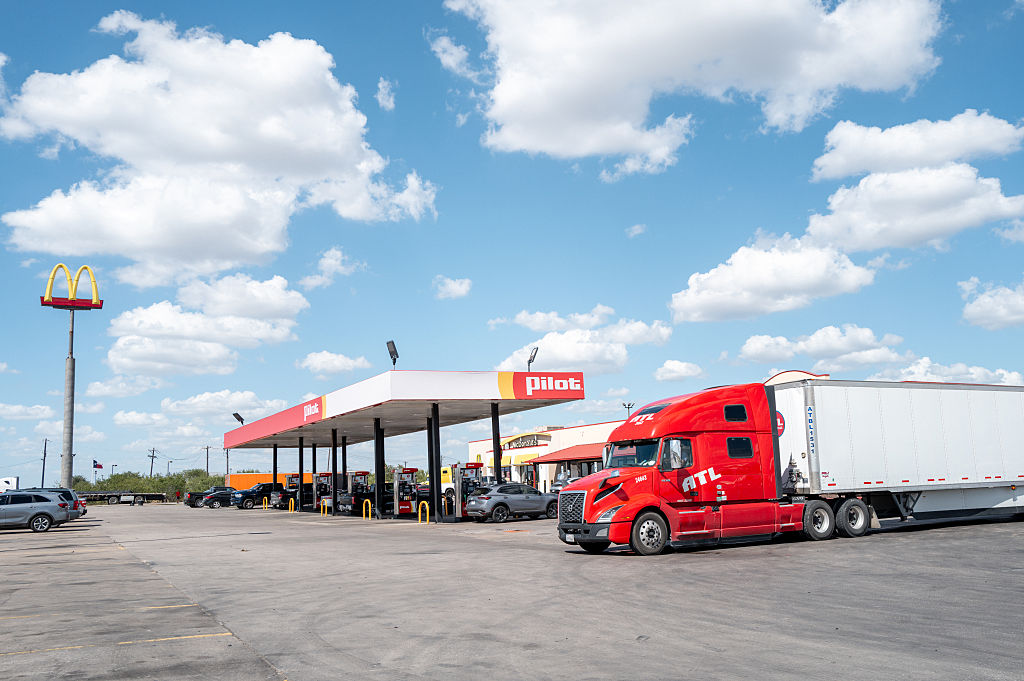 A semi-truck at a Pilot gas station in Buda, Texas, on Sept.14, 2026. (Brandon Bell/Getty Images)
Diesel has risen by more than 95 cents over the past month and is nearly $2.69 higher than a year ago, when diesel averaged $3.70 per gallon.
Diesel powers much of the country’s trucking, freight, farming, and delivery networks, and higher fuel prices raise the cost of transporting everyday goods. High diesel prices were a big factor in August’s 0.4 percentage point jump in U.S. wholesale inflation, which rose to an annualized 5.4 percent.
Trump has asked Ukraine to halt its attacks on Russian oil refineries, saying the attacks are exacerbating the global fuel shortage caused by Iranian threats against maritime traffic in the Strait of Hormuz.
Gasoline has also risen in price, though far less dramatically than diesel, with the average cost of a gallon of gas sitting at just under $4.44 on Sept. 17, up from $4.06 last month and $3.20 a year ago.
 Friends Read Free
Copy
Facebook
Tweet
Friends Read Free
Copy
Facebook
Tweet