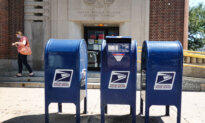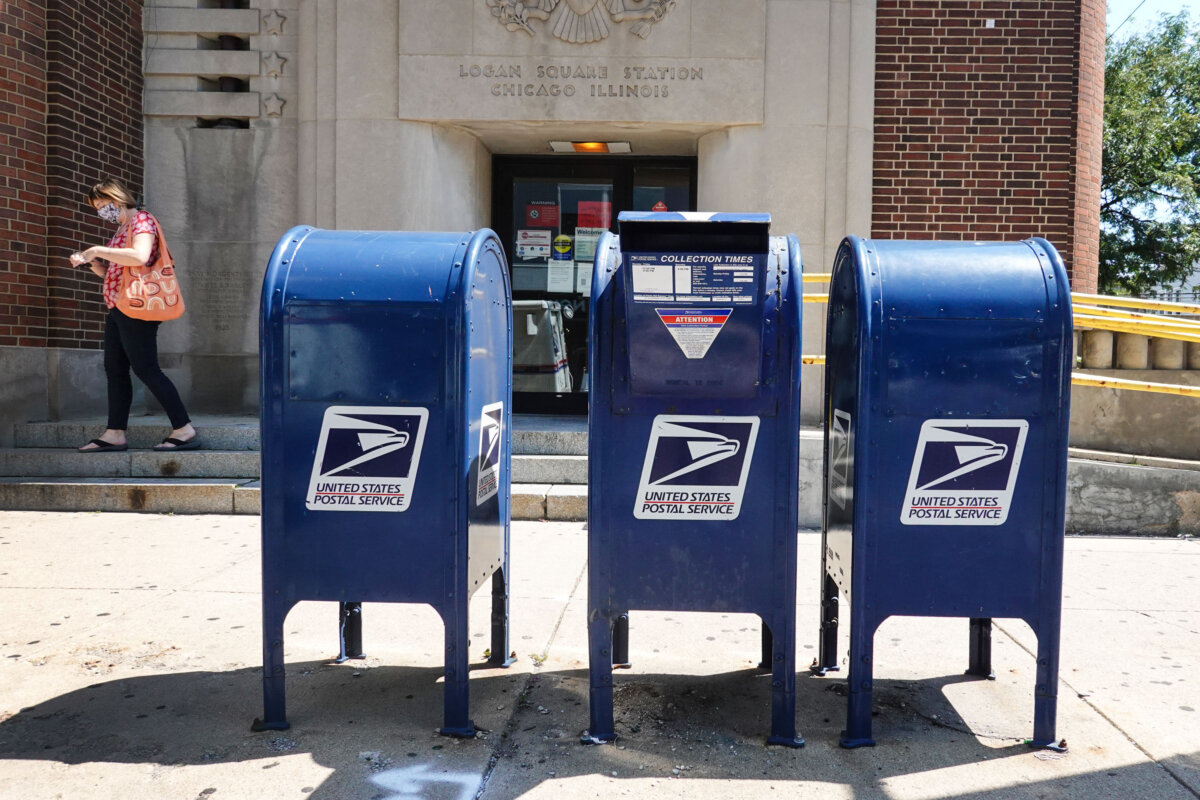

The U.S. Postal Service’s (USPS’s) rate hike of First-Class Mail Forever stamps from 78 to 82 cents is set to come into effect on July 12.
In April, USPS proposed the rate hike to the Postal Regulatory Commission, according to an April 9 agency statement. The hike was eventually approved. The new rate applies to letters weighing less than one ounce, according to the agency’s price list.
For metered letters less than an ounce, the price has been raised from 74 to 78 cents. The price of domestic postcards will be 65 cents, up by four cents.
The agency’s April proposal had kept the price of an additional ounce for single-piece letters unchanged at 29 cents. At the time, USPS said it was also seeking price adjustments for other First Class Mail products, USPS Marketing Mail, Periodicals, Packaging Services, and select Special Services products.
“The Postal Service generally receives no tax dollars for operating expenses and relies on the sale of postage, products, and services to fund its operations,” the agency said at the time, adding that it was in the midst of a “severe financial crisis.”
In May, USPS reported a net loss of $2 billion for the second quarter of fiscal year 2026, up from the first-quarter loss of $1.26 billion.
The postal service had suffered a $9 billion loss in fiscal year 2025, following $9.5 billion in 2024 and $6.5 billion in 2023.
In a May 27 order, the Postal Regulatory Commission assessed that USPS’s request to raise stamp prices for July 12 was consistent with established regulations and applicable commission directives and orders. There was no legal basis to reject the rate changes.
However, “the Commission remains concerned about the substantial declines in Market Dominant volumes, overall service performance for Market-Dominant products, and the Postal Service’s overall financial situation, issues that have all remained significant,” the order said. Market-dominant products refer to mailing services.
USPS Crisis
In March, Postmaster General David Steiner warned during a hearing of the House Oversight and Government Reform Subcommittee on Government Operations that USPS was “in a crisis.”
Steiner predicted the agency could run out of money by October or November this year if reforms were not implemented, including allowing USPS to borrow more money and raising stamp prices.
In April, USPS told the Office of Personnel Management that it would pause employer contributions to a government pension plan. This is expected to conserve roughly $2.5 billion through Sept. 30, the end of the ongoing fiscal year.
“The risk to the Postal Service and the American public from insufficient liquidity for postal operations dramatically outweighs any longer-term risk to the pension funds from not making the currently due payments,” said USPS Chief Financial Officer Luke Grossmann.
During a June 4 testimony at the House Subcommittee on Government Operations, Postal Regulatory Commission Commissioner Robert G. Taub highlighted the financial crisis facing USPS, citing the failure of the Delivering for America plan.
The plan, implemented in 2021, seeks to implement several changes within USPS to boost the agency’s financial and operational efficiency. However, by the sixth year of the 10-year plan, the USPS had incurred a total loss of $31 billion, Taub said, adding that the agency was on the path to lose even more money in the remaining four years.
Taub raised concerns about the Postmaster General’s suggestion to raise USPS’s borrowing authority by $ 15 billion. He said that USPS has received “significant financial relief” from Congress over the past few years, including $10 billion in COVID-19 relief and $3 billion in funding for electric vehicles.
“Now more money is being requested, with no structural solution in sight,” Taub said.
“Whether to adjust the Postal Service’s statutory borrowing authority is ultimately a policy judgment for Congress; however, the Commission is doubtful that ‘just $15 billion more’ is going to solve the problem. Extend the date of the ultimate crisis, yes; but prevent it, no.”
 Friends Read Free
Copy
Facebook
Tweet
Friends Read Free
Copy
Facebook
Tweet