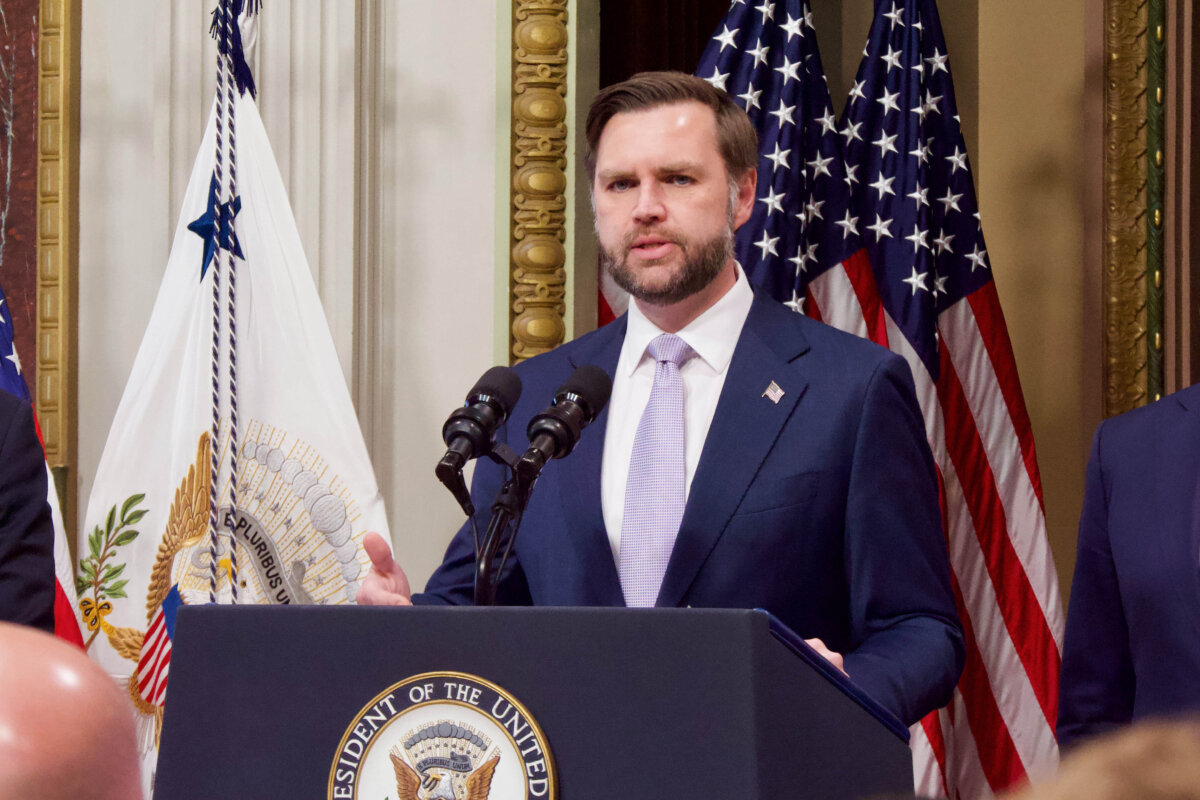

Vice President JD Vance said the United States is making progress in talks with Iran and that President Donald Trump wants guarantees that Tehran cannot obtain a nuclear weapon.
The United States is continuing diplomatic efforts to uphold the Iran ceasefire reached in April and ultimately end the conflict after weeks of fighting and disruptions to shipping through the Strait of Hormuz.
“I think that we are making progress,” Vance said during a May 13 White House press conference. “The fundamental question is, do we make enough progress that we satisfy the president’s red line?”
Vance said that Trump “needs to feel confident” that enough protections are in place to prevent Iran from developing nuclear weapons.
The comments came two days after Trump said the ceasefire with Iran was on “life support” following what he described on May 10 as an unacceptable proposal from Tehran.
Iranian officials defended the proposal and said Tehran’s demands were reasonable. Iranian Foreign Ministry spokesman Esmail Baghaei said Iran sought guarantees involving maritime security and the future status of the Strait of Hormuz.
The U.S. Central Command said on May 13 that since the U.S. naval blockade on Iranian ports began four weeks ago, American forces had redirected 67 commercial vessels.
Trump said last month that the blockade would end once an agreement is reached to end the war, under which Iran will have to abandon its nuclear weapons program and fully reopen the strait.
Vance also told reporters that he had discussed Iran earlier on May 13 with special envoys Steve Witkoff and Jared Kushner and with several U.S. allies in the Arab world.
Witkoff and Kushner were part of the U.S. delegation, led by Vance, that met with Iranian officials in Islamabad last month for extended negotiations that lasted more than 20 hours.
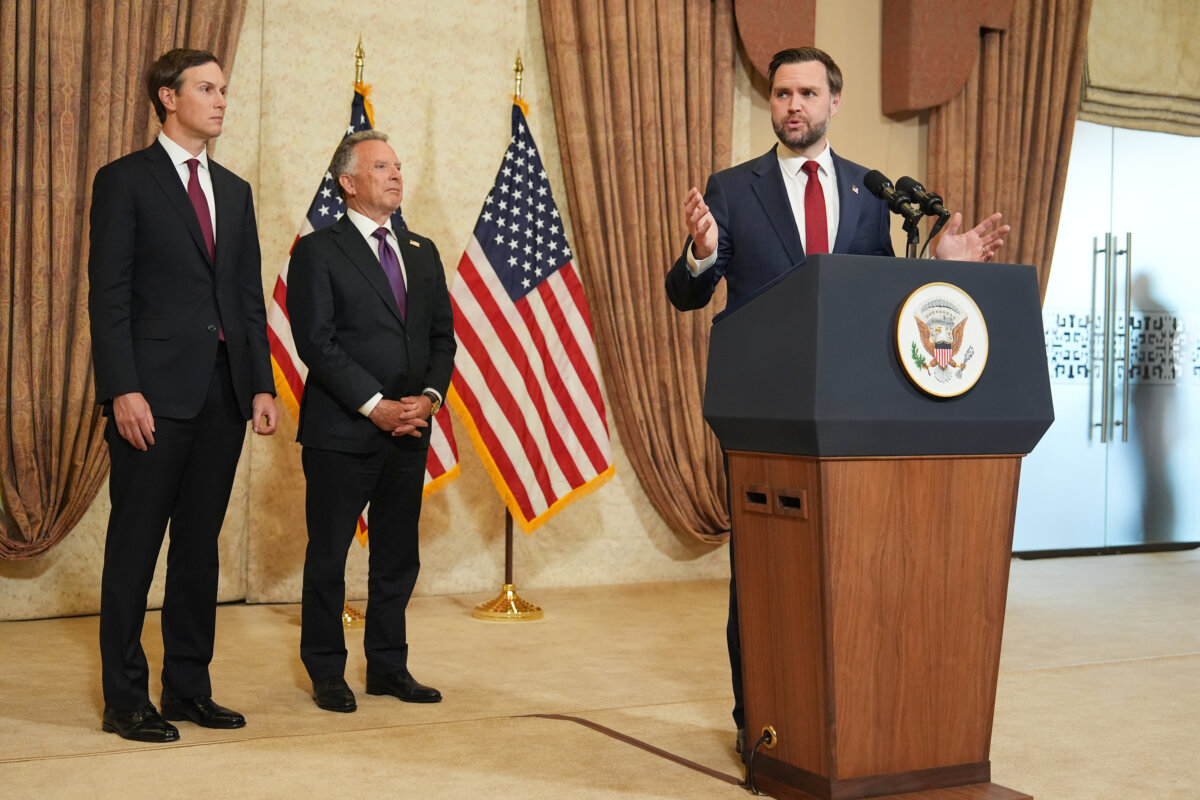
The talks ended without a breakthrough, and Vance later said Tehran’s refusal to commit to permanently abandoning nuclear weapons capability remained the main obstacle.
Vance defended the Trump administration’s diplomatic strategy on May 13, while emphasizing the broader security implications of nuclear proliferation.
“Nuclear proliferation is one of those challenges that people don’t realize,” he said. “It’s the biggest threat to America’s national security.”
Vance said that an Iranian nuclear weapon could trigger wider proliferation across the Middle East.
“What happens if Iran gets a nuclear weapon?” he said. “Then multiple Gulf Arab countries are going to want to get a nuclear weapon.”
Iran Remains Resistant
Iranian officials have continued to reject what they describe as American pressure tactics, but they said Tehran is ready to pursue a diplomatic course.
Speaking at a BRICS foreign ministers meeting in New Delhi on May 14, Iranian Foreign Minister Abbas Araghchi said Iran would not surrender under outside pressure.
“It ought to be clear that Iran is unbreakable and only emerges stronger and more united when under pressure,” Araghchi said, according to Iran’s Press TV. “While ready to fight with everything we have in defense of our freedom and our soil, we are equally ready to pursue and defend diplomacy.”
Iran’s mission to the United Nations also criticized a draft Security Council resolution circulated by the United States and Bahrain calling for Iran to cease attacks in the Strait of Hormuz.
The proposed resolution, according to a May 14 U.N. report, is backed by Bahrain, Kuwait, Qatar, Saudi Arabia, and the United Arab Emirates.
Iran’s U.N. mission accused Washington of trying to manufacture international support for what it described as unlawful maritime actions against Iran.
“The U.S. attempt to portray the number of co-sponsors of its politically motivated draft resolution as broad international support and proof of Iran’s isolation is both absurd and deceptive,” Iran’s U.N. mission said in a May 13 post on X.
Ebrahim Azizi, chairman of the Iranian parliament’s national security commission, warned regional governments on May 12 against supporting a U.S.-backed U.N. resolution condemning Iran’s attacks on shipping in the Strait of Hormuz.
Azizi said in a post on X that governments siding with Washington would face “severe consequences” and warned against risking closure of the Strait of Hormuz.
U.S. Ambassador to the U.N. Mike Waltz wrote in a May 12 post on X that Washington is “choosing diplomacy in the U.N. Security Council.”
He also said, “[Azizi’s post] proves why this Resolution is needed and why Iran will never be allowed to have a nuclear weapon.”
 Friends Read Free
Copy
Facebook
Tweet
Friends Read Free
Copy
Facebook
Tweet