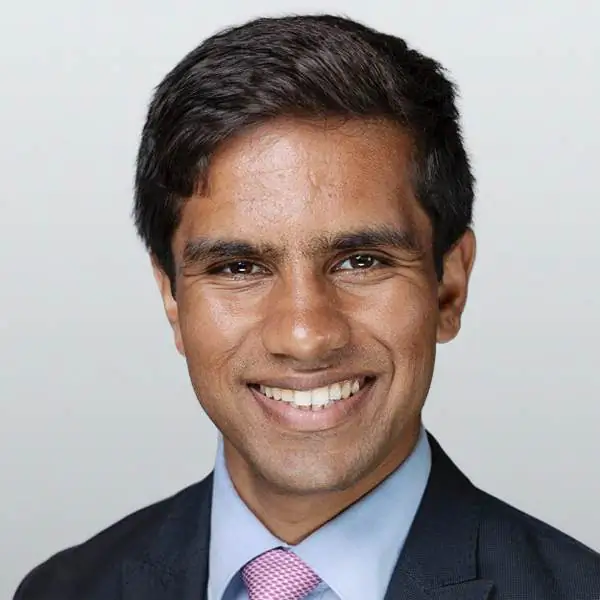
WASHINGTON—ABC’s recent suspension of late-night talk show host Jimmy Kimmel over his comments on the assassination of Charlie Kirk sparked a national debate.
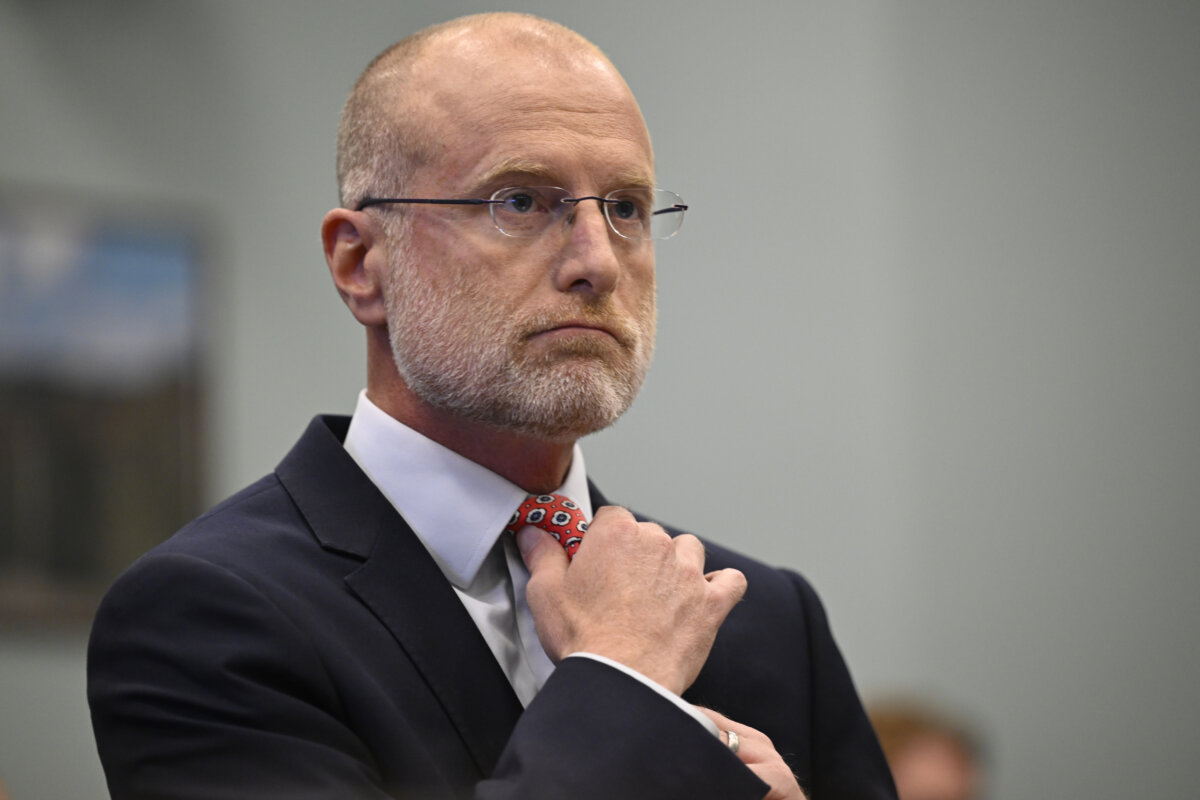
The now-lifted suspension followed criticism of the left-leaning comedian’s remarks from Brendan Carr, chairman of the Federal Communications Commission (FCC), which regulates radio, television, Wi-Fi, cable, satellite, and digital communications across the United States. The Walt Disney Company reinstated Kimmel’s show on Sept. 22, saying it will return on Sept. 23.
Kimmel’s supporters have alleged that Carr’s statements led to the suspension and accused him of being a censor on behalf of the Trump administration, while others have cheered him on.
Amid this dispute, we take a look at the key aspects of Carr’s life, his views on communications law, and his influence while serving on the FCC.
Catholic and Conservative
After his birth in Washington in 1979, Carr remained there for his education, receiving a bachelor of arts in government from Georgetown University and a juris doctor from Catholic University—two of the largest universities in the District of Columbia, and both Catholic.
After law school in 2008, he clerked for Judge Dennis Shedd of the U.S. Court of Appeals for the Fourth Circuit, an appointee of President George W. Bush who once worked for the well-known conservative Sen. Strom Thurmond (R-S.C.).
Carr has held a longtime interest in communications law, having served as president of the Communications Law Student Association, according to his LinkedIn profile. After practicing telecommunications law for several years at Wiley Rein LLP, he joined the FCC in 2012 to work for its Republican commissioners, specifically for Ajit Pai.
Pai’s elevation by President Donald Trump in 2017 to chair of the FCC led to Carr’s concurrent appointment by Pai as the agency’s general counsel, an influential position that gave him a role in shaping the commission’s rules, actions, and investigations. In less than eight months, Trump nominated Carr to hold a Republican seat on the commission; by law, no more than three of the five commissioners may be members of the same political party.
Carr was approved by a voice vote of the Senate to join the commission and took office on Aug. 11, 2017. He was renominated twice to the commission by both Trump and President Joe Biden to retain the Republican seat on the body. Later, amid resignations and retirements of commissioners, he became its senior Republican. When Trump was reelected in 2024, he designated Carr as chairman of the FCC.
“I think Brendan Carr is an incredible American patriot with courage,” Trump said in the Oval Office on Sept. 19.
Carr on 5G, Space, and Project 2025
Carr’s views on communications law and policy are varied. He was the author of the Federal Communications Commission chapter in The Heritage Foundation’s Project 2025, a pre-election policy document prepared in anticipation of Trump’s victory.
In that chapter, Carr called for the agency to take action against big technology companies, such as stripping them of non-textual immunity from lawsuits under Section 230 of the Communications Decency Act, a law that has long prevented companies from being sued for the content they host but do not create. He also wrote that they should be required to pay more money to subsidize rural connectivity programs, as well as establish appeals processes for content moderation decisions.
During the 2020 presidential election, conservatives criticized decisions by social media companies such as Twitter and Facebook to restrict access to posts expressing views critical of the COVID-19 vaccine mandates, Hunter Biden’s laptop, and the results of the election.
Since taking office as chairman, Carr has heavily prioritized fifth-generation cellular technology or “5G” promotion. This includes reducing regulations to replace old copper telephone lines with new infrastructure, as well as eliminating some environmental reviews. He also launched a “5G Ready” plan to promote the training of working-class telecom employees.
Carr’s Views on the CCP
In Project 2025’s “Mandate for Leadership,” Carr wrote extensively about using the agency to combat the Chinese Communist Party (CCP).
“There are … strong actions that the FCC can and should take to address the CCP’s malign campaign[s],” Carr said.
Carr’s ideas included banning the Chinese mobile application TikTok on “national security grounds”—a measure required by an act of Congress, but which has been paused by Trump amid efforts to broker a sale of the company to an American owner—as well as expanding the FCC’s Covered List to include more CCP-linked companies, which would ban them from providing any communications equipment in the United States.
Carr also called for more funding for the “rip and replace” program, which would entail U.S. telecom providers removing all hardware produced by CCP-linked companies, such as Huawei and ZTE. Moreover, he advocated for the United States to impel allies to ban Huawei from their telecom networks, as well as ban U.S. companies from improving artificial intelligence datasets owned by CCP-linked firms.
Kimmel’s Suspension
In the wake of Kirk’s assassination on Sept. 10, Carr criticized the American Broadcasting Company (ABC) for what he said were false and “truly sick” comments made by Kimmel on his “Jimmy Kimmel Live!” show.
Kimmel recently stated on air that “many in MAGA land are working very hard to capitalize on the murder of Charlie Kirk” and suggested that the suspected assassin, 22-year-old Tyler Robinson, was “one of them.” MAGA refers to Trump’s “Make America Great Again” policy agenda.
ABC suspended the show indefinitely on Sept. 17 but announced on Sept. 22 that it would be reinstated.
“[W]e made the decision to suspend production on the show to avoid further inflaming a tense situation at an emotional moment for our country. It is a decision we made because we felt some of the comments were ill-timed and thus insensitive,” wrote The Walt Disney Company, the owner of ABC, said in a statement published by ABC News.
“We have spent the last days having thoughtful conversations with Jimmy, and after those conversations, we reached the decision to return the show on Tuesday.”
Kimmel’s statements also led Nexstar Media, a network that owns the news organization NewsNation among other assets, to block the show from being aired.
Opponents attribute Kimmel’s prior suspension to Carr’s comments in response, when the FCC chairman suggested that the agency would take action against networks that air Kimmel’s show.
“We can do this the easy way or the hard way. … There’s actions we can take on licensed broadcasters. It’s long past the time that … Comcast and Disney say ‘We’re not gonna run Kimmel anymore … because we licensed broadcasters are running the possibility of fines or license revocation from the FCC,’” Carr said on “The Benny Show” podcast run by conservative influencer Benny Johnson.
Carr accused Kimmel of misleading people with his comments and said that broadcasters’ licenses, issued by the FCC, require them to operate in the public interest, which he believes was not served by that broadcast.
“The broadcasters … are entirely different than people that use other forms of communication. They have a license granted by us, the FCC, that comes with an obligation to operate in the public interest,” Carr told Johnson. “These companies can find ways to change conduct and take action … or there is going to be additional work for the FCC ahead.
“The FCC could make a strong argument that this is sort of an intentional effort to mislead the American people about a very core fundamental fact, a very important matter,” Carr noted.
Those comments were criticized by some as imperiling free speech and the First Amendment.
“I call for Brendan Carr’s resignation,” wrote Sen. Richard Blumenthal (D-Conn.) on social media. “Censoring Jimmy Kimmel goes to the core of suppressing free speech in this country. Trump—through his lapdog chair of the FCC—is creating the fear & intimidation that serves an instrument of authoritarian power.”
Former Rep. Elizabeth “Liz” Cheney (R-Wyo.), an outspoken Trump critic, also weighed in.
“Hey Brendan … Government officials cannot attempt to coerce private parties in order to punish or suppress views that the government disfavors. … This doesn’t just constrain Democrats. It applies to all officeholders, including you. You took an oath to the Constitution not to Donald Trump,” she wrote on social media.
White House press secretary Karoline Leavitt said Kimmel was not suspended because of Trump administration pressure but because of an ABC decision.
“The decision to fire Jimmy Kimmel and to cancel his show came from executives at ABC,” Leavitt said on Fox News’s “Saturday in America” on Sept. 20.
Asked about criticisms against Carr, Trump told reporters in the Oval Office the day before that the FCC head is “a courageous person.”
“I think Brendan Carr doesn’t like to see the airwaves be used illegally and incorrectly and purposely horribly. [He] doesn’t like to see a person that won the election in a landslide get 97 percent bad publicity before the election,” Trump added, referring to himself.
 Friends Read Free
Copy
Facebook
Tweet
Friends Read Free
Copy
Facebook
Tweet