

A U.S. District Court in Louisiana handed three Second Amendment advocacy groups and three individual plaintiffs what they said was an empty victory and a possibly unconstitutional order.
The plaintiffs intend to appeal the judgment.
Meanwhile, a constitutional lawyer and Second Amendment social media influencer said their concerns may be unfounded.
In November 2020, the Second Amendment Foundation (SAF), Firearms Policy Coalition, Louisiana Shooting Association, along with individuals Caleb Reese, Joseph Granich, and Emily Naquin, sued the federal government over its prohibition on sales of handguns to those between 18 and 21.
In 2022, the U.S. District Court for the Western District of Louisiana upheld the ban.
The plaintiffs appealed to a three-judge panel of the Fifth U.S. Circuit Court of Appeals, which ruled the ban unconstitutional and sent the case back to the district court for a final judgment.
On Oct. 7, District Court Judge Robert R. Summerhays issued a narrow judgment limiting relief to people who were members of the plaintiff organizations on Nov. 6, 2020, and are located in Texas, Mississippi, and Louisiana, the states in the Fifth Circuit.
The judge also ruled that the organizations create a list of those members within 21 days.
The plaintiffs said that affected members of the named organizations would have been in their early teens at the time of the filing. Leaders of the plaintiff groups said they would refuse to disclose membership information.
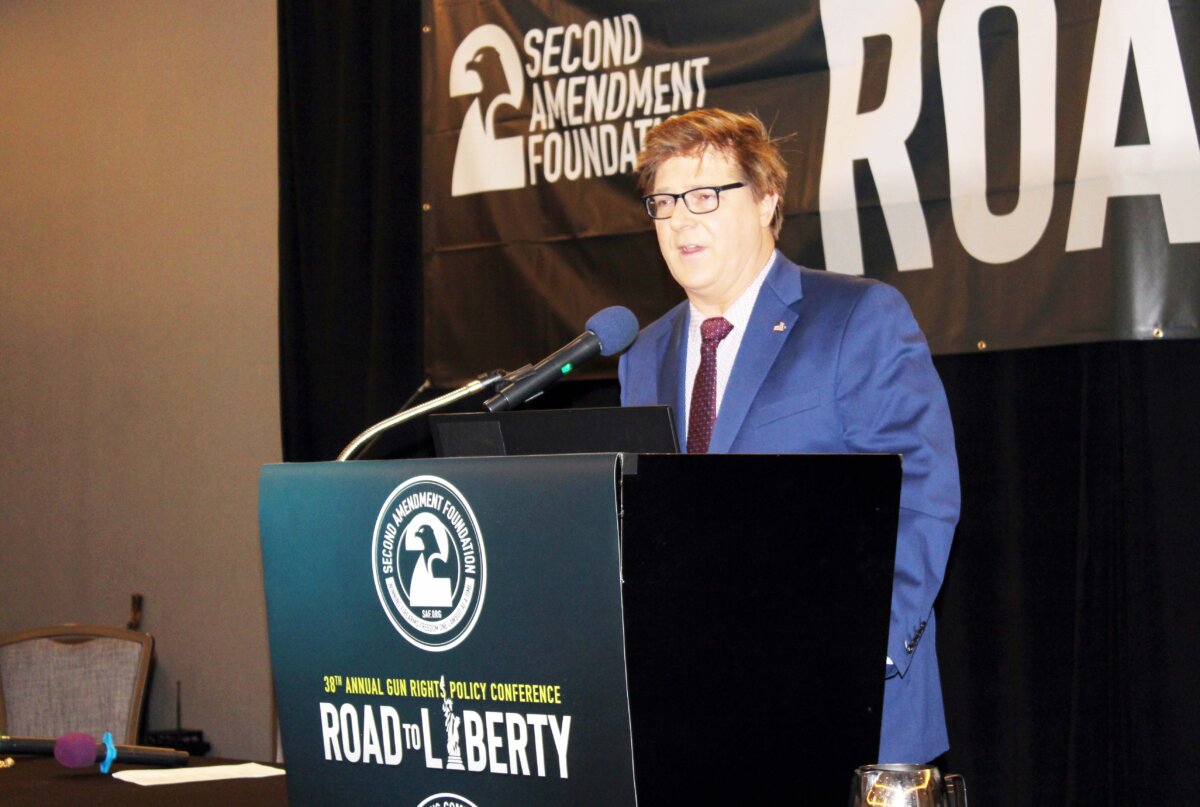
“What the court has done here is say that this law is unconstitutional,” SAF Executive Director Adam Kraut stated in an Oct. 7 news release. “But in order for an 18-year-old to avoid having their constitutional rights trounced by it today, they must live in one of only three states in the nation and have been a member of SAF at age 13.
“We’re currently examining our options in relation to the relief granted and will vigorously defend our members’ right to free association and privacy of such.”
The Firearms Policy Coalition called the decision “morally bankrupt” in a statement on its website. The Coalition stated that it would also refuse to disclose membership information.
“To be clear: FPC has never provided a list of its members to the government—and never will. … We will commence appellate proceedings as necessary to protect our members and effectuate the Fifth Circuit’s decision in our favor,” the statement reads.
Mark Smith, a constitutional lawyer and host of a Second Amendment YouTube channel, said the ruling may not be as dire as it appears. He said the judgment has three legal errors that should be easy to overcome.
According to Smith, the U.S. Supreme Court has ruled that ordering the disclosure of membership information is unconstitutional. He added that, in his review of the court record, he found no such request by the government.
Likewise, he says there is legal precedent that if a court issues an order related to an organization, the order would cover all members of the organization, regardless of their location.
He said he would be surprised if any judge upheld the Oct. 7 judgment.
Despite these issues, Smith said the judgment confirms the plaintiffs’ position.
“The decision established a fantastic circuit precedent finding that 18–20-year-old Americans are entitled to full Second Amendment rights,” Smith wrote in an email to The Epoch Times.
Gun control groups have opposed lifting the ban. They filed dozens of amicus briefs while the case was in court.
In a July 1 press release, Eric Tirschwell, executive director at Everytown Law, criticized the Justice Department for not requesting that the U.S. Supreme Court review the case. His organization called the Fifth Circuit’s decision “reckless.”
“Firearms are the leading cause of death for children and teens, and 18-to-20-year-olds commit gun homicides at triple the rate of adults 21 and over. We continue to support the constitutionality of this common-sense law, and hope the issue makes its way to the Supreme Court quickly,” Tirschwell said.
 Friends Read Free
Copy
Facebook
Tweet
Friends Read Free
Copy
Facebook
Tweet