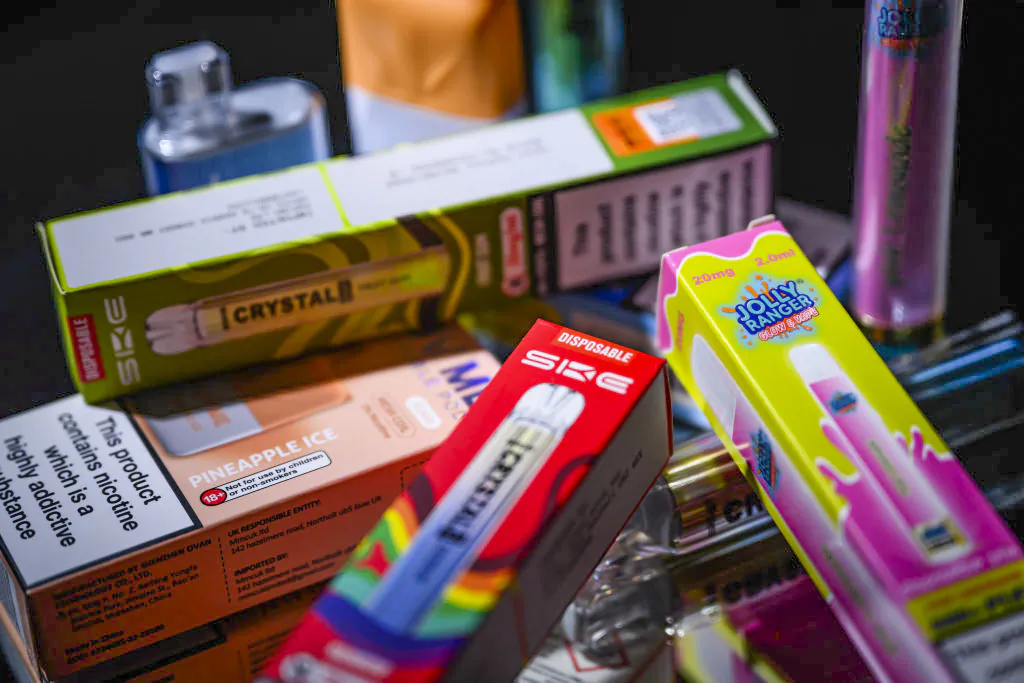

Around 250,000 illegal disposable vapes, with a street value of $7.4 million (US$4.9 million), have been intercepted by border officials in South Australia, sparking concerns that criminal gangs will try to profit from the federal government’s ban on the devices, which came into force on Jan. 1 this year.
It means that imported disposable vapes will no longer be allowed entry to Australia, regardless of when they were ordered, vape stores can still sell any products they currently have in stock.
The most recent shipment had been sent from a single location in China and declared as “refillable atomiser[s]” and arrived in Melbourne before being sent to South Australia, where it was seized.
Penalties for importation could extend from a fine to imprisonment, depending on the nature and the severity of the offence. But that doesn’t seem to have deterred importers, with 13 tonnes of vapes seized just in the past week.
Charges have not yet been laid over the most recent discovery, though police say an investigation is underway.
Importation Attempts Expected to Continue
Australian Border Force (ABF) Assistant Commissioner Chris Waters said he expected the attempted importation of disposable vapes to continue regardless of enforcement efforts.
“The ABF’s experience in preventing the importation of a range of prohibited goods means we are skilled and experienced to respond to this challenge,” he said.
“All Australian suppliers of vaping products should heed this notice. If you attempt to conceal imports of vapes, we will uncover and intercept them.”
Health Minister Mark Butler said the seizures were “choking off a market that is increasingly controlled by organised crime, by outlaw motorcycle gangs, and other organised criminal gangs.
“Vaping was sold to the global community as a therapeutic good that would help hardened smokers kick the habit,” he said.
“A few years into the experiment now, we understand that was not really the intention of the tobacco industry at all.
“What we now know is that this was a product marketed directly to children, teenagers and very young adults, with one objective in mind: recruit a new generation to nicotine addiction. The tragedy of this is not only were we deceived, but that it’s working.”
One In Four Young Adults Vape
The health minister said figures show that approximately one in four young adults were vaping, with the figure for high school students being one in six.
He claimed some senior students were so addicted to vaping that they couldn’t get through recent exams without nicotine patches.
In addition to nicotine, vape users inhale about 200 chemicals, some of which are also used for weed-killing, nail polish remover, or to de-ice airport runways.
Anecdotal evidence and posts on social media suggest the use of vapes to deliver illegal drugs is also increasing. In some forums, participants have been seeking information on vaping various substances, including crystal meth.
In November last year, a 14-year-old South Australian boy was unresponsive for 15 hours and suffered seizures and heart irregularities after inhaling from a vape laced with DMT—a hallucinogen—and THC, the major psychoactive component in cannabis.
Disposing of the seized devices is a complex task, as they contain harmful chemicals, lithium batteries, and glass.
New Laws Will Extend Vape Crackdown
Mr. Butler said he also planned to introduce new laws that would make it illegal to sell or supply vapes.
Already, from March 1 importing vapes will require a permit from the Drug Protection office. The devices will have to meet new standards from the Therapeutic Good Administration, including plain labelling and plain flavours, as well as meeting prescribed nicotine levels.
“This is designed to make sure … the vapes are a proper therapeutic product,” Mr. Butler said.
The federal government has committed $29.5 million over four years to fund programmes to meet the increased need to support people to quit smoking and vaping arising from the new tobacco and vaping reforms.
 Friends Read Free
Copy
Facebook
Tweet
Friends Read Free
Copy
Facebook
Tweet