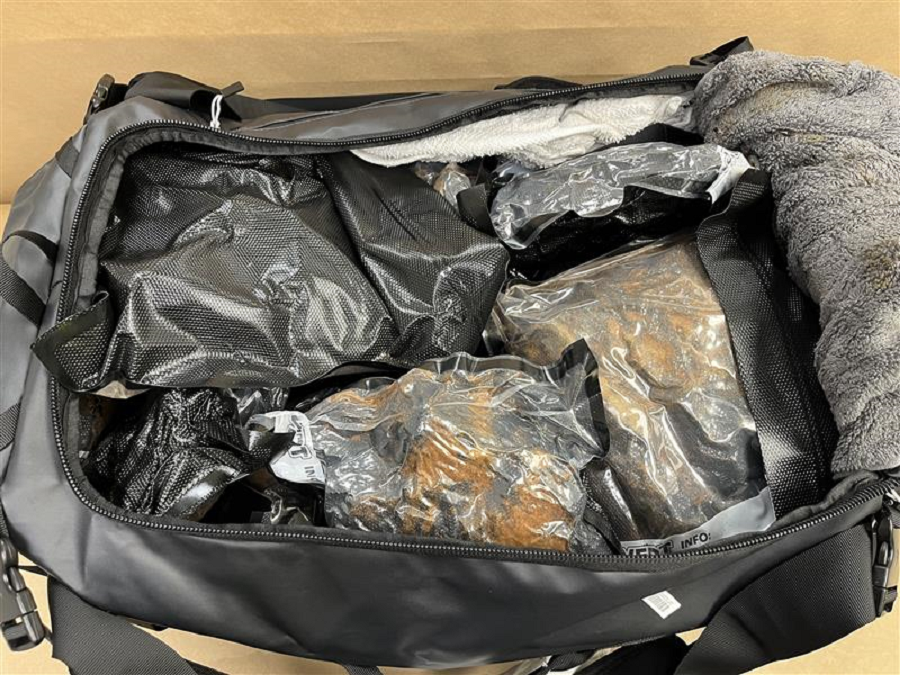

New Zealand Police have laid 347 criminal charges against 43 gang associates, alleged to be part of a sophisticated criminal syndicate smuggling illicit drugs into the country aboard international flights.
Police and Customs have also seized 630 kilogrammes of methamphetamine with a street value of NZ$220.8 million (US$126.35 million), alongside 112 kilogrammes of cocaine worth $50.4 million, and around $800,000 in cash.
Authorities estimate the drugs would have caused around $733 million in social harm had they not been intercepted.
The arrests are the result of a long and complex joint investigation into a syndicate allegedly smuggling class A drugs through unattended baggage, primarily through Auckland Airport.
Class A drugs are New Zealand’s highest-risk category and include substances such as methamphetamine and cocaine.
Twenty Raids Across Auckland
On Nov. 27, officers from the National Organised Crime Group and Customs executed 20 search warrants across the Auckland region, arresting eight associates of the Brotherhood 28 Motorcycle Club, including the gang’s president.
The group is not widely known in New Zealand, though it has built a conspicuous social media presence.
The designation “28” is used internationally by the neo-Nazi network Blood and Honour, derived from the second and eighth letters of the alphabet.
While police have not said the people arrested in New Zealand have any links to that group, the gang was added to the government’s anti-gang list in 2024.
Earlier Firearm Seizures
Those arrested face charges including participating in an organised criminal group, importing, possessing and supplying Class A drugs, and money laundering.
During raids on Nov. 27, police also seized multiple rounds of ammunition, jewellery, and electronic devices.
In February this year, two members of the gang were found in possession of assault rifles.
This week’s action marks the fifth phase of Operation Matata, which targets airline baggage-handling staff and other airport-linked associates allegedly working inside the air border to facilitate drug importation.
‘Rooted Out the Organisers and Facilitators’
Detective Inspector Tom Gollan said the investigation began in February this year, and ultimately uncovered 20 consignments of methamphetamine and cocaine.
“Since 2021, police and customs have worked with Auckland Airport to disrupt the flow of drugs being imported through the air border, facilitated by the corruption of baggage handlers,” Gollan said.
“This operation has rooted out the organisers, facilitators, and baggage handlers involved in this illegal operation. Police and Customs investigators have exposed their networks while establishing how they are evading systems and controls.”
Authorities said the syndicate offered large cash incentives to corrupt airport workers.
“Alarm bells should be going off when they are offered cash payments in exchange for them committing serious offences,” Gollan said.
“We’re seizing boxes at baggage handlers’ addresses that are full with $200,000 cash. That’s the type of money these boys are getting corrupted with.”
He added that some gangs “rented out” compromised baggage-handling teams to other groups for a profit.
Earlier this year, media reported that the Headhunters and Crips had been using the same group of ground staff to import illicit drugs. The Two Eight Brotherhood are also known to be closely associated with the Crips, sometimes even sharing members.
Targeting the Syndicate’s Upper Tier
While 20 of those arrested in Operation Matata were baggage handlers, this week’s arrests focused on “facilitators and controllers sitting over the top of the syndicate.”
Support from international law enforcement agencies and companies contributed to the operation, which in turn has led to enforcement activity in offshore countries.
Customs Investigations Manager Dominic Adams said New Zealand’s high volume of legitimate trade and travel creates opportunities for criminal infiltration
“This is not a new method used by transnational syndicates—it has been an issue around the world for several years, and we are not immune to it,” he said.
“Those arrested have abused positions of trust to smuggle harmful drugs into our communities. Customs and police will not tolerate this and will continue to pursue anyone who compromises the safety of our country and people.”
Airport Praises Joint Effort
Auckland Airport’s Head of Terminal Operations Richard Deihl said the latest arrests are an example of the effectiveness of cooperation between the airport and law enforcement agencies.
“The latest arrests demonstrate the strong collaboration between police, customs, and the airport community to disrupt the global drugs trade,” he said.
“Everyone in the airport system is united in our commitment to stamp out drug trafficking at the border.”
 Friends Read Free
Copy
Facebook
Tweet
Friends Read Free
Copy
Facebook
Tweet