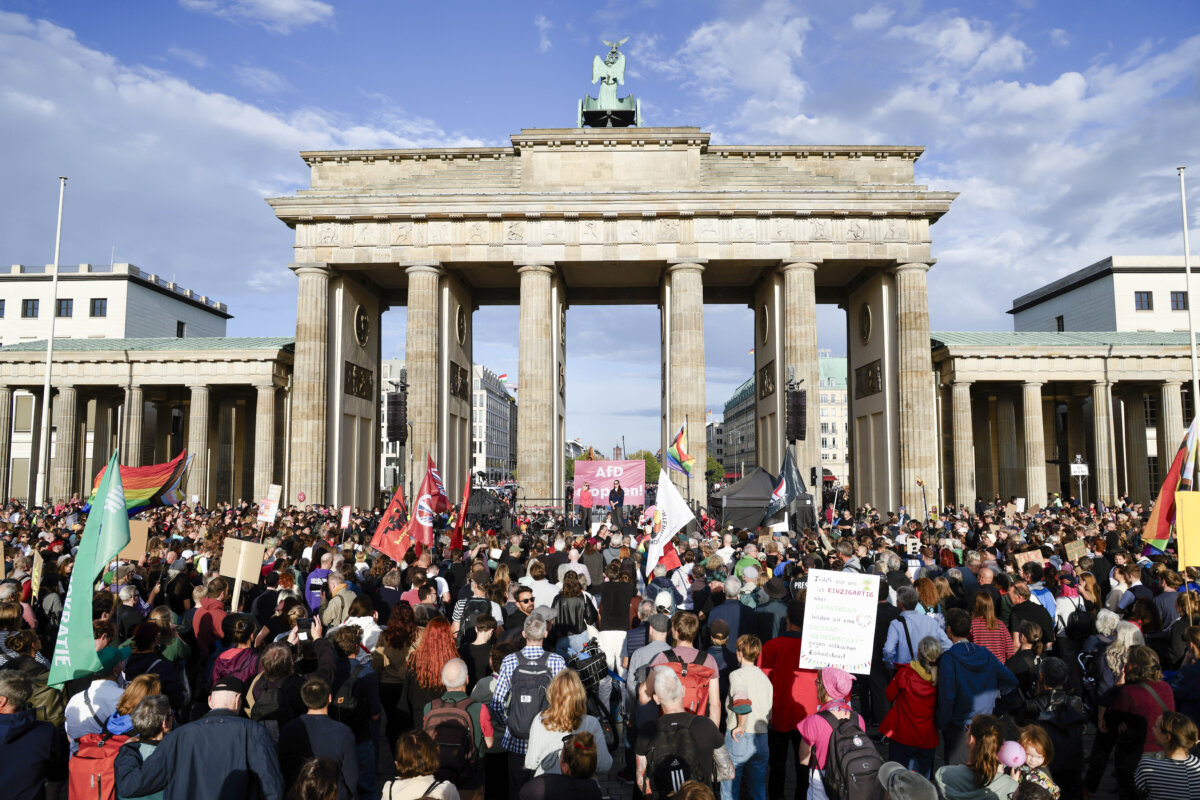

Germany’s Alternative für Deutschland (AfD) now sits at the top of every major national poll, drawing 27 to 29 percent of voting intentions, while Chancellor Friedrich Merz’s CDU/CSU alliance trails at 19.5 to 23 percent, according to polling aggregator Wahlrecht.de.
German polling institute INSA has shown the AfD ahead since March, adding pressure on the Christian Democratic Union’s (CDU’s) long-running firewall against any cooperation with the party.
The same pattern showed up at the ballot box on Sept. 6. In Saxony-Anhalt, the AfD took 43.8 percent, more than twice its 2021 result and its strongest result ever.
The CDU suffered a sharp decline in the eastern state, falling from 37.1 percent to 17.2 percent.
Exit polling also undercut the idea that the AfD is mainly a party of older, disaffected eastern voters. A poll by ARD, an organization of German public-service broadcasters, found it won 41 percent among 18- to 24-year-olds and 52 percent among middle-aged voters, compared with 31 percent among those over 70. It led among blue-collar workers at 59 percent, took 30 percent of university graduates, and pulled in about 170,000 previous nonvoters.
A Cheer From Washington, a Snub From Berlin
U.S. President Donald Trump said in a Sept. 8 post on Truth Social that Germans had become tired of immigration rules and regulations.
“Wow! The Populist Party in Germany just had a really big night,” U.S. President Donald Trump wrote. “THEY ARE ON THE RISE, and not going to take it anymore! MGGA!!!”
On Wednesday, Merz’s spokesman said a call with Trump planned for that day had been postponed. He did not link the delay to the post, but cited Merz’s objection to foreign interference in German domestic politics, particularly regarding elections, ARD’s Tagesschau reported.
Maximilian Kneller, an AfD member of the Bundestag, Germany’s federal parliament, told The Epoch Times he welcomed Trump’s remarks and said the AfD should retain close ties with the Republicans.
Merz Digs In as His Party Wavers
Merz said the result was “the most serious election defeat that the CDU has had for years, for decades.”
He added that a majority of voters had not voted for the AfD and that what it calls its remigration program is “nothing but a synonym for ethnic cleansing according to origin and skin color.”
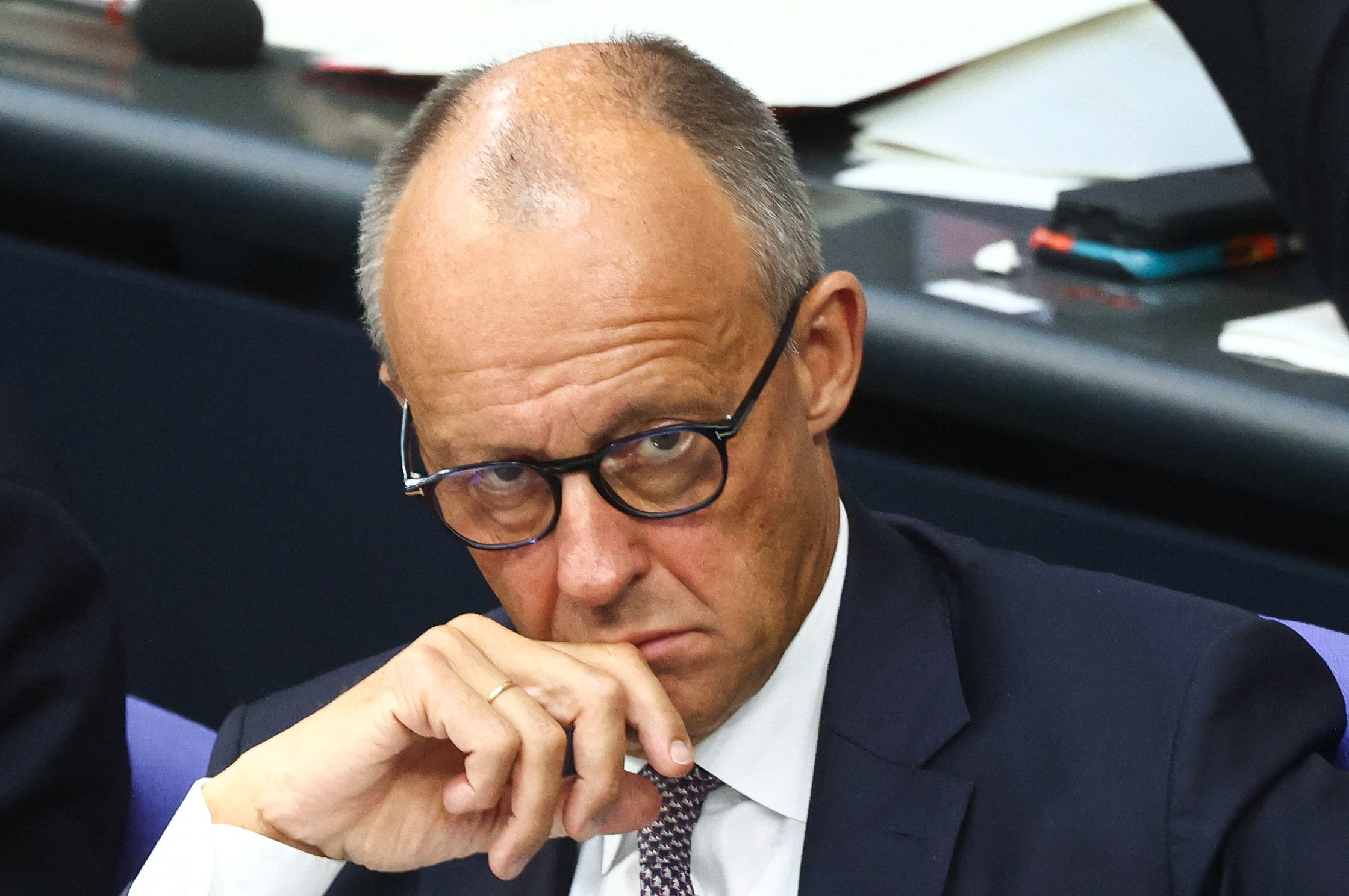 German Chancellor Friedrich Merz attends the 2027 budget debate at the German lower house of parliament, Bundestag, in Berlin, Germany, on Sept. 8, 2026. (Liesa Johannssen/Reuters)
The AfD accused Merz of deliberately twisting its position in order to demonize the party.
“By ‘remigration,’ the AfD means the consistent deportation, in accordance with the law, of all foreigners required to leave the country; nothing else. Chancellor Merz knows this too,” AfD lawmaker Bernd Baumann said.
Pressure has also come from within the CDU.
A 2018 CDU resolution rules out coalitions and similar forms of cooperation with both the AfD and the far-left Die Linke. Six weeks before the vote, Saxony’s CDU premier, Michael Kretschmer, appeared to challenge that approach, saying in an interview with Handelsblatt that “whoever still talks about firewalls has not recognized the signs of the times.”
Werner J. Patzelt, professor emeritus of political science at Dresden University of Technology, told The Epoch Times that beyond keeping the AfD out of office, the firewall had another aim that he said was overlooked: forcing the CDU “into alignment with either the Social Democrats or the Greens by portraying any form of cooperation with the AfD as a threat to democracy.”
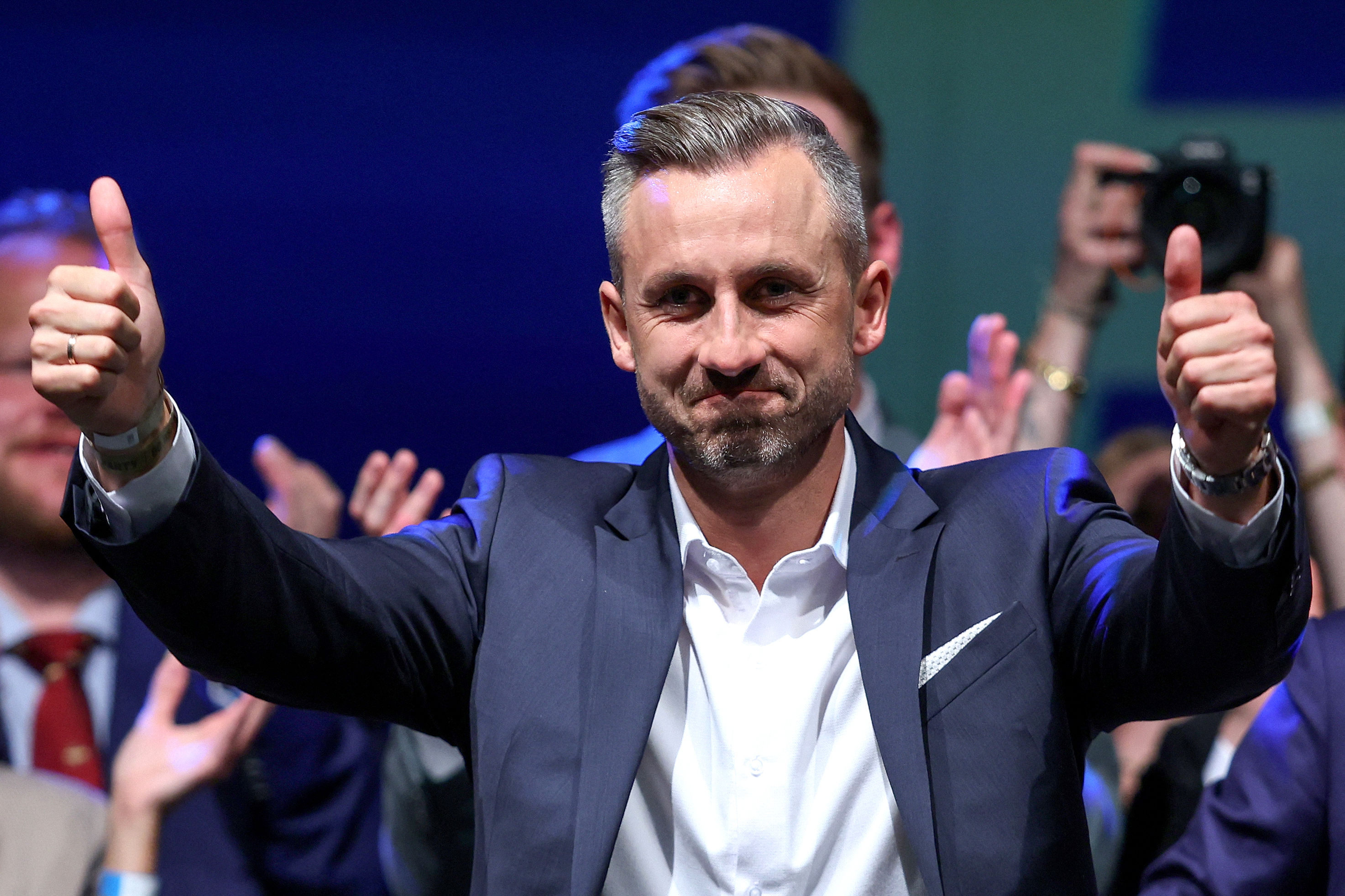 Ulrich Siegmund, Alternative for Germany’s main candidate in the Saxony-Anhalt state election, addresses supporters at the AfD’s election party following Saxony-Anhalt’s state elections in Magdeburg, Germany, on Sept. 6, 2026. (Ronny Hartmann/AFP)
He added that a CDU-led coalition built to keep the AfD out of government could prove more damaging to the CDU than an AfD majority. Such a coalition, he said, “would send a clear signal that the CDU still has no intention of pursuing center-right policies.”
Accusations of Extremism
Saxony-Anhalt’s domestic intelligence agency has classified the AfD’s state branch as a right-wing extremist organization since November 2023, citing statements it judged to be Islamophobic and racist. The party has challenged the designation in court.
A similar classification at the federal level drew sharp criticism from Washington.
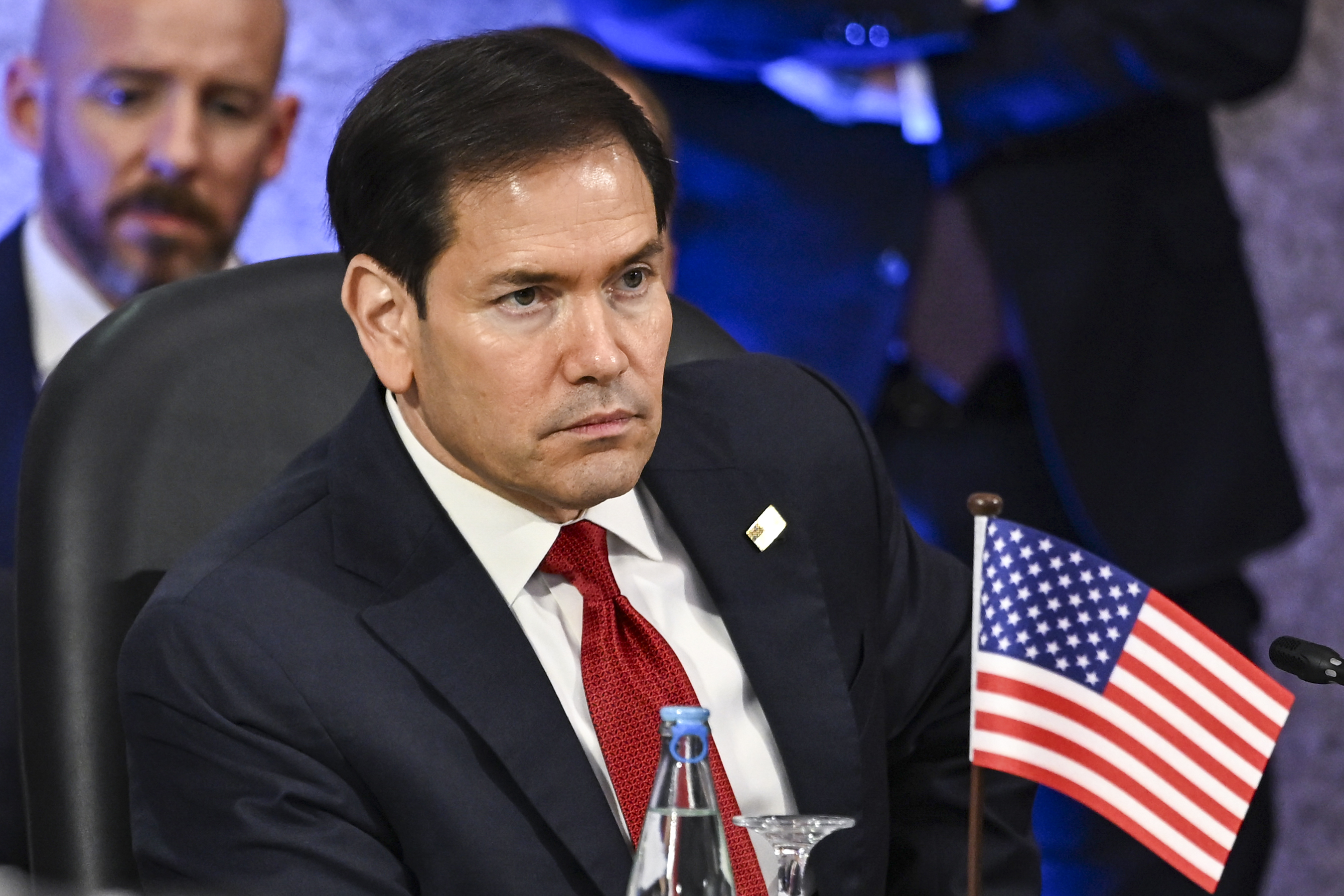 U.S. Secretary of State Marco Rubio in Pasay, Metro Manila, Philippines, on July 23, 2026. (Brendan Smialowski/AP)
Russia Divides AfD
Russia remains another source of controversy for the party. The AfD opposes German arms deliveries to Ukraine and has called for the lifting of sanctions against Moscow, saying they hurt Germany’s economy.
Kneller said Germany could not be actively engaged in the war in Ukraine and described economic ties with Russia as pragmatism. He argued that Germany’s push for renewable energy and the phaseout of nuclear power under previous governments were what made the country dependent on Russian energy.
“The so-called renewables also make you highly dependent on the Chinese Communist Party, because wind turbines, solar panels, and the like all require resources from China,” Kneller said.
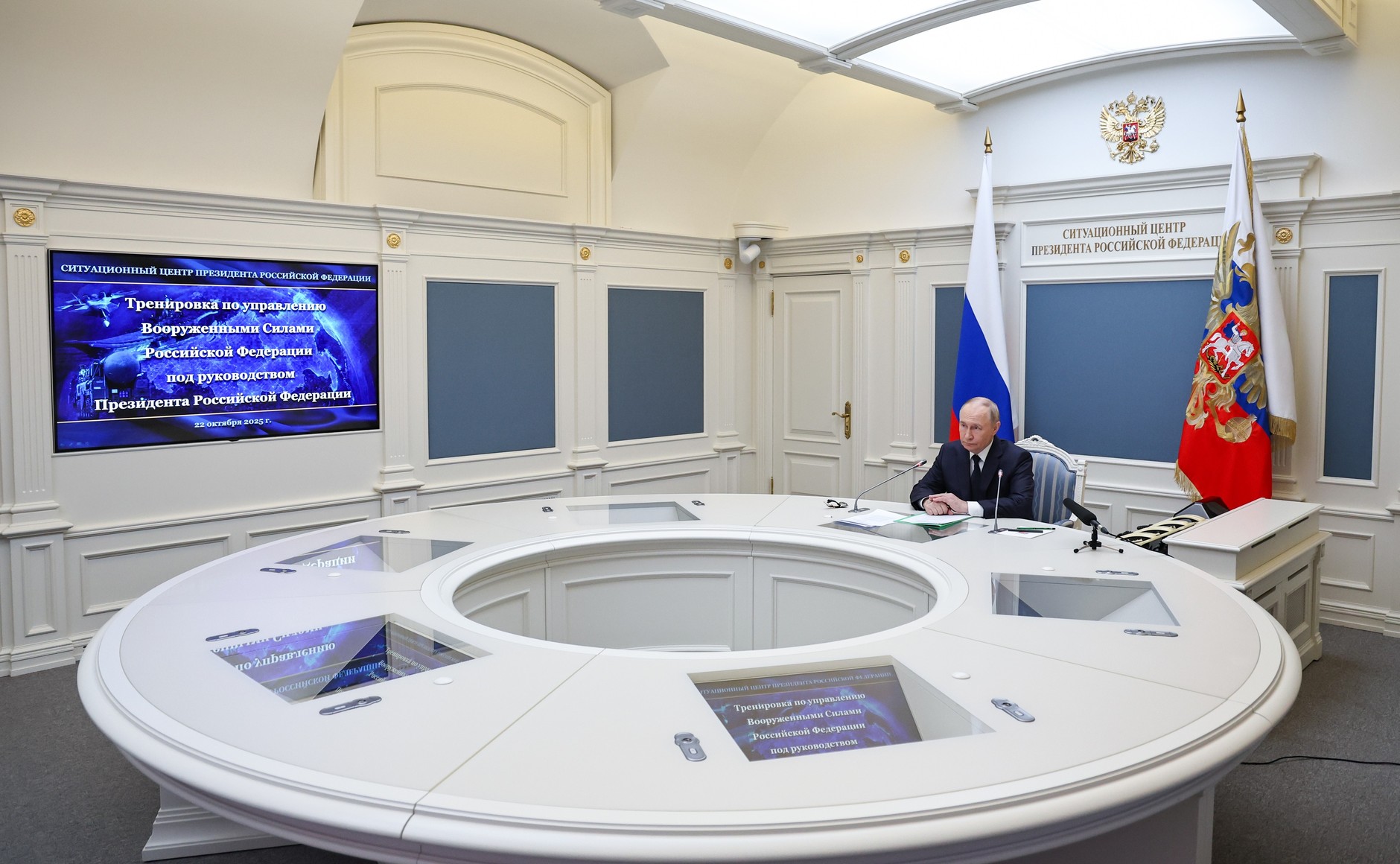 Russian President Vladimir Putin inspects a military exercise of the country’s nuclear forces on land, sea, and air to test their readiness and command structure, via a video link from Moscow, on Oct. 22, 2025. (Courtesy of the Kremlin)
“I am not pro-Russia. I think what [Russian President Vladimir] Putin is doing in Ukraine is shameful,” he said.
He described those within the party who still admire Moscow as a shrinking group.
The Russian political apparatus, he said, is spreading propaganda and is “full of old communists who never really changed their views.”
“A lot of people inside the party have concluded that Putin is not what he pretended to be,” he said.
The Ban Question
Political opponents of the AfD have also intensified calls for Germany to consider banning the party.
Patzelt likened the debate over banning the AfD to a farmer putting up a scarecrow and expecting it to keep the birds out. He described it as part of “a long series of highly questionable measures” that, in his view, have led some voters to side with a party they see as being treated unfairly.
Kneller expressed doubt that a ban would ultimately succeed. He also accused the left of denouncing Russia while adopting the very methods it attributes to Putin.
“You cannot claim that NATO is a community of nations united by shared values such as democracy and freedom, and that these values are at the heart of our conflict with Russia, only to turn around and do exactly what you accuse the Russians of doing: curtailing free speech, barring candidates from running in regional elections and, ultimately, banning a political party on the false claim that the AfD is a Nazi party,” he said.
 Friends Read Free
Copy
Facebook
Tweet
Friends Read Free
Copy
Facebook
Tweet