
More than four years after the original Freedom Convoy protest, several court cases are still ongoing, including one that may now head to the country’s highest court.
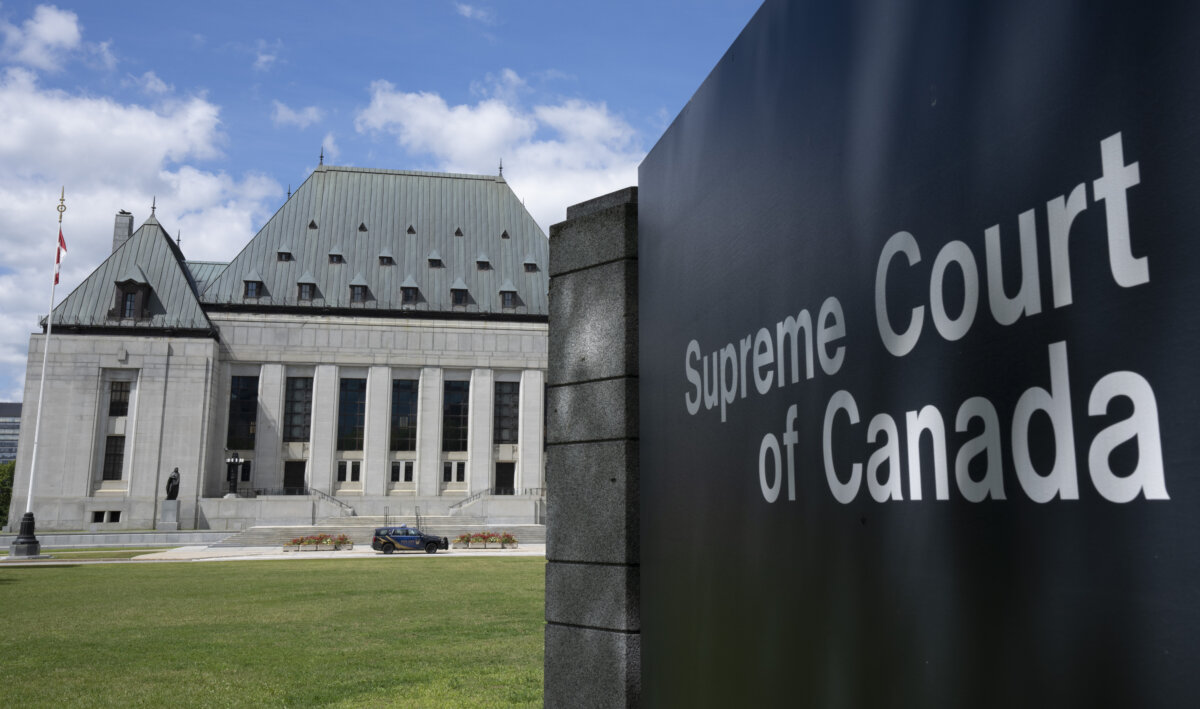
The federal government launched an appeal with the Supreme Court of Canada on March 18 to defend its use of the Emergencies Act in 2022 in response to the Freedom Convoy, which saw protestors gather in Ottawa and cities across Canada to oppose various COVID-19-related mandates and restrictions.
At the same time, several lower-level court cases related to the Freedom Convoy are still taking place, including several related to the protest’s organizers.
Here’s an overview of some of the ongoing cases.
Supreme Court Case
The most high-profile court case has involved the federal government’s invocation of the Emergencies Act, which gave law enforcement sweeping powers to arrest demonstrators, freeze the bank accounts of some protesters, and compel towing companies to remove protesters’ vehicles from downtown Ottawa. The act also made it illegal to attend any event deemed an unlawful assembly.
Months after the Emergencies Act was revoked, a public inquiry was held to examine whether Ottawa’s use of the Emergencies Act was justified. The inquiry ruled that Cabinet had met the “very high” threshold for invoking it, though the commissioner, Paul Rouleau, said he came to the conclusion “reluctantly.”
Federal Court judge Richard Mosley, who was presiding over a lawsuit brought on by protesters, then ruled in January 2024 that the government’s use of the act was “unreasonable” and that related regulations infringed on Canadians’ Charter rights. The federal government appealed the ruling, sending it to the Federal Court of Appeal.
That court rejected Ottawa’s appeal in a Jan. 17 ruling, saying that the declaration of a public order emergency was unreasonable, and parts of the order infringed on paragraph 2(b) and section 8 of the Charter, which related to freedom of expression and protection against unreasonable search and seizure.
The federal government filed an application on March 17 to have an appeal heard at the Supreme Court, arguing that the lower courts incorrectly reviewed their use of the Emergencies Act. The Justice Department said in a statement that the government remains “committed to ensuring it has the tools needed to protect the safety and security of Canadians in the face of threats to public order and national security.”
John Carpay, president of the Justice Centre for Constitutional Freedoms (JCCF) which has provided legal aid for those opposing the use of the Emergencies Act, said in a video statement on March 18 that the government will face an “uphill battle” given that the Supreme Court of Canada takes on less than 10 percent of the cases presented to it.
Carpay said the government will need to persuade the court that there is an “unresolved legal doctrine of national importance” that it needs to provide clarity on. “These two court rulings are pretty simple … So I don’t know how the federal government is going to try to do this,” he said.
If the Supreme Court agrees to hear the case, it will be overseen by nine justices, including Chief Justice Richard Wagner. In 2022, Wagner told Quebec newspaper Le Devoir that the protest was the “beginning of anarchy where certain people decided to take other citizens hostage, to take the law into their own hands.”
Convoy Leaders
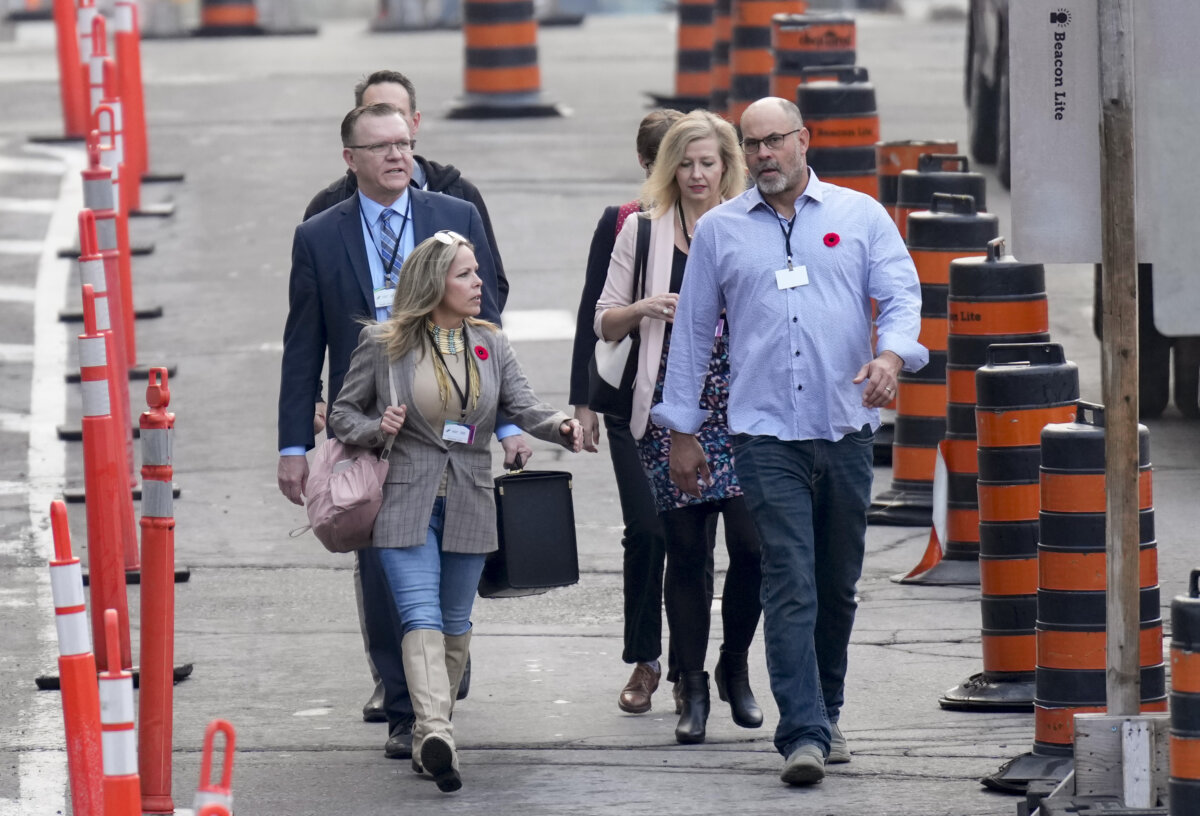
Meanwhile, several court cases for the leaders of the Freedom Convoy protest are continuing. While the trial of Tamara Lich and Chris Barber has technically ended, the Crown has filed appeals against their sentencing and acquittals of intimidation charges, while the two organizers have also appealed their sentences.
Barber and Lich were found guilty of mischief in April 2025, and Barber was also found guilty of counselling others to disobey a court order. Justice Heather Perkins-McVey did not find Lich and Barber guilty on charges of intimidation, counselling to commit intimidation, or obstructing police.
Lich and Barber were then handed 18-month conditional sentences in October 2025, which include house arrest, a curfew, and community service.
In December 2025, Justice McVey also ruled that Barber would be able to keep his long-haul truck “Big Red,” dismissing the Crown’s application to seize the vehicle. The judge said while the truck was used as offence-related property for the protest, forfeiture would have been disproportionate because the truck is used for Barber’s business.
Convoy organizer Pat King was also given a three-month conditional sentence in February 2025, on top of the nine months he spent in custody before and during his trial. The Crown is also appealing his sentencing and the acquittals for more serious accounts.
James Bauder, another Convoy organizer, has a Canada-wide arrest warrant out for him after he failed to appear in court in Ottawa following a summons to face criminal charges for his role in the protest. Bauder reportedly applied for asylum in the United States, claiming he is being politically persecuted.
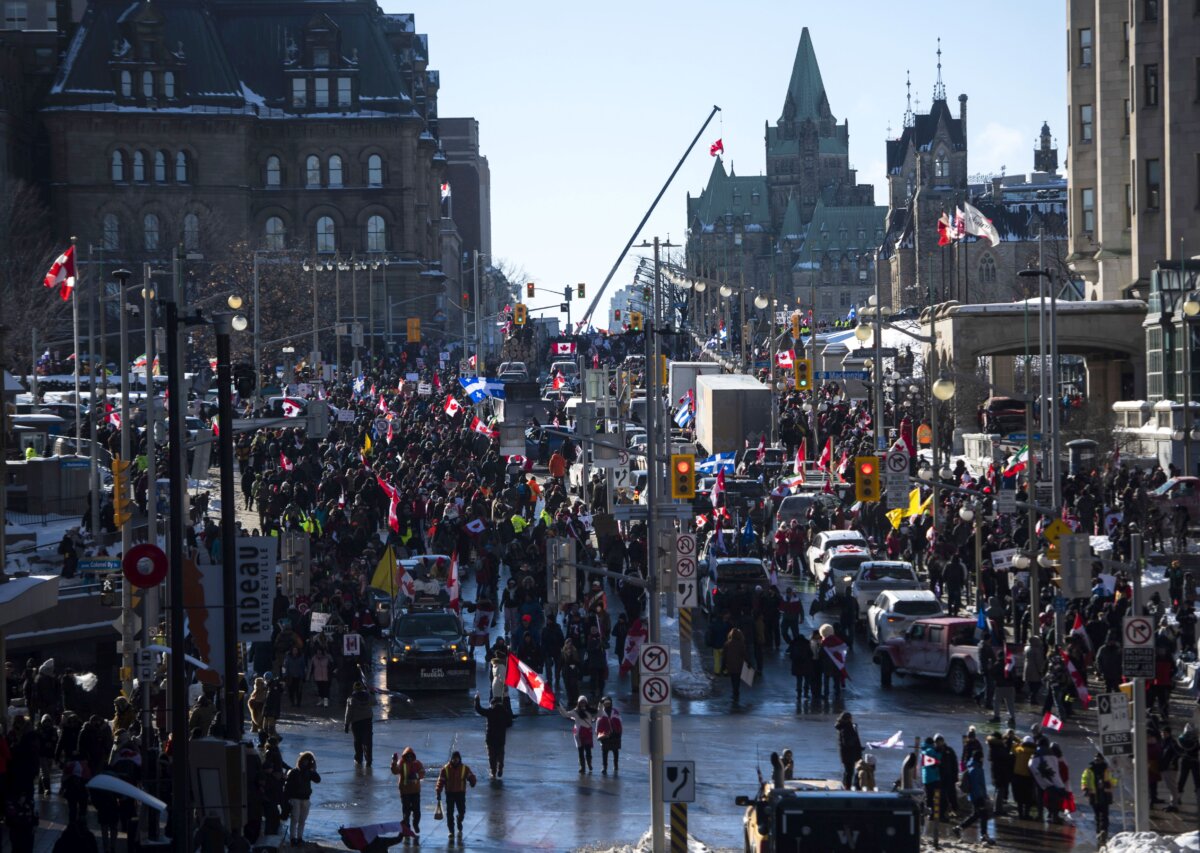
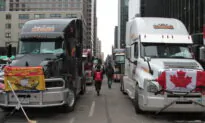
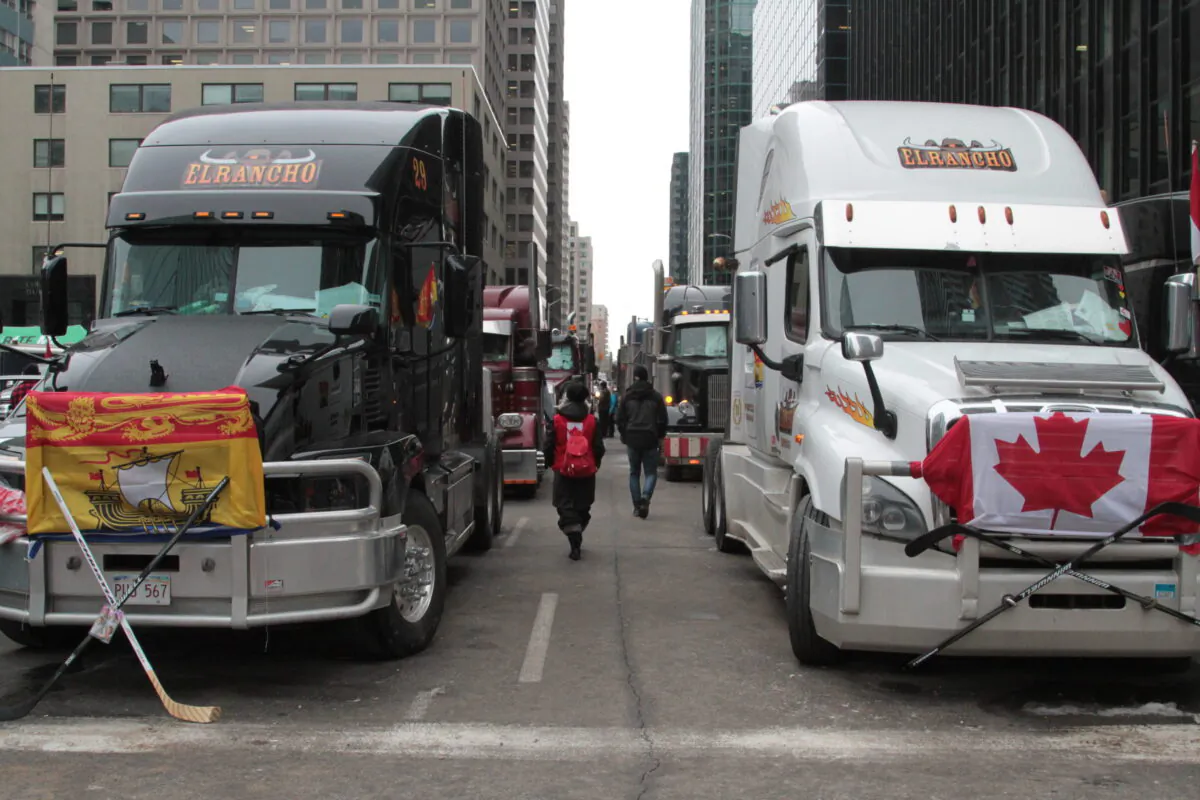
People and vehicles fill Wellington Street near Parliament Hill on the first day of the Freedom Convoy protest against COVID-19 restrictions, in Ottawa on Jan. 29, 2022. (The Canadian Press/Justin Tang)
Class-Action Convoy Lawsuit, Others
At the same time, a $290 million class-action lawsuit against Freedom Convoy organizers and protestors is ongoing. Back in 2022, two Ottawa residents as well as the Happy Goat Coffee Company and a local union launched the lawsuit seeking damages from those who organized and supported the protest in downtown Ottawa.
The lawsuit claims that those who donated to the convoy “knew or ought to have known” their donations would contribute to nuisance harms that stemmed from noises from horn honking and idling trucks, and the smell of diesel fumes in downtown Ottawa.
Lawyers representing protestors and donors recently filed a motion for a permanent stay of proceedings, as the plaintiffs’ lawyer Paul Champ entered into a settlement agreement with one of the defendants in April 2024.
The Ontario law requires such settlement agreements to be immediately disclosed to other parties in the litigation, and the JCCF said this agreement was not disclosed to other defence counsels until last month.
Jeffrey Evely, convicted of mischief and obstruction after attempting to stand guard at the National War Memorial during the protest, had his appeal dismissed by the Ontario Court of Appeal on Feb. 23. The JCCF said that Evely had pleaded not guilty and challenged his arrest under section 9 of the Charter, which protects against arbitrary detention.
Evan Blackman, who was arrested during the protest and charged with mischief and obstructing police, is also appealing his conviction. The JCCF said the freezing of Blackman’s bank accounts under the Emergencies Act violated his rights under section 8 of the Charter.
The JCCF is appealing the decision to the Ontario Superior Court of Justice, arguing that the original trial judge applied the wrong legal test, failing to consider whether the freezing of his accounts formed part of the same police operation that targeted protestors in Ottawa.
 Friends Read Free
Copy
Facebook
Tweet
Friends Read Free
Copy
Facebook
Tweet