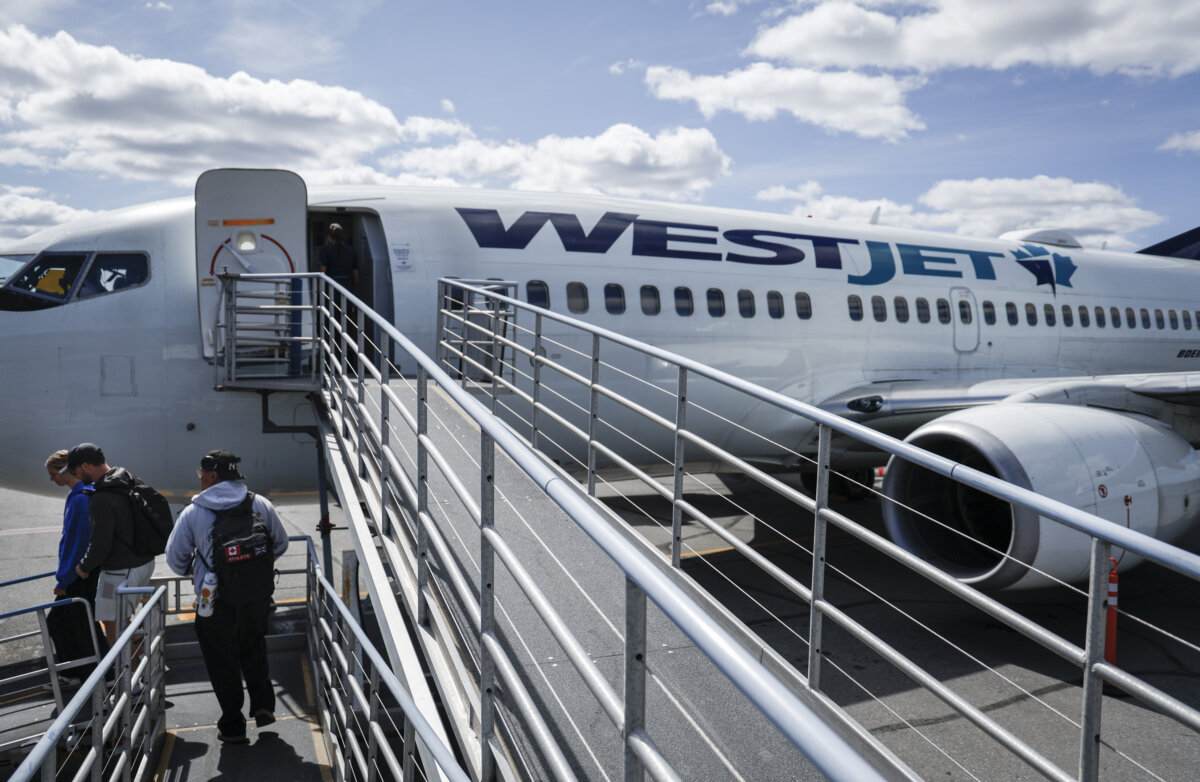

Air Transat and WestJet are scaling back their flight capacities in response to the cost of aviation fuel that has escalated since the start of the war in Iran.
Both carriers made the announcement this week as cost pressures continue to hit the airline sector.
Transat A.T. Inc., the travel company that owns Air Transat, says it is cutting capacity by 6 percent from May through October, which covers the crucial summer travel season. It has also announced plans to lower flight frequencies on some routes to Europe and the Caribbean and extend its suspension of service to Cuba in response to ongoing volatility in energy markets and fuel supply constraints in certain regions.
“We will continue to optimize our program based on demand, which remains strong,” CEO Annick Guérard said in an April 22 press release. “Additional measures may be implemented depending on how the situation evolves, beyond our control.”
Calgary-based WestJet has also announced capacity reductions of approximately 1 percent in April, 3 percent in May, and nearly 6 percent in June.
“As fuel prices continue to rise, WestJet has adjusted some flying to align with demand and best manage associated fuel costs,” the airline said in a press release, adding that travellers impacted by the changes are being offered alternate flight options.
No routes have been eliminated at this time, but WestJet said it is “evaluating its summer schedule” for potential cuts. The airline said it is actively monitoring the global jet fuel supply situation and remains in regular contact with its fuel suppliers.
The airline is currently combining flights on some routes and has decreased the travel timeframe for seasonal service to a number of destinations.
WestJet has announced a temporary fuel surcharge of $60 earlier this month on all bookings made through WestJet Rewards companion vouchers. The airline told its customers the temporary fuel surcharge would be lifted “once jet fuel prices return to normal levels.”
It also announced a fuel charge of $50 per person for Sunwing Vacations and Vacances WestJet Québec, which have been owned by WestJet since it purchased Sunwing Airlines to expand its leisure travel offerings in 2023.
Air Canada Cuts
WestJet’s announcement this week comes after Air Canada said it would suspend six routes, citing fuel costs that have made them unprofitable. Among the cuts were flights to New York City’s JFK airport from Toronto and Montreal between June 1 and Oct. 25.
Air Canada also announced last week its plan to implement higher baggage fees. It said the price would rise from $35 to $45 for the first checked bag in its basic economy class on domestic, U.S., and sun destination flights.
Air Canada spent more than $5.1 billion on jet fuel in 2024, accounting for 24 percent of the carrier’s operating costs—its largest expense. It is anticipating much higher costs this year now that the price of jet fuel has increased twofold since the start of the conflict in Iran.
The U.S.-Israeli military action against Iran that began in late February resulted in a near-shutdown of the Strait of Hormuz. This development triggered considerable surges in oil prices and even larger increases in jet fuel costs, which remain at double their levels prior to the conflict, even with a tenuous ceasefire in place.
Approximately one-fifth of the world’s oil supply—20 million barrels daily—passes through the waterway that connects Iran and the Arabian Peninsula before reaching the open seas and global customers.
Jet fuel, diesel, and gasoline all originate from crude oil, which makes them susceptible to fluctuations in its price but Canadian refineries process some 1.6 million barrels of crude oil each day across all petroleum products, providing the airline with some degree of protection against supply interruptions.
Canada obtains a large portion of its jet fuel domestically or from the U.S. Gulf Coast and Pacific Northwest. This minimizes the risks associated with long-distance imports from the Middle East but may not help lower costs. Pricing is connected to global commodity markets and airlines purchase jet fuel through contracts that are linked to market indexes, regardless of the fuel’s origin.
Energy and shipping experts have been warning since the start of the war that an increase in energy costs would be passed on to consumers and predicted major shortages.
The Canadian Press contributed to this report.
 Friends Read Free
Copy
Facebook
Tweet
Friends Read Free
Copy
Facebook
Tweet