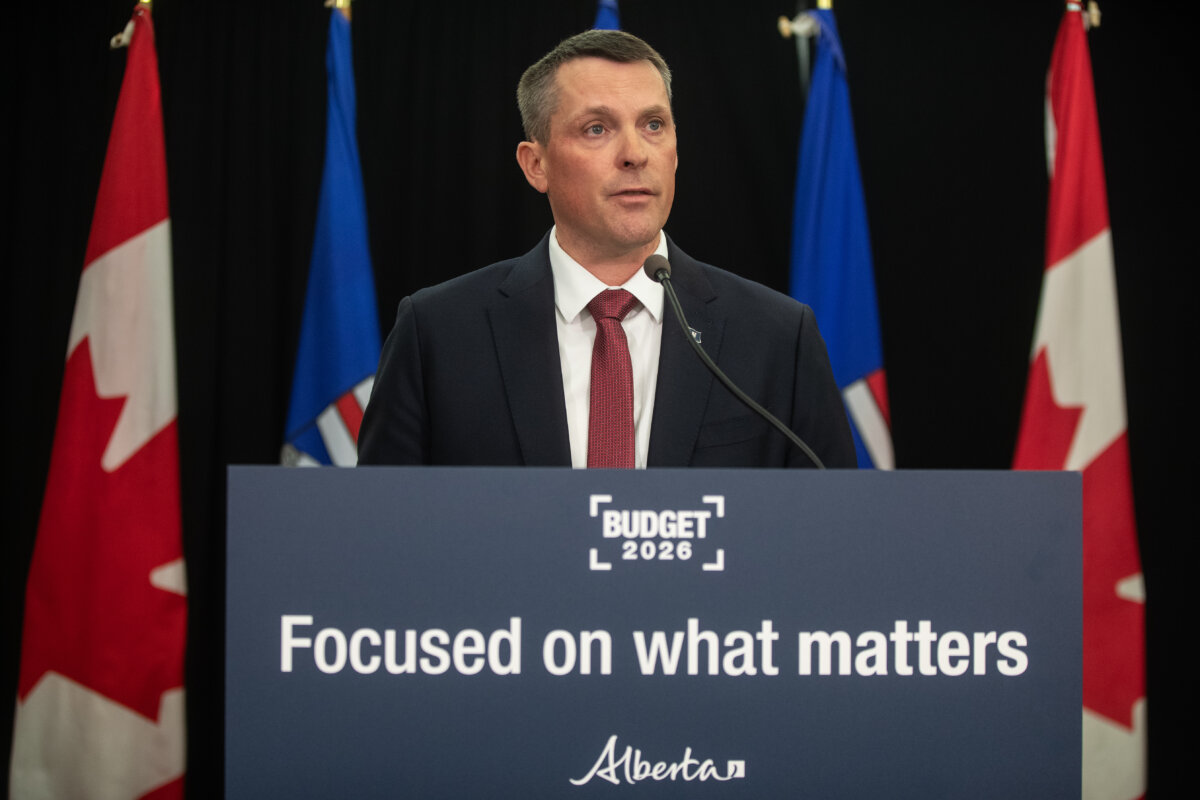

Alberta’s new budget includes a $9.4 billion deficit, which the finance minister is blaming on the costs of a rising population coupled with low oil prices.
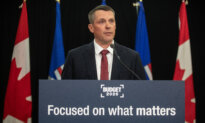
“This year will require tough choices. Some of them won’t be popular. But all of them will be necessary to face the challenges ahead,” Finance Minister Nate Horner told the legislative assembly in Edmonton on Feb. 26 as he tabled the 2026-2027 budget.
Horner added that “we’re not making massive program cuts and we’re not raising personal income taxes.”
While not asking for any increase of personal income tax rates, the budget does propose a number of fee hikes and increases to other taxes.
Fee and Tax Hikes
Fee hikes include higher penalties for some driving infractions, a fee increase for registry and corporate filing fees, and a bump in the province’s tourism levy on hotel rooms and short-term accommodations from 4 to 6 percent when the coming fiscal year begins this April.
In addition, the budget proposes a new 6 percent tax on personal vehicle rentals apart from long-term leases and commercial truck rentals to begin in 2027. The government is also changing the education property tax.
Alberta is Canada’s only province without a provincial sales tax, and Horner said earlier this week that although a 5 percent provincial sales tax could generate around $6 billion per year for the province, there is no referendum planned on introducing it for now.
“We’ve got to take Albertans with us on this ride,” he said ahead of the budget announcement on Feb. 26. “If Albertans want to give up some of that advantage to get off the roller-coaster, that’s a conversation we can have.”
In addition, the budget cuts the Film and Television Tax Credit operating allocation to $60 million for 2026-27, a $35 million reduction. This follows last year’s pledge by the province of $235 million over three years in the form of the tax credit in order to draw more major productions to complete film and television productions in the province.
NDP Leader Naheed Nenshi criticized the government for the size of the deficit, and said the budget doesn’t allocate enough funds for health and education while hiking fees and taxes.
“There is no funding for a new hospital in Edmonton or Calgary. There is no additional funding for building a single new school, and there is virtually no increase to primary care funding,” the NDP said in its reaction to the budget.
“Budget 2026 also makes life more expensive for Albertans amidst already rising costs. “
Nenshi said the rising costs are coming “despite years of extraordinary resource revenues and record production.”
Rising Expenditure
The government said to maintain services for the province’s rising population, it will have to boost health care spending by roughly 6 percent, amounting to approximately $1.9 billion in the coming fiscal year, while also raising education spending by 7 percent to approximately $10.8 billion.
“Demand for services is rising faster than government revenue is growing,” Horner said in the budget announcement.
Alberta’s population went up by more than 200,000 people in 2023-2024.
In the Red
The province said it expects to collect $74.6 billion in revenue this upcoming fiscal year while forecasting spending of $83.9 billion, including a $2 billion contingency fund.
This is the second deficit budget in a row for the United Conservative Party government, with a $4.1 billion deficit projected in the fiscal year ending this March. The preceding fiscal year in 2024–2025, Alberta recorded a $8.3 billion budget surplus.
The budget also forecasts a $7.6 billion deficit for the 2027–2028 fiscal year, followed by a $6.9 billion deficit for the 2028–2029 fiscal year.
In addition, the budget forecasts that taxpayer-supported debt will rise to around $109 billion this year and up to $138 billion by 2029. However, it notes that Alberta’s Heritage Savings Trust Fund is expected to have approximately $34 billion by the end of the upcoming fiscal year and reach around $250 billion by 2050.
Oil Prices
Horner said the budget’s $9.4 billion deficit is based on a forecasted average price for West Texas Intermediate (WTI) crude oil of US$60.50 per barrel for the coming fiscal year.
He added that for every price decrease of US$1 in the WTI, provincial revenue falls by about CA$680 million.
Speaking in a televised address Feb. 19 ahead of the budget announcement, Alberta Premier Danielle Smith said Alberta will hold a referendum this October in order for her government to seek a mandate to make significant changes to Alberta’s immigration policies and changes to Canada’s Constitution.
The referendum questions ask if Albertans agree with limiting which categories of migrants qualify for provincially funded health care and education, as well as abolishing the Senate and giving Alberta control over judicial appointments to the Court of King’s Bench and appeals courts in the province.
Smith said the referendum is required because current immigration levels coupled with low oil prices have put a strain on Alberta’s health care, education, and infrastructure and are unsustainable for taxpayers.
“This is not only grossly unfair to Alberta taxpayers, but also financially crippling and undercuts the quality of our health care, education, and other social services,” she said.
Though noting that Alberta plans to “double” its crude oil pipeline capacity in the next decade, including a soon-to-be-proposed pipeline from Alberta to the B.C. coast, Smith said the province has to respond to the difficult situation in the short-term.
“After all, we can’t just sit by waiting and hoping for world oil prices to recover, nor can we trust the federal government to manage our immigration system in the best interests of Albertans,” she said.
 Friends Read Free
Copy
Facebook
Tweet
Friends Read Free
Copy
Facebook
Tweet