
News Analysis
Alberta’s move to expand private health care is sparking a great deal of discussion across the country, but it isn’t the only province to try to introduce elements of private care into a public system that has become strained by growing wait-lists and crowded emergency rooms.
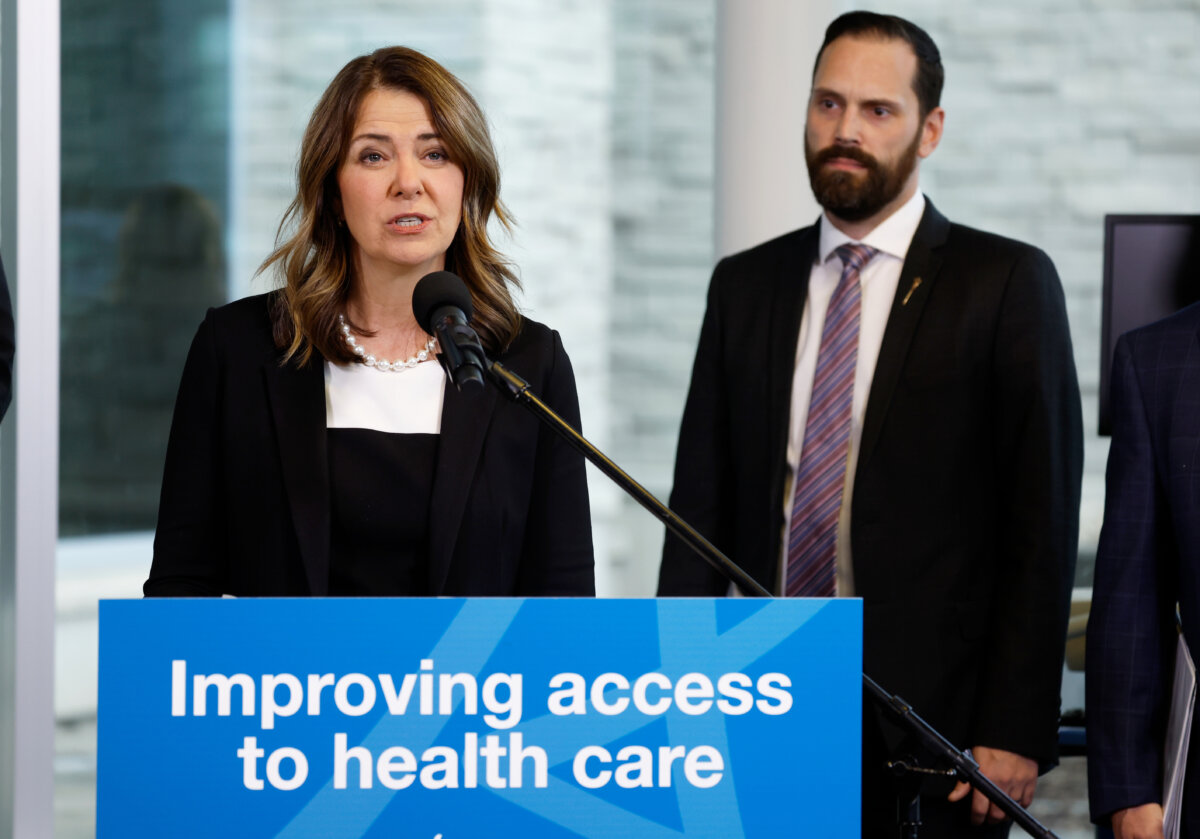
Premier Danielle Smith announced on Nov. 19 that her government will introduce a “dual practice surgery model” allowing physicians to practise both publicly and privately. The Alberta government subsequently tabled legislation to enact the new model on Nov. 24.
Alberta NDP Leader Naheed Nenshi criticized the move, warning that Smith’s government is “bringing for-profit American-style health care to Alberta.”
The United Conservative Party (UCP) government sought to allay such concerns, however, stating in a press release that dual practice “is widely used in countries with top-performing health systems” and that it is also used in New Brunswick and Quebec.
While New Brunswick does incorporate some elements of private care into its system, Alberta’s reform goes further by introducing a parallel private system for surgeries alongside the public system. However, the dual practice is more advanced in Quebec, and the provincial government attempted to restrict it earlier this year by passing a bill limiting the scope of private practice via requiring doctors to work in the public system for at least five years after their medical degree.
In Alberta, if the province’s Bill 11, the Health Statutes Amendment Act 2025, is passed, it would allow doctors to perform private elective surgeries during their off-hours in a bid to cut wait times.
Why is Alberta including caveats regarding elective surgeries and off-hours? The reason lies in the unique structure of Canada’s health-care system.
Unlike some other countries with universal health-care systems, Canada’s health care is decentralized, with each province and territory having its own health plan that covers different services and products. Nonetheless, Ottawa still holds the purse through the Canada Health Act (CHA), which dictates the terms of the Canada Health Transfer (CHT).
The CHT is the largest federal transfer to the provinces and territories. The most recent federal budget projects that it will grow to an annual $65 billion by 2029–30. This huge flow of cash comes with strings attached.
Private services cannot impose a financial burden on the public system—hence Alberta’s caveat that physicians can only do private surgeries during their off-hours. Because the Canada Health Act only covers “medically necessary” procedures, Alberta’s emphasis on elective procedures like knee or hip surgeries theoretically avoids potential complications.
Tightrope
Other provinces are also walking the tightrope of introducing as much private health care into the mix as possible without jeopardizing their portion of the federal health transfer. This is a real threat—Ottawa has deducted nearly $267 million from CHT payments for non-compliance with the act since 2015.

One of Ontario’s recent strategies to bring in private care has been to try to offload patients languishing on public health-care waiting lists onto private clinics. In January 2023, Premier Doug Ford announced his government’s intention to provide funding to private clinics to undertake more cataract surgeries, MRI and CT scans, and other procedures.
Ford argued that the lengthy waiting lists in the public system left his government little choice but to seek to break up the “log jam” by turning to private clinics.
“The way I can describe it, you have a dam, you have a log jam, are you going to just keep pouring the water up against the logs? Or are you going to reroute some of the water and take the pressure off the dam?” he said.
Ontario has been relying on this approach with increasing frequency. In August 2024, the province put forward a plan to cut long wait times for gastrointestinal endoscopies by funding 60,000 procedures at private community clinics. In July this year, the province said it was investing $125 million to cover up to 20,000 orthopedic operations at private surgical centres.
The Ontario Nurses’ Association has come out against these moves, stating that “Ford’s expansion of private clinics brings Ontario closer to American health care.”
A Fraser Institute study released in June called for Canada to go further along the path taken by Ontario, incorporating more private clinics into the health-care system. The study argues that Canada can learn from Switzerland, where “universal coverage is delivered through a system of managed competition among 44 non-profit private insurers” and where wait times are shorter.
Across the country, the provinces are increasingly ramping up funding to private health-care partners, which act as a kind of auxiliary force to prop up an exhausted public system.
The spread of private health-care partnerships is particularly strong in Saskatchewan—despite being widely acknowledged as the birthplace of Canada’s universal health-care system due to the pioneering reforms undertaken by Premier Tommy Douglas that saw the introduction of medicare in 1962.
In October, the Saskatchewan Health Authority announced that it is “renewing and expanding its partnership” with Surgical Centres Inc., a surgical service provider based in Western Canada, in an effort to “enhance access to timely care for patients.”
The health authority explained that, of the 100,400 surgeries performed in Saskatchewan in 2024–25, no fewer than 18 percent were done by publicly funded, private “community partners.”
Alberta’s recent move to allow dual practice for elective surgeries goes beyond the approach taken by Saskatchewan and Ontario. Rather than just funding private clinics, Alberta intends to allow physicians to practise publicly and also accept payment for private surgeries.
This shift toward private health care is also apparent in the Maritimes.
New Brunswick has been looking to the private sector to cut its long wait-lists for cataract surgeries, signing repeated partnerships to provide public funding for private surgeries.
And Prince Edward Island now has its first private MRI clinic; the wait time for an MRI scan in P.E.I. can be as long as 424 days. The new Summerside Diagnostic Imaging Centre is not affiliated with the provincial government, indicating that the trend toward private health care is sometimes taking place without the government directly encouraging it.
Wait Times
Slowly but surely, the provinces are coming to rely on a parallel system of publicly funded, private health-care providers. This is largely a reflection of the current state of Canada’s public health-care system.
According to the most recent available data from “Waiting Your Turn,” the Fraser Institute’s annual report on health-care wait times, the median wait between referral from a general practitioner and receipt of treatment is now 30 weeks—an increase of 222 percent since 1993.
Long wait-lists are the norm even for relatively straightforward diagnostics, with the report finding expected wait times of 16.2 weeks for an MRI scan, 8.1 weeks for a CT scan, and 5.2 weeks for an ultrasound.
A Montreal Economic Institute report released in September found that “out of 16,297,628 emergency room visits in 2024, 1,267,736 patients left without having been treated”—roughly one in every 13 visits.
Behind the data are harrowing individual stories, such as the tragic death of a 16-year-old Ontario youth following an eight-hour wait in the emergency room of the Oakville Trafalgar Memorial Hospital in February 2024.

According to a study by think tank SecondStreet.org, at least 23,000 patients died in Canada last year while waiting for surgery or a diagnostic scan, not including Alberta and some parts of Manitoba.
Statistics like these explain the increasing attempts by many provinces to circumvent the public system where possible and to pivot toward private care.
In Manitoba, incorporating private options into the public system has become a hot-button issue. In 2022, the former Progressive Conservative government under Premier Heather Stefanson vowed to boost the availability of private sector health care, a move that was denounced by trade union Unifor.
Manitoba Premier Wab Kinew’s NDP government, which came to power in October 2023, has shifted in the other direction, de-emphasizing the role of private clinics and ordering a health authority in western Manitoba to slash private nurse spending by 15 percent by March 2026.
From Politics to the Courts
Meanwhile, in British Columbia, the public-private health-care issue moved from the realm of politics to the courts when orthopedic surgeon Brian Day sought to make the case that banning private practitioners from charging patients violates constitutionally protected rights.
In the high-profile case, Cambie Surgeries Corporation v. British Columbia, Day, who runs the Cambie Surgery Centre, a private clinic in Vancouver, challenged the sections of B.C.’s Medicare Protection Act that prohibit private practitioners from charging patients for services that are available in the public health system.
The lawsuit, filed in 2016, argued that blocking patients stuck on long wait-lists from paying for speedier private treatment can cause them to “suffer prolonged pain and disability, serious psychological harm or deterioration and irreparable harm” and thus violates Section 7 of Canada’s Charter of Rights of Freedoms, which protects the “right to life, liberty and security of the person.”
Day’s lawsuit also argued that B.C.’s health-care rules violate Section 15 of the Charter—equality rights—because those who suffer workplace injuries in B.C. are exempt from the ban on private treatment.
In September 2020, B.C. Supreme Court Justice John J. Steeves issued a ruling dismissing the lawsuit, arguing that the negative effects of the province’s restrictions on private health care have not been proven to be “disproportionate to their societal benefits.” Specifically, Steeves pointed to the benefit to society of “preserving and ensuring the sustainability of the universal public system and ensuring that access to care is based on need and not the ability to pay.”
Dr. Day appealed the ruling, but it was upheld by the B.C. Court of Appeal, and in 2023 the Supreme Court of Canada declined to hear an appeal—Day’s last chance to win the case.
While B.C. does not make the same extensive use of private clinics as do Ontario, Saskatchewan, and now Alberta, it has sought to reduce strain on the public system in other ways—notably, by outsourcing some services south of the border.
In response to gruelling wait times for radiation treatment, the B.C. government announced in May 2023 that it would temporarily begin sending cancer patients to clinics in Bellingham, just across the border from Vancouver.
The debate over private clinics in B.C. did not end with the defeat of Day’s lawsuit. During the last provincial election in the fall of 2024, B.C. Conservative Leader John Rustad promised to expand public partnerships with private clinics in order to “get people off waiting lists and into operating rooms and diagnostic clinics for services like MRIs and priority surgeries.”
Quebec’s Chaoulli Case
In a striking illustration of the complexity of Canada’s governance structure, Quebec—a province perceived by the rest of the country as a hotbed of progressive politics—has gone further down the road of private health care than any other. This is less the result of political decisions than it is the consequence of one particular court case.
The ramifications of the 2005 case known as Chaoulli v. Quebec are still felt in the province today. Jacques Chaoulli, a doctor who tried and failed to set up a private hospital in Quebec, and George Zeliotis, a man who waited almost a year for hip surgery, challenged their province’s ban on private medical insurance.
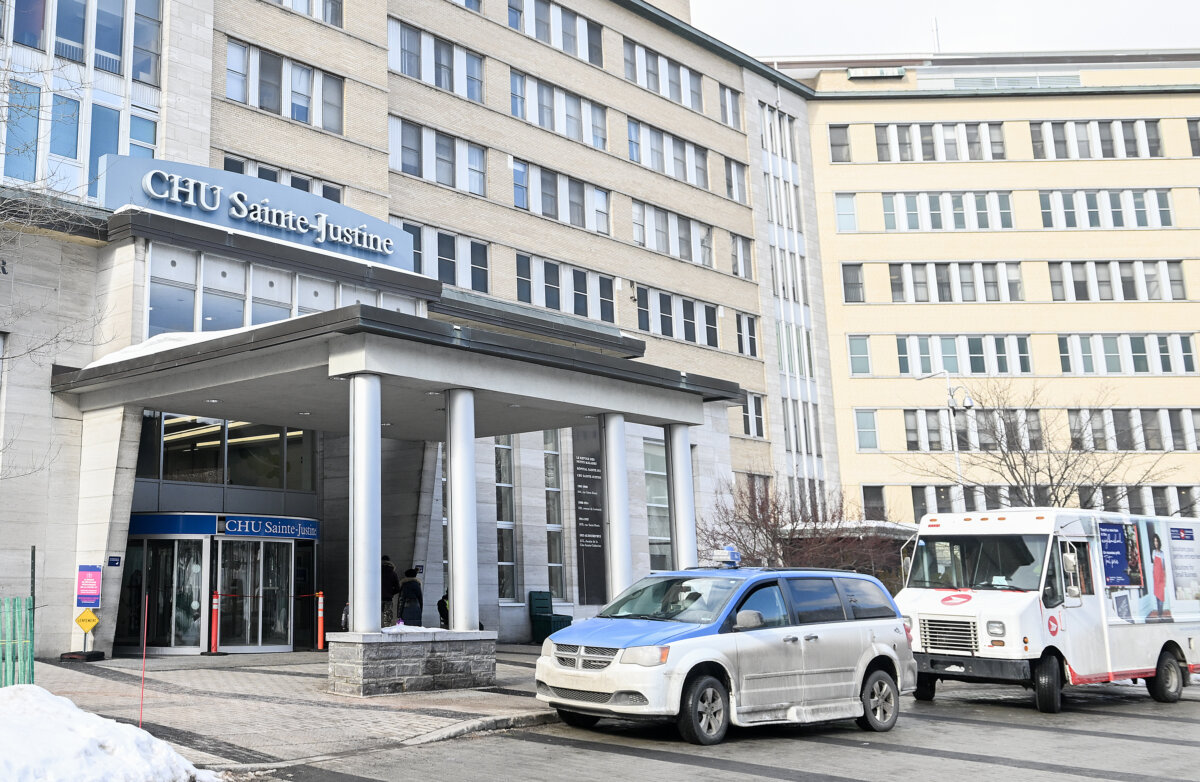
The Supreme Court of Canada heard the case, and in a 4–3 decision ruled that prohibiting private insurance for services that are also covered by the public health-care system while patients endure long wait times violates the Quebec Charter.
The Chaoulli case came within a hair’s breadth of changing Canada’s national health-care system. While a majority of the judges ruled that the ban on private insurance was in contravention of the Quebec Charter, there was a 3–3 tie on whether it violated the Canadian Charter of Rights and Freedoms, with one judge giving no opinion on the matter. Thus, the Chaoulli decision applied to Quebec specifically rather than Canada writ large.
A paper published in 2021 in the Canadian Medical Association Journal found “a large and sustained increase” in the number of Quebec physicians opting out of the public health system to practise privately after the landmark Chaoulli decision.
A September 2023 study by the Fraser Institute tracked the increase in private health care in Quebec after the Chaoulli ruling. Legislation introduced by Quebec after the decision created a framework to regulate private surgery clinics, which the province called specialized medical centres (SMCs).
While SMCs were initially allowed to do three types of surgeries with especially long wait times, they have since been authorized to perform almost 50 additional specialized medical treatments—mostly cosmetic and ophthalmological surgeries.
The study notes that one in every six publicly funded surgeries in Quebec are now done by private clinics.
With or without court decisions, more and more provinces are headed in this same direction of incorporating more private health care within Canada’s public system.
As wait-lists for surgeries and even simple diagnostics continue to grow, and horror stories circulate of overcrowded emergency rooms, this steady drift toward expanded private health care shows no signs of slowing down.
 Friends Read Free
Copy
Facebook
Tweet
Friends Read Free
Copy
Facebook
Tweet