SYDNEY—”The dictator is not in power anymore.”
Those are the jubilant words of Isaias Vego, a 29-year-old Venezuelan Australian who has spent most of his life seeing his beloved home country under the rule of the United Socialist Party of Venezuela.
Over the past decade, almost 8 million Venezuelans fled the nation amid accusations of illegal authoritarian power, kidnappings, torture and murder of civilians, according to human rights organisations.
On Jan. 3, the U.S. military entered Venezuela in Operation Absolute Resolve, conducting targeted airstrikes and raids in the capital Caracas, capturing Maduro and his wife Cilia Flores before flying the pair to New York City where they face U.S. federal charges for crimes including drug trafficking.
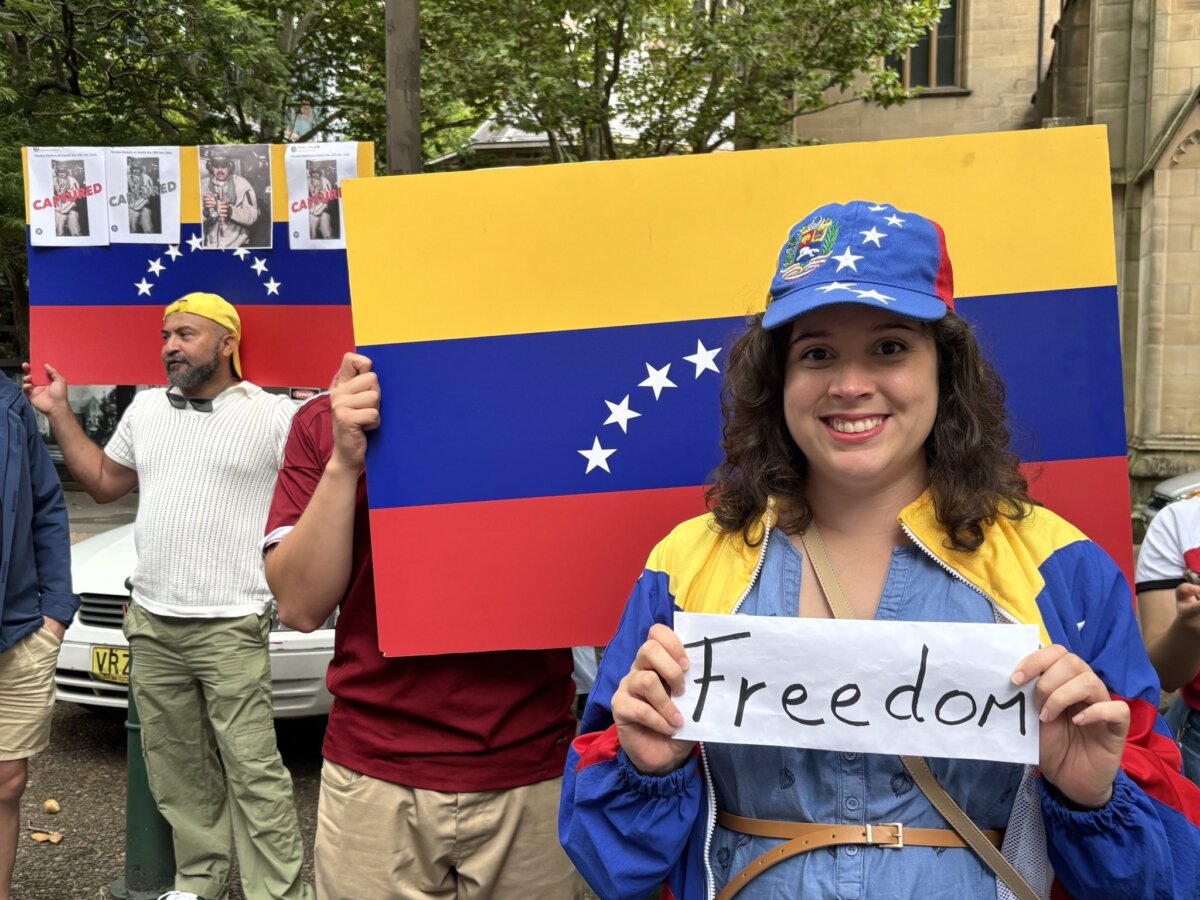
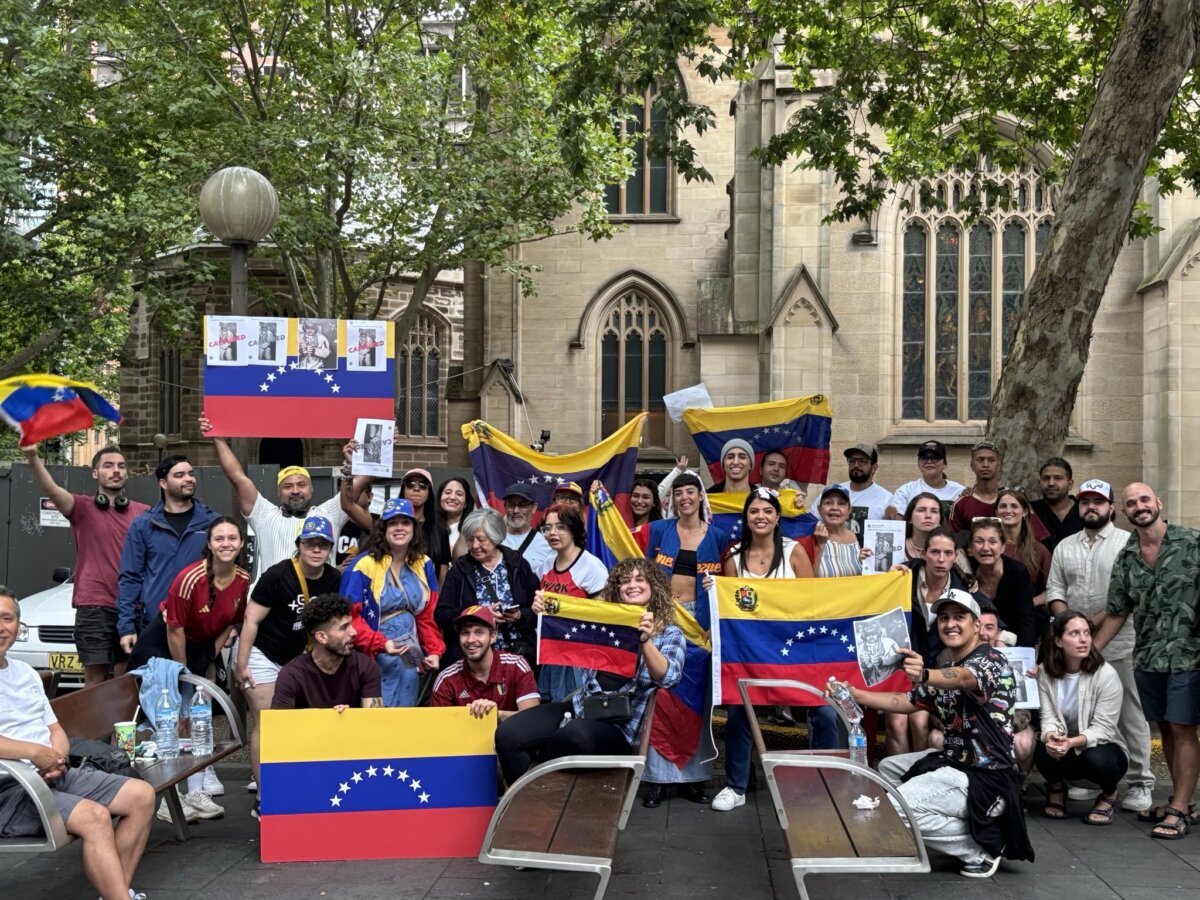
On Jan. 4, Vego, a social media influencer, has lived in Australia for eight years, joined other Venezuelans to celebrate Maduro’s removal.
“So my whole life I haven’t experienced the positive side of Venezuela and seeing this happening right now is just wonderful to us,” Vego told a crowd that had gathered in the Sydney CBD.
“That’s why we are here right now, because we all happy about this, and a lot of people are talking about the bombs. They weren’t killing people. The bombs were placed at specific places.”
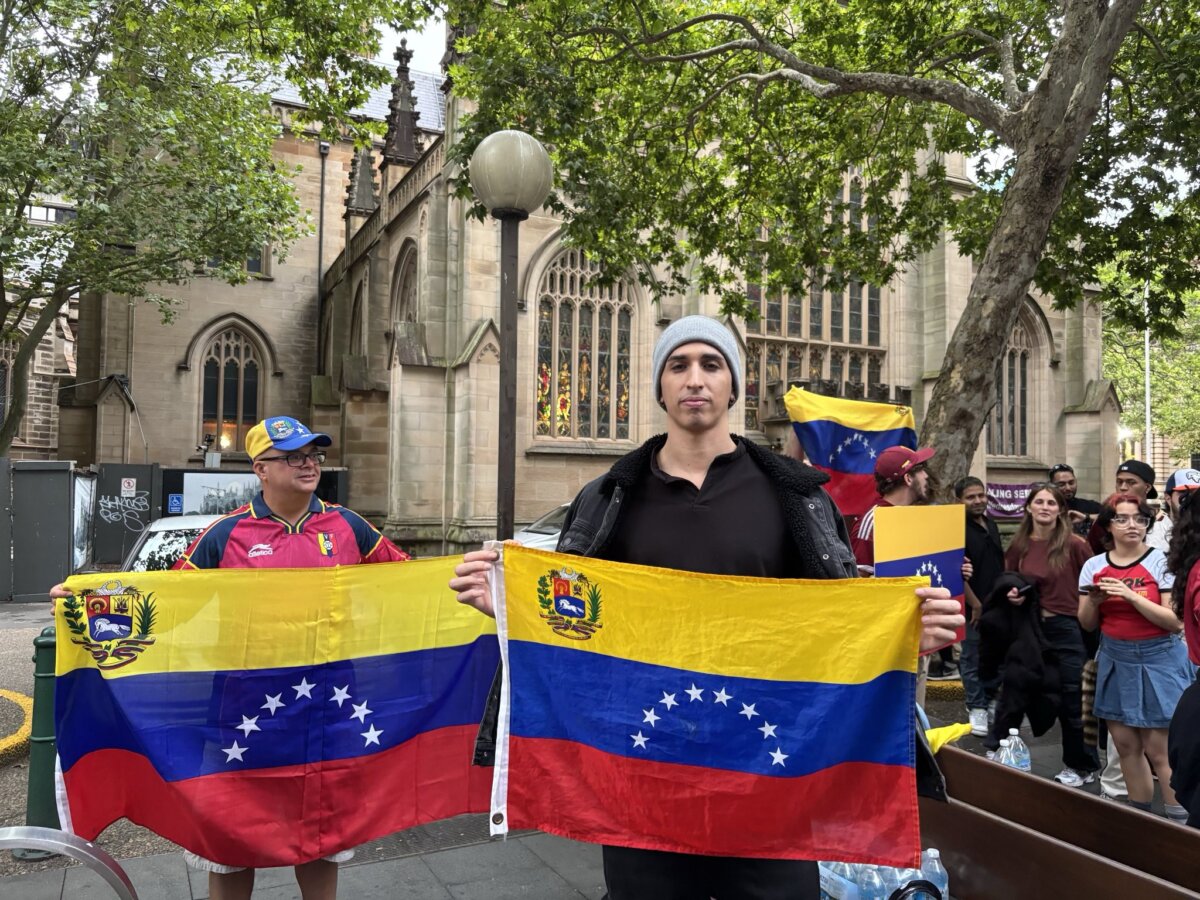
Vego says U.S. weapons targeted strategic areas aimed at aiding in the capture of Maduro.
He also denied claims the United States had “kidnapped” Maduro.
“He [Maduro] has been sending drugs to America. He’s also been killing everybody,” Vego said, adding that the former leader had to build a new prison to hold all the political dissidents.
Vego also said the United States was not just interested in oil reserves, and would guide the country towards a new era.
“Donald Trump is helping with the army,” Vego said. “He’s going to help with the army on the transition. It doesn’t mean they are going to take Venezuela.”
Baby to Meet Family: Venezuelan Says Mother Left Home to Find Work
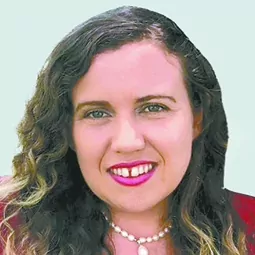
Fellow Venezuelan Ginette Villasmil also spoke to The Epoch Times as she joined in celebrations in Sydney.
“I will say that there are people who are scared of what the U.S. government might do,” she said.
“There are people who are very happy and they are very excited for what’s coming next.
“All kinds of opinions. But I think, ultimately, everyone agrees that we are very happy.”
Villasmil, a digital content creator, recounted how her own family had been forced to leave Venezuela because of their opposition to the leadership, noting that they struggled financially under the Maduro regime.
“A while ago, [the regime] made a list and made it impossible for people opposing them to find jobs and that’s what happened to my mum,” she said.
“My mum was a electric engineer, and she couldn’t find any work because she was on that list, so we had to move somewhere else so that she could be able to work and support her family.”
On the topic of the U.S. military going into Venezuela, she said the Maduro regime had been sending mercenaries to America to “cause chaos,” and that the government had “kidnapped U.S. citizens” for use as bargaining chips.
“So I don’t think that America is overreacting to the very real threat that the Maduro government placed on their country,” Villasmil said.
“I think it’s reasonable for him [Trump] to respond and say, ‘I’m sorry you can’t mess with our people that way.'”
Amid the fall of Maduro’s dictatorship, Villasmil said they could also reunite safely.
“I am personally very excited because I am three months’ pregnant, and I know that my baby is going to go to Venezuela,” she said.
“I’ve been here for 15 years, and I’m so happy that I’m gonna be able to go to my country, and my baby is going to meet my family.”
Socialists Protest, Call for Australia to Withdraw from AUKUS
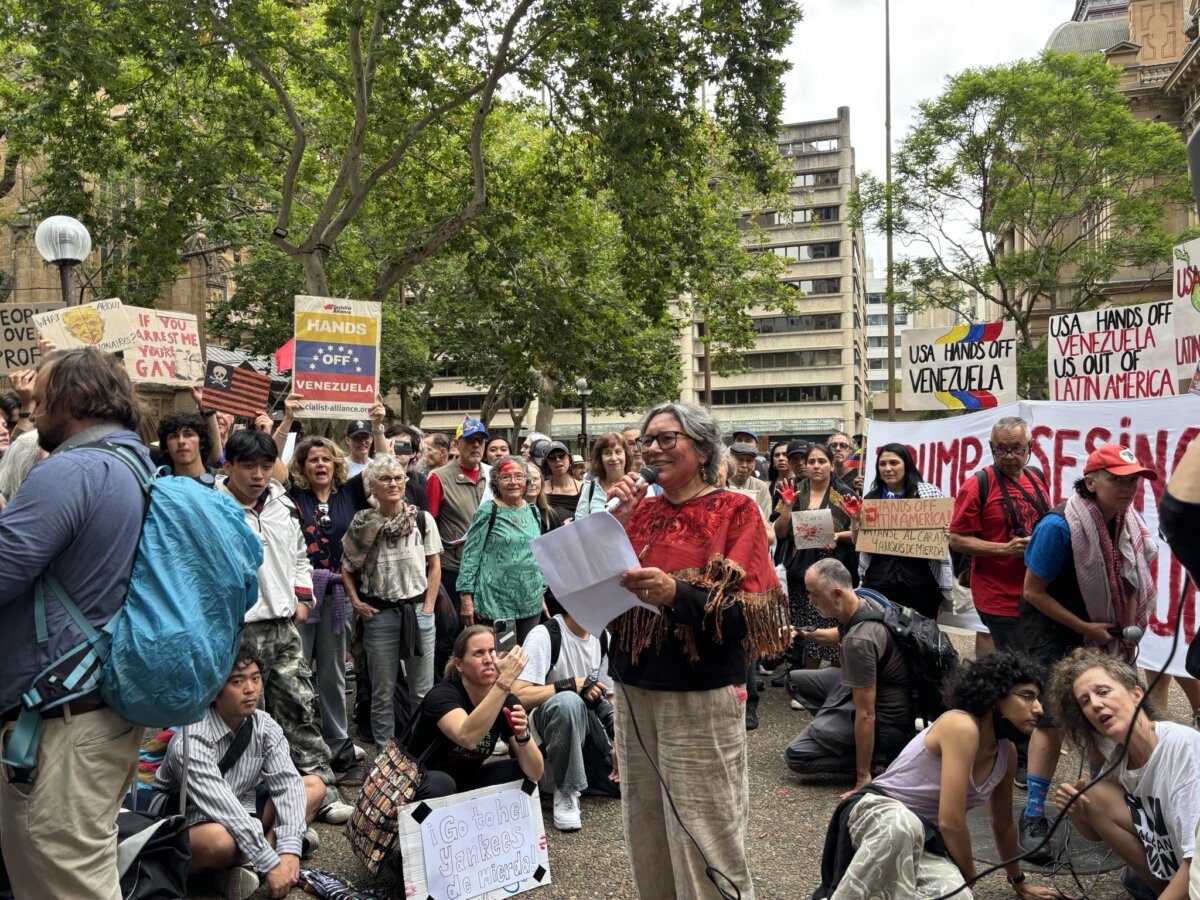
While Venezuelan-Australians celebrated, socialists and left-wing activists gathered just a few hundred metres away to protest Maduro’s capture.
Kylie Crowell is a member of the Executive Council of New South Wales Socialists and a finance sector union organiser.
Crowell labelled the U.S. actions a “terror attack” and urged protestors to push for Australia’s withdrawal from the AUKUS agreement.
“Government plans to spend at least $368 billion (US$246 billion) on nuclear submarines for America’s imperialist adventurism,” Crowell told her supporters.
“Our money should be used to solve the housing crisis, to restore our hospitals, to fix our schools, funds that should be used for bettering the lives of all Australians, along with AUKUS, we should demand that Australia cuts ties with the fascistic U.S. regime.
Meanwhile, Sydney academic Tim Anderson also spoke to the crowd accusing the U.S. government of “kidnapping.”
“They’ve kidnapped one man, and there are millions of angry people in Venezuela, and they have guns,” he said.
“Millions of angry people have guns. You think they’re going to let the next round of oil executives have administrators come into Venezuela and steal their social programs, steal their assets?” he said.
Anderson claimed Maduro had been part of a government that built “5 million houses for poor families” over the span of a decade.
Venezuelans Starved Under Maduro’s Rule: Human Rights Watch
Maduro came to power in 2013 after the death of his mentor, Hugo Chavez.
Once president, Maduro consolidated control by reshaping key institutions, sidelining the opposition and relying on the military and loyalist networks to maintain political dominance.
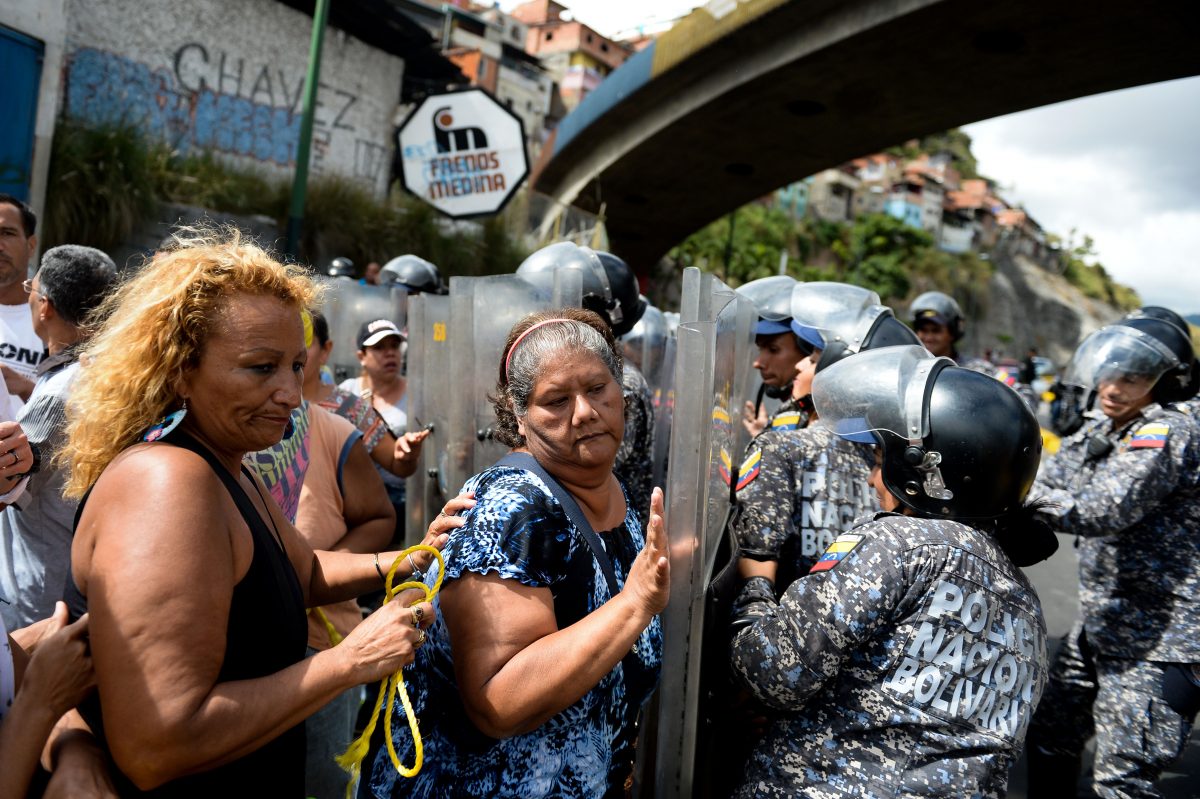
His subsequent re-elections have been widely disputed, with his regime accused of using repression to control the population and wreaking havoc on the country’s economy.
Human Rights Watch found in 2018 that found 3.7 million Venezuelans were malnourished.
Further research stated that 80 percent of households in the South American nation were deemed “food insecure,” meaning they had no reliable nutrition source.
Catholic humanitarian organisation Caritas Venezuela reported crisis levels of malnutrition among children, with 17 percent of youngsters under the age of five having severe malnutrition in 2018.
The same charity found 21 percent of pregnant women suffered from moderate to extreme malnutrition, additionally, studies found the majority of pregnant women had no access to prenatal care.
Disease has also run rampant in the South American nation. From 2008-2015, there was just one reported case of measles, but by 2019, close to 10,000 cases were reported, with the disease having re-emerged in 2017.
The Venezuelan Ministry of Health stopped releasing official data on maternal and child mortality in 2015.
The US Operation to Capture Maduro
On Jan. 2, President Trump ordered U.S. special operations forces to launch a helicopter-borne raid on Caracas to capture Maduro.
The operation was the culmination of months of preparation and weeks of waiting for the opportune moment.
U.S. forces reportedly built a house identical to the one where they found Maduro, who lived within a military base.
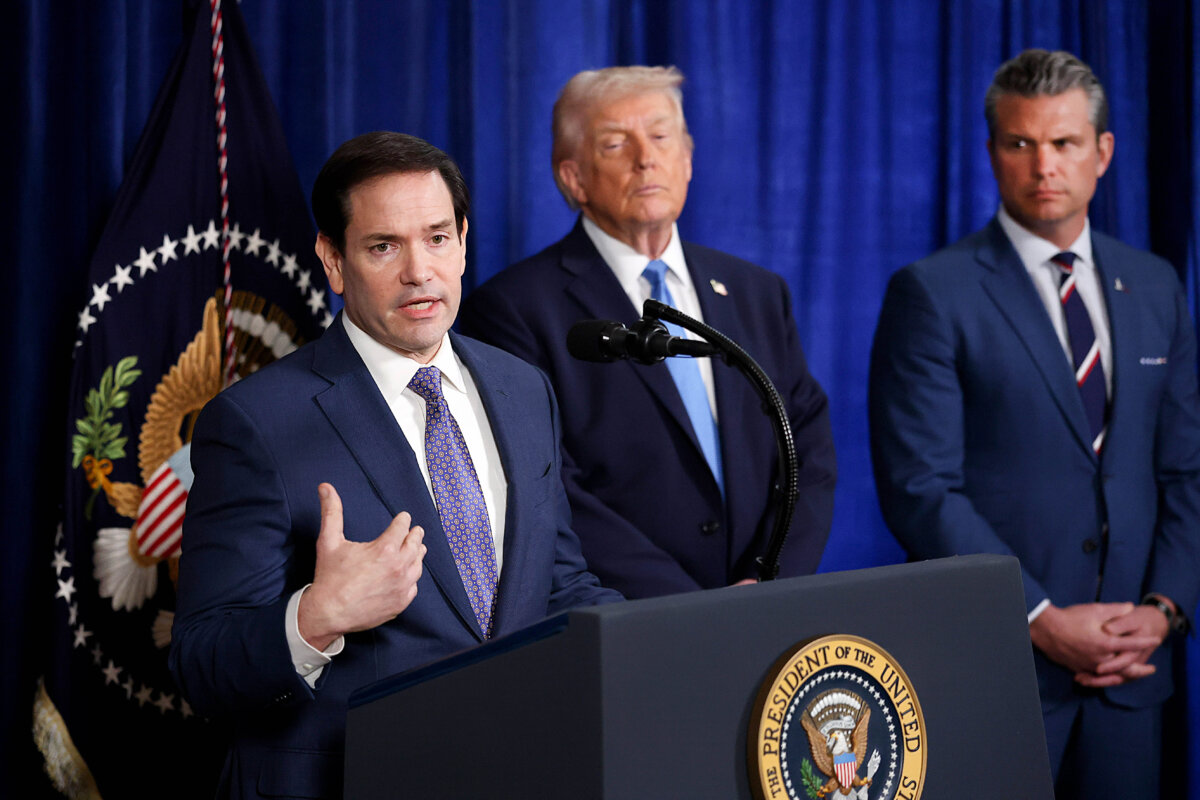
“It is not easy to land helicopters in the middle of the largest military base in the country,” Secretary of State Marco Rubio said.
“The guy lived on a military base. Land within three minutes, kick down his door, grab him, put him in handcuffs, read him his rights, put him in a helicopter, and leave the country without losing any American or any American assets—that’s not an easy mission.”
The U.S. military under the Trump administration has carried out multiple strikes on vessels in and around Venezuelan waters that U.S. officials claim were engaged in drug trafficking.
Speaking in a later address, Rubio said America would continue actions including seizing boats until all issues were addressed.
“The number one thing we care about is the safety, security, wellbeing and prosperity of the United States,” Rubio said.
Hailey Do contributed to this article.
 Friends Read Free
Copy
Facebook
Tweet
Friends Read Free
Copy
Facebook
Tweet