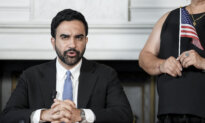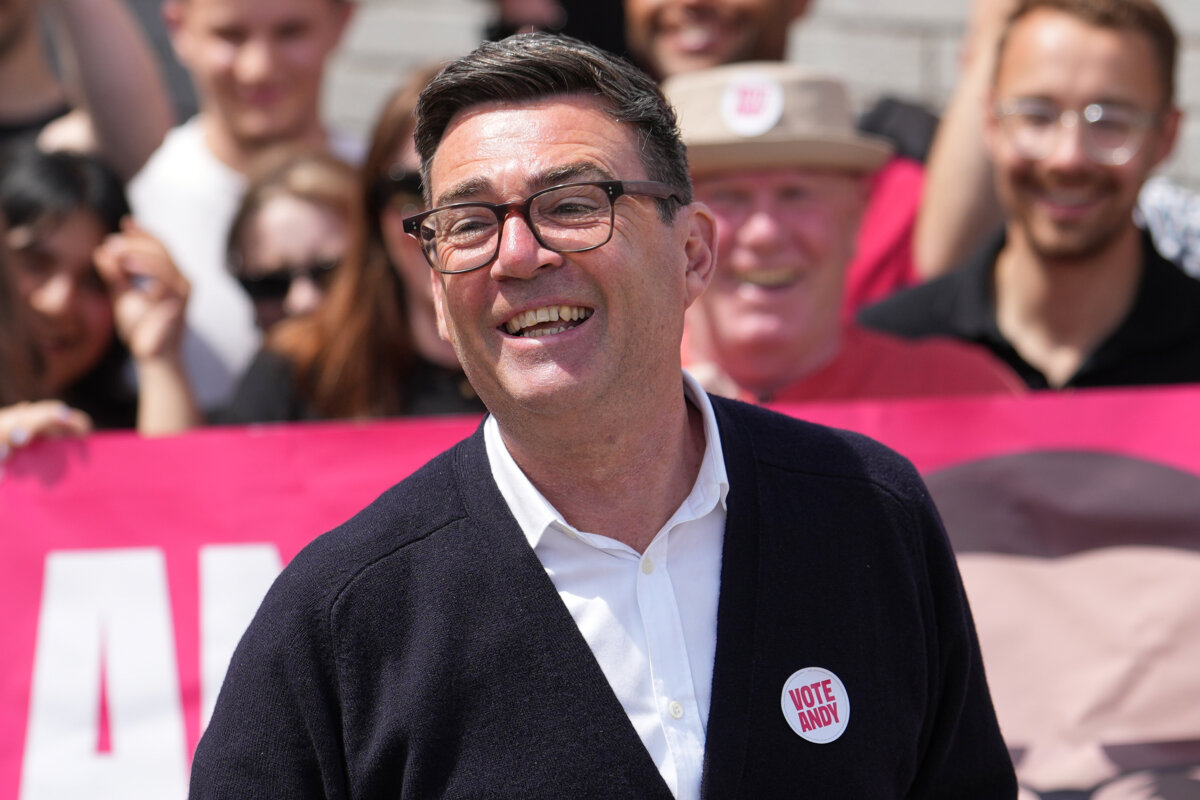

Labour party favorite Andy Burnham cleared a path to ousting British Prime Minister Keir Starmer on Friday after winning a parliamentary seat in the north of England.
The former mayor of Greater Manchester won the seat by a clear majority over Reform UK, with his return to national politics expected to spark a leadership challenge to the under-pressure Starmer.
Burnham secured 54.8 percent of the vote in Makerfield, while the candidate for Nigel Farage’s populist Reform party came second with 34.5 percent.
Starmer on Friday said he will not “walk away” if Burnham, a former political ally, moves against him, making clear he intends to stand in any leadership contest.
His former health secretary, Wes Streeting, who resigned in May, has said he will also stand in any contest.
Starmer has been under growing pressure from within his own party following a disastrous result for Labour at the local elections in May, when the party lost almost 1,500 seats across Britain, mainly to Reform but also to the Green Party in some areas.
Labour lost control of the devolved government of Wales for the first time and recorded its worst-ever result in the Scottish government election.
Reform performed strongly in Wigan in May, the area where the Makerfield constituency is, winning 24 out of 25 seats up for grabs in the local election and leading some commentators to speculate that Farage’s party could cause an upset by blocking Burnham’s return.
‘Divided’ US Politics Criticized
In the end, the result was decisive, with Burnham, who polls show is the party members’ clear favorite to be Labour leader, achieving a majority of 9,231 votes.
“Everyone knows that politics isn’t working. Everyone can feel that the country isn’t where it should be. Tonight could—just could—be the turning-point,” Burnham, 56, said in his victory speech.
He also said that he wanted to lead the UK away from what he termed the “divisions” in the country.
He said the UK now had a chance to turn away from “the path of a divided, dark politics of the kind we see in the United States.”
Starmer Won’t ‘Walk Away’
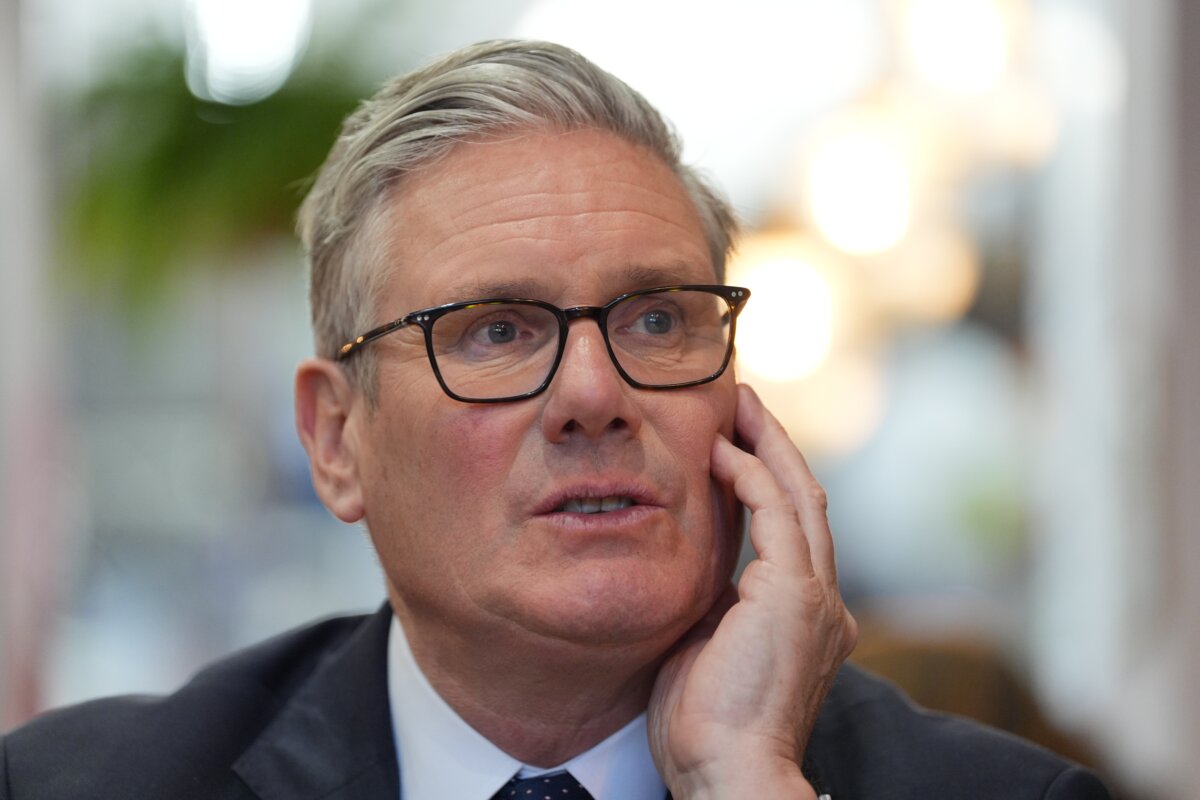
Starmer, 63, told reporters on Friday that it was “really important” and “really good” that Burnham had won in Makerfield, adding that he was “a huge asset” to the party.
But he said that a leadership race now would “plunge us into chaos,” and reiterated, “if there is a contest … yes, I will run, I will stand, and I’ve said repeatedly, I’m not going to walk away from that.”
Around a quarter of Labour MPs called on Starmer to resign in the days following the local elections. He came under further scrutiny for his decision to appoint Peter Mandelson as British ambassador to the United States, prompting questions about his judgment.
Starmer, as a newly elected lawmaker, backed Burnham to be Labour leader in a 2015 party leadership contest. Burnham ultimately finished second to Jeremy Corbyn, who led the party until Starmer took over in 2020.
Burnham left Westminster in 2017 to stand to be Manchester’s mayor. He backed Starmer to become leader in Labour’s 2020 contest.
Starmer led Labour to a landslide national election victory in July 2024, but his time as prime minister has seen the rise of the Reform party, which has only a handful of MPs but is attracting growing support amid widespread discontent over immigration policy and a cost-of-living crisis.
Burnham has previously said he would like to see the UK rejoin the European Union, which the British people voted to leave 10 years ago, although he has more recently rowed back on this controversial view.
Starmer has consistently called for closer ties with the EU but has stopped short of suggesting rejoining. Streeting said in May that he would like to see the UK back in the 27-nation bloc “one day.”
Farage posted a message to X on Friday, calling the Makerfield result “disappointing” for Reform, and urging those who voted for rival populist party Restore Britain to consider their choice.
The Reform leader said that Burnham is “a very popular local mayor, just as (former prime minister) Boris Johnson was a very popular mayor in London just a few years ago.”
Farage said the real reason for Burnham’s “dramatic, emphatic” victory, however, was a message of “Vote Burnham, get Starmer out.”
Former cabinet minister Louise Haigh, who managed Burnham’s campaign, said she hopes the new Makerfield MP and Starmer can come to an agreement in the coming days, to avoid a leadership contest.
Starmer Urged to ‘Reflect’
“We want to avoid a leadership contest if possible, and we hope that we can agree a way forward,” Haigh told the BBC.
She added that it is “quite clear” the prime minister cannot take the party into another set of elections and called on him to reflect and do “what’s right in the interest of the country and of the party.”
Labour rules state that 20 percent of the party’s MPs need to back a replacement candidate to trigger a leadership contest.
Other Labour MPs expected to throw their hats into the ring in the event of a leadership contest include former Deputy Prime Minister Angela Rayner, who is on the left of the party, and former armed forces minister Al Carns, who resigned from his position last week, citing concerns over military funding.
No Labour prime minister has ever faced a formal leadership challenge from their MPs. Since its formation in 1900, the party has had seven prime ministers, with Tony Blair the longest serving.
 Friends Read Free
Copy
Facebook
Tweet
Friends Read Free
Copy
Facebook
Tweet