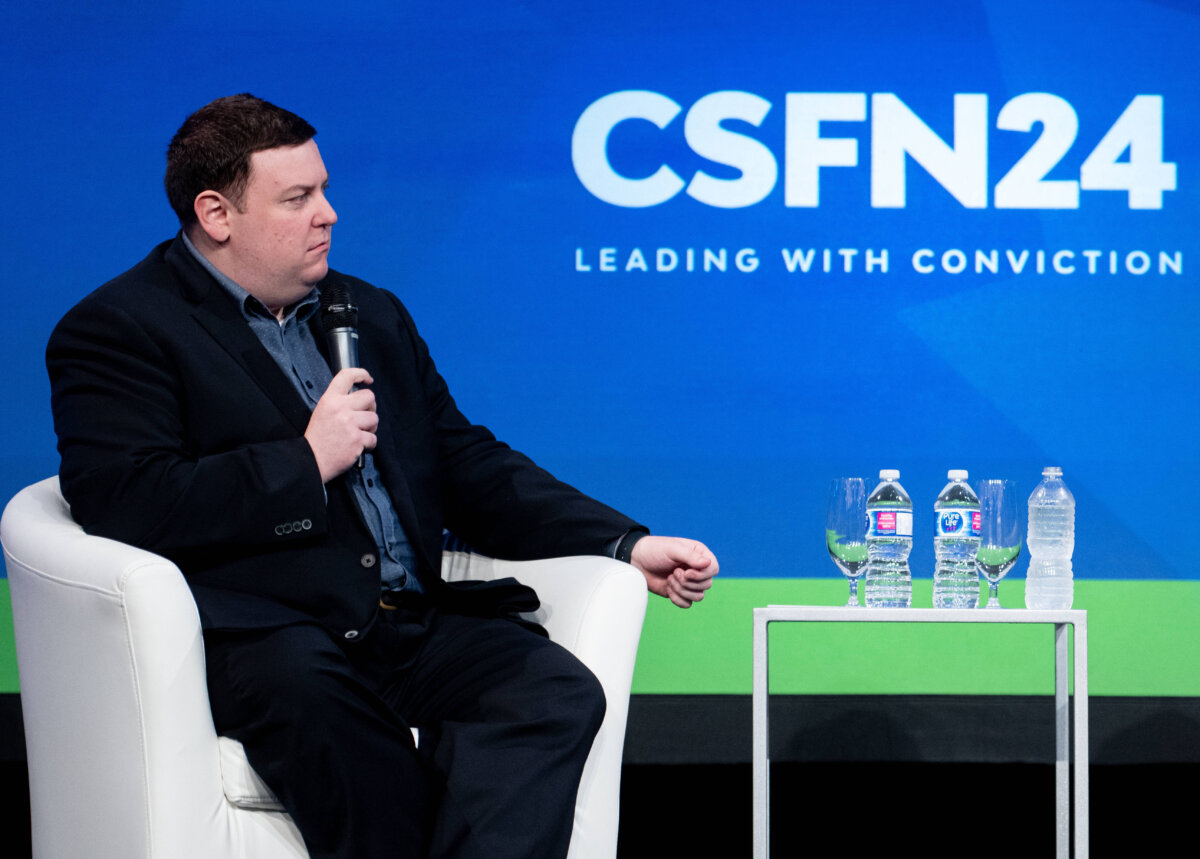

A Conservative MP says the case of a gender transition critic who was told by a co-panellist her remarks could constitute “hate” speech shows how codifying such definitions into law is creating an atmosphere that could lead to censorship.
“This is one of the many problems with codifying murky definitions of ‘hate’ in law. Not only does it give the state wider latitude to prosecute people for their thoughts and expressions, but it also is used by bad actors to chill speech preemptively,” Andrew Lawton said on Oct. 20.
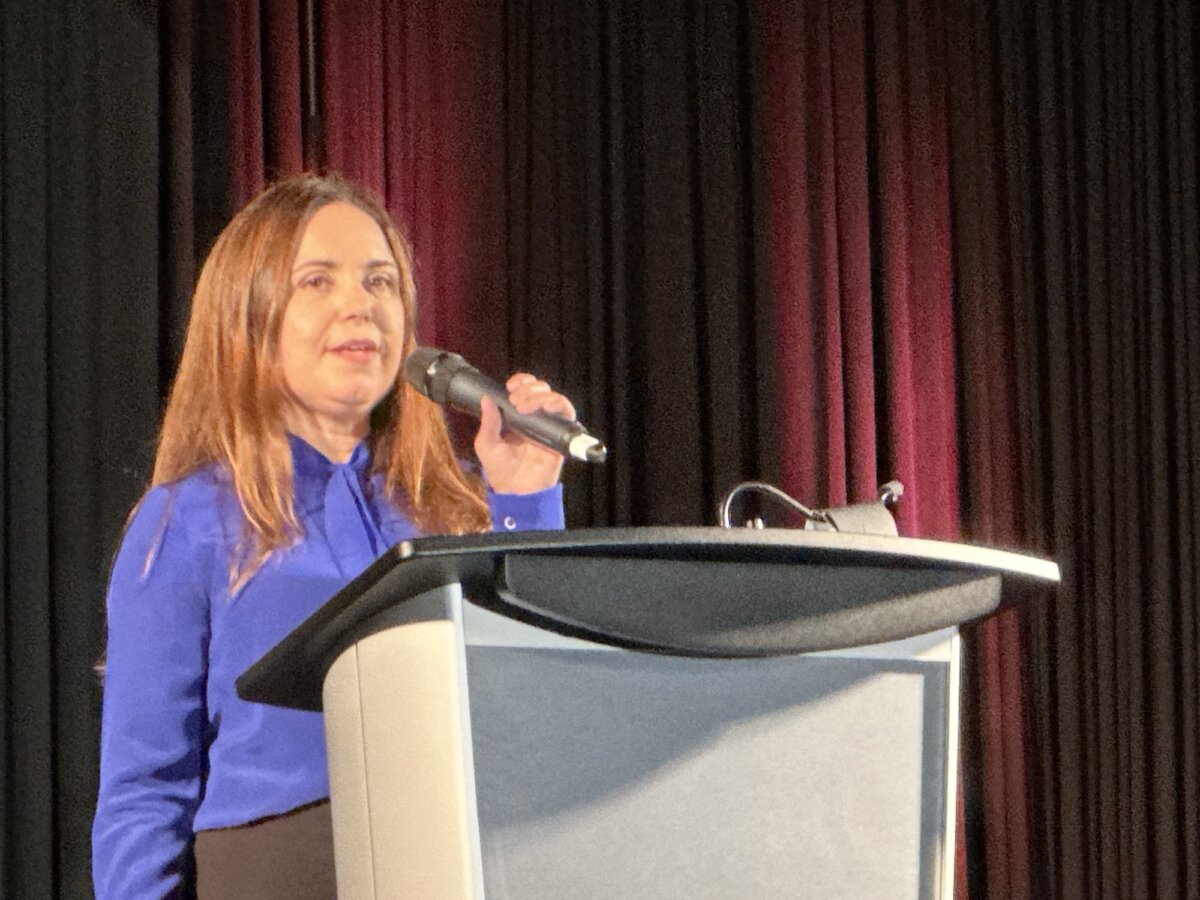
Mia Hughes, a senior fellow at the Macdonald-Laurier Institute, said on X earlier in the day that she had agreed to partake in a discussion at Wilfrid Laurier University on gender identity on Oct. 23. The discussion, according to the university’s Heterodox Academy Campus Community (LaurierHxA), will examine the “evidence and socio-legal implications of gender identity.”
However, Hughes said she was advised by her co-speaker, transgender activist Morgane Oger, that she should review her remarks “with human rights codes in mind.” According to Hughes, Oger also suggested that some of her views could “be hate speech under the Criminal Code.”
Hughes said that disagreement should “not be labelled hate” and that she would not be reviewing her remarks or changing “a single thing about the way I express my opinions or beliefs.”
Following the warning, LaurierHxA issued an updated participation agreement that Hughes and Oger were required to sign, which said no legal, administrative, or disciplinary action or complaint may be initiated in response to views expressed during the discussion. LaurierHxA also stated that Oger’s “implied threats are incompatible with the principle of good-faith engagement.”
Oger did not respond to The Epoch Times’ request for comment before press time.
In a post on Facebook, Oger wrote about “looking forward to comparing moral panics to facts” during the discussion, and said the talk would examine topics like women’s sports, women’s prisons, and the role of the Charter of Rights and Freedoms. “Hopefully I’ll speak to rights, policy, outcomes, and the far-right pushback that gives broken record,” Oger said.
MP Lawton has raised concerns with the Liberal government’s Bill C-9, the Combatting Hate Act, which deals with the public incitement of hatred and wilful promotion of hatred against identifiable groups.
The bill would make it a crime to intimidate or intentionally obstruct people from physically attending places of worship, schools, and community centres; criminalize the wilful promotion of hatred against an identifiable group by publicly displaying certain terrorist or hate symbols; and remove the requirement for the attorney general to give consent before someone can be charged with a hate crime.
Lawton said during a speech in the House of Commons on Oct. 1 that the bill also adds the term “hatred” to the list of definitions in Section 319(7) of the Criminal Code. He said that while the Supreme Court in a seminal free expression case held that hatred “connotes emotion of an intense and extreme nature that is clearly associated with vilification and detestation,” the bill, if passed, would define “hatred” as an “emotion that involves detestation or vilification and that is stronger than disdain or dislike.”
Lawton said the removal of the word “extreme” means the Liberal government is “lowering the threshold of what constitutes hate,” while also “expanding the state’s power and lowering the threshold of what can be regarded as free expression in this country.”
When introducing the legislation, Justice Minister Sean Fraser said Bill C-9 would strengthen protections so that Canadians of all races, ethnicities, faiths, and sexualities could “feel safe in their communities.” The government has also said the legislation would respect Canadians’ Charter freedoms of expression and peaceful assembly and not “unreasonably” impact the freedom of Canadians to protest or peacefully voice their concerns.
 Friends Read Free
Copy
Facebook
Tweet
Friends Read Free
Copy
Facebook
Tweet