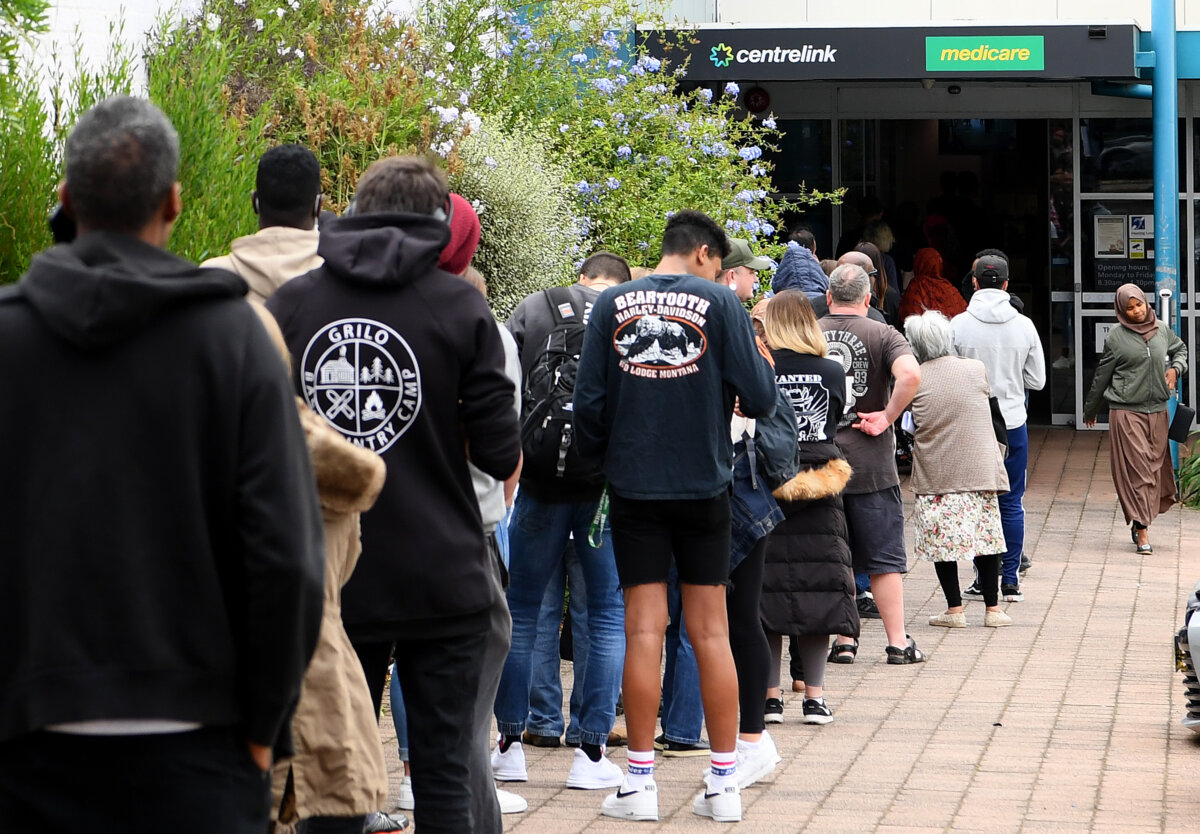

Taxpayer-funded employment now accounts for 31.3 percent of all Australian jobs amid warnings the country is following in the footsteps of other countries that have slid into socialism.
According to the study, “Leviathan on the Rampage,” by Robert Carling for the Centre for Independent Studies (CIS), found employment in three industries heavily supported by government funding—public administration and safety, education and training, and health care and social assistance—accounted for 26.2 percent of total employment in February 2013.
This share rose to 28.1 percent in 2019, and 31.3 percent in February 2025.
The proportion would be even higher if only new jobs were counted—the health sector has been a major driver of jobs growth in recent years.
“Over this whole period of 12 years, total employment across all industries increased by 3.1 million. The three industry groups listed above accounted for 1.6 million, or close to 50 percent,” the report said (pdf).
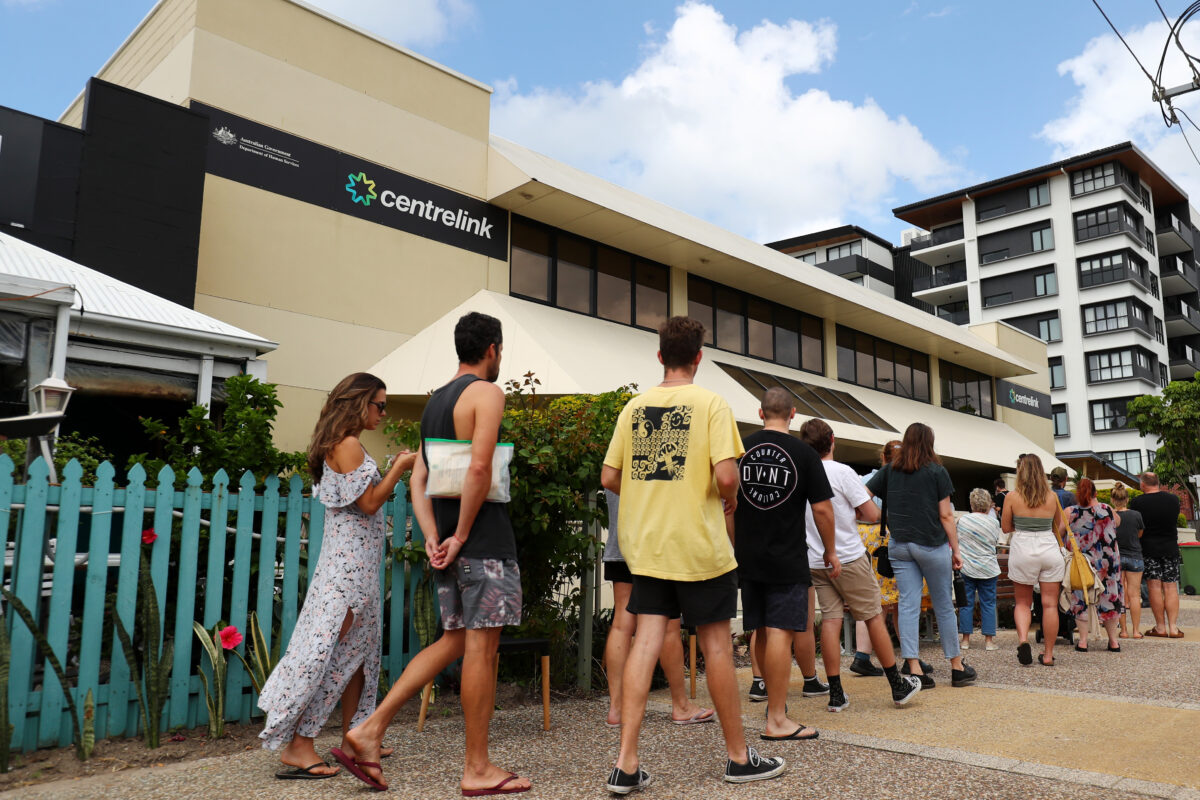
The CIS also found that when the number of taxpayer-funded workers were combined with those on welfare, more than half of Australia’s eligible voting population ends up relying on taxpayers for their income.
In the 2024-25 financial year, estimated spending at all levels of government in Australia stood at 38-39 percent of total GDP.
While the figure was well below a peak of over 44 percent during the COVID-19 pandemic, it was still higher than the 2010-2019 average of 36-37 percent, and the late 1990s-2008 average of 34-35 percent.
Meanwhile, the federal government accounted for 27.6 percent of GDP in 2024-25, down from the 30 percent peak during the pandemic, but up from 25 percent in 2012-13.
Major Spending Items
The list of fastest-growing spending categories—many of which are welfare-related—is expected to account for 50 percent of total government spending by 2028-29, up from 35 percent in 2012-13.
In addition, these items are projected to make up 83 percent of the increase in government expenditures in dollar terms by 2028-29.
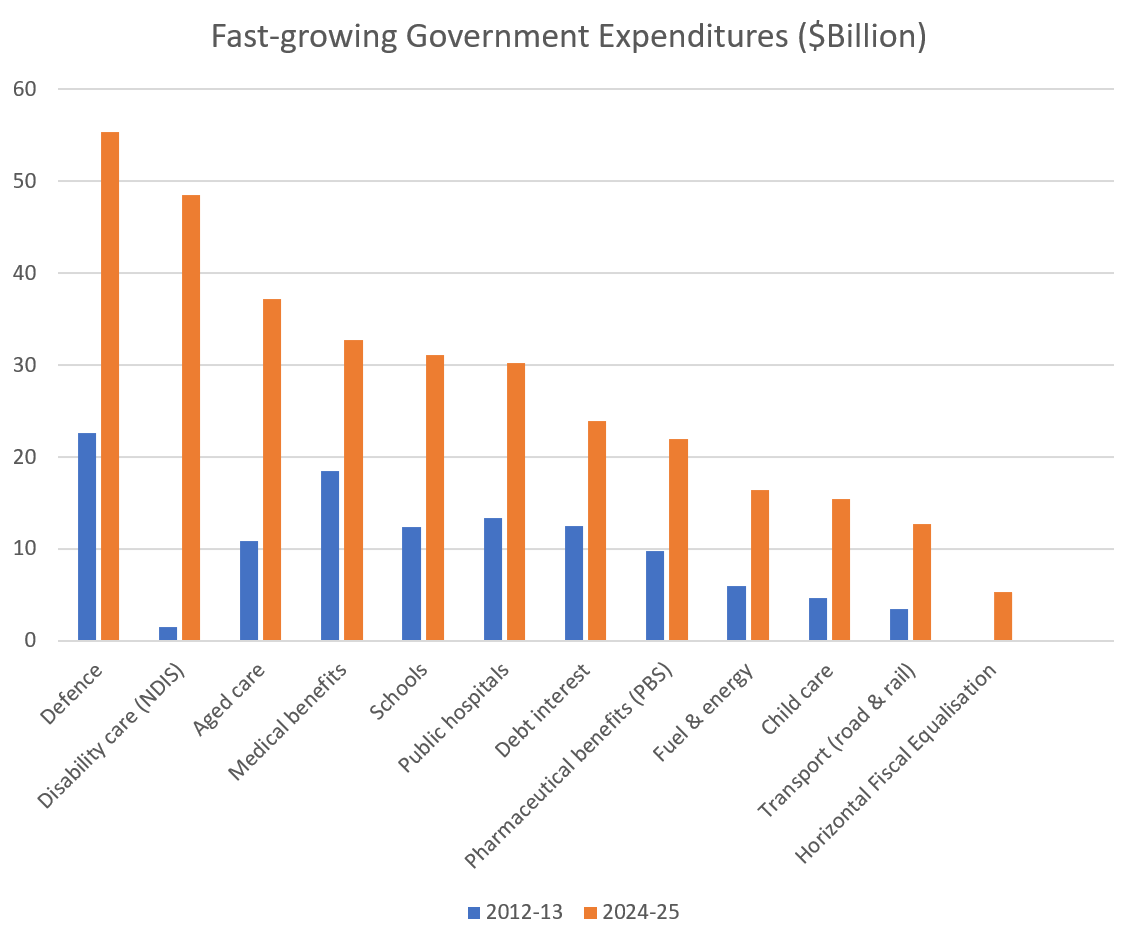
Defence was the most significant expenditure at $55.3 billion (US$36 billion) in 2024-25, followed by disability care at $48.5 billion, aged care at $37.2 billion, medical benefits at $32.7 billion, and schools at $31.1 billion.
Disability care reported the highest growth, with a compound average growth rate of 35.1 percent in the past 12 years.
What started as a small federal payment to states prior to the establishment of the NDIS (National Disability Insurance Scheme) in 2013, has grown into the second-largest expenditure in the list, with costs rising from $1.5 billion in 2012-13 to $48.5 billion in 2024-25.
Other expenditures with high compound growth rates were transport (11.3 percent), aged care (10.9 percent), child care (10.4 percent), and fuel and energy (8.7 percent).
It is worth noting that some off-budget spending, ranging from student loans to energy transition funds, is expected to add a further $104 billion to total government spending over five years to 2028-29.
Value of Taxpayer-Backed Spending Erodes As It Grows
The risk of this trend continuing is that the economy may not be able to support this cycle.
“The reality is that the bigger government becomes, just as the marginal benefits of more spending are likely to shrink, the marginal cost of taxation or borrowing is likely to expand, and the more likely it is that the last dollar spent was wasted or did not generate sufficient benefit to justify the extra dollar of taxation or borrowing needed to finance it,” the report said.
“The economic costs may come from a rising debt burden if spending is financed by deficits and borrowing.
“But even if this is avoided through increasing taxation, the rising tax burden also does economic harm by eroding incentives for productive work, saving and investment.”
Another problem with high government spending is worsening inflation.
While the federal government has downplayed the impact of rising expenditures in recent years, economic evidence shows that they do contribute to higher inflation.
In 2023, RBA Governor Michele Bullock acknowledged that inflation in Australia was “increasingly homegrown” and driven by strong domestic demand instead of the impacts of the global supply chain disruptions caused by the war in Ukraine, like before.
“Australia’s burst of high inflation since 2021 has drawn attention to the connection between government expenditure and inflation,” the report said.
“There is no doubt that while other factors were also at work, the rapid growth of public sector demand has contributed to elevated inflation.”
Welfare Breeds Entitlement
Amid the rise in welfare spending, a culture of dependency has taken root, leading to demand for more taxpayer-backed spending, which in turn, makes politicians reluctant to cut back on spending dramatically or risk voter backlash.
“A vast network of lobby groups and organisations has evolved to safeguard and increase social spending,” the report said.
“The growth of government becomes self-sustaining as it nourishes the powers that demand it continue.”
The findings aligns with conclusions presented in The Epoch Times’ editorial series, “How the Spectre of Communism Is Ruling Our World,” which reveals how quickly welfare systems can expand and consume a nation’s resources.
It pointed to data from the OECD, which found 27 countries had an income tax rate higher than 30 percent.
“The countries with the highest income taxes, at 54 and 49.4 percent, are both in Europe. On top of this, eating or shopping in Europe usually adds more than 20 percent in sales tax. Corporate and other taxes further add to the overall tax burden,” the series says.
It also outlined a study by Swedish scholar Nima Sanandaji, who found in his World Value Survey that in “the 1980s, 82 percent of Swedes agreed with the statement that ‘it is wrong to receive government benefits that you do not deserve.’ In the 2010–2014 survey, only 55 percent of Swedes agreed with this statement.”
A Backdoor for Communism
New Zealand communism expert Trevor Loudon says historically government systems that introduce welfare eventually morph into more socialist or communist models.
In the first stage, which Loudon dubbed “welfarism,” in an article in The Epoch Times, where the economy remains healthy while people receive relatively few benefits.
By the second stage (“social democracy”), social welfare benefits become more universal and generous, with most people receiving handouts.
At this stage, welfare is no longer seen as a privilege but a “right,” and different kinds of conflicts arise in society due to the distribution of benefits.
As welfare continues to stack up, society will head toward socialism (stage three), with significant tax rates and difficulties maintaining economic growth.
By the third stage, the government will operate most services despite declining service levels. At the same time, the private economy is suppressed by government policies. Generally at this point, people are also led to be deeply suspicious or jealous of the country’s wealthiest individuals and entrepreneurs.
In the final stage (communism), the government controls everything with its security and military apparatus. The economy is in free-fall, and every aspect of society is declining.
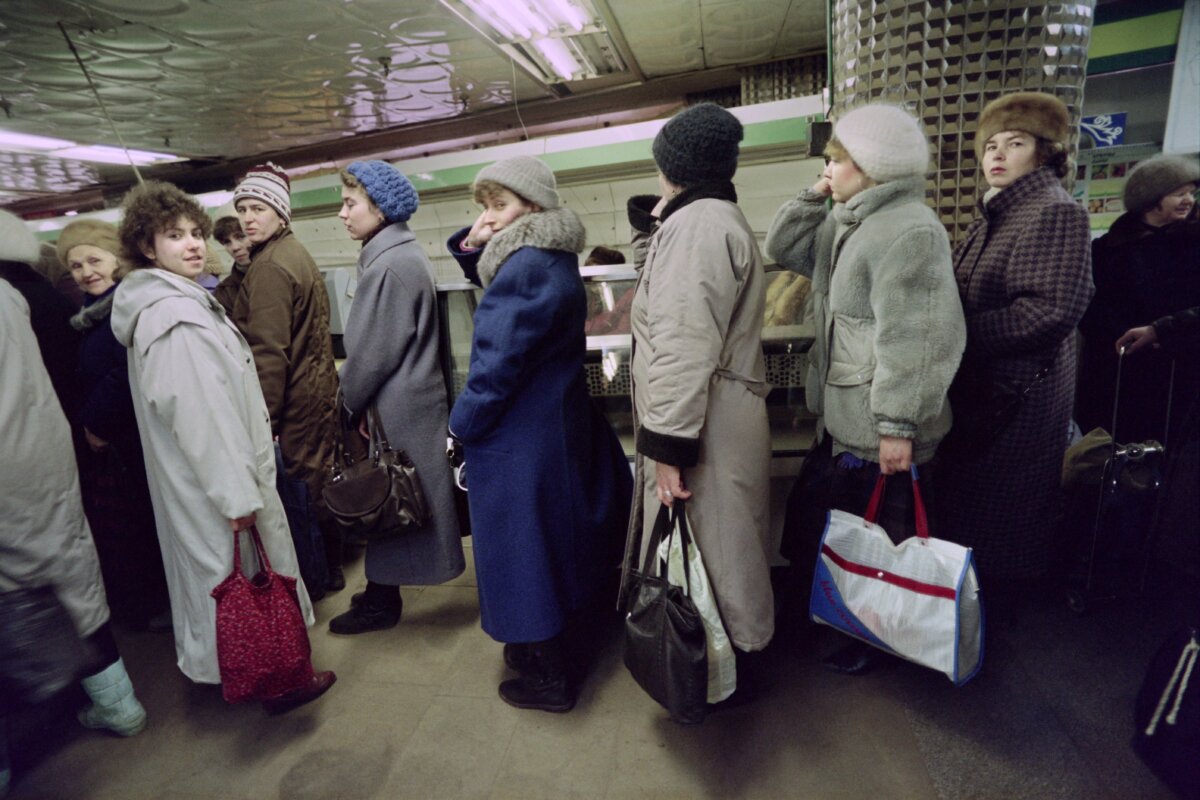
While every service is now free, they are worthless, with endless queues and atrocious quality. Class tensions also intensify.
“And it all started with just a little bit of harmless welfare,” Loudon wrote.
What About Australia?
The CIS acknowledges that cutting spending will be a big challenge, and recommends slowing it down.
These include conducting reviews of major spending programs to reduce spending and improve their effectiveness, minimising the roll-out of new spending measures, implementing fiscal rules limiting the growth rate of spending per capita, and suspending the expansion of the public service.
“The aim should be to achieve a structural budget balance by 2029-30, which allows five years of fiscal consolidation,” the report said.
“This would be comparable to the five years from 1985-86 to 1989-90, during which Commonwealth budget payments shrank by a cumulative 3 percent in real terms and the budget went from a deficit of 2.6 percent of GDP to a surplus of 1.5 percent, and at the same time, meaningful tax reform was implemented.”
 Friends Read Free
Copy
Facebook
Tweet
Friends Read Free
Copy
Facebook
Tweet