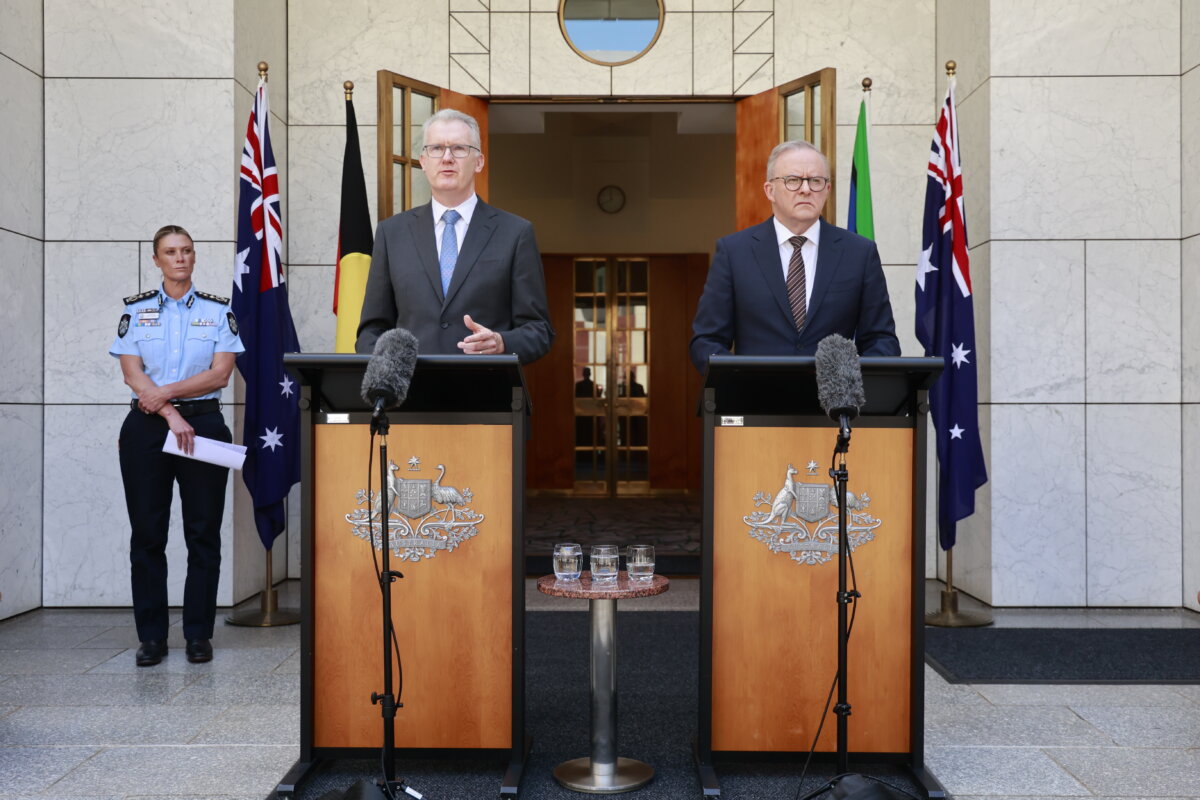

Prime Minister Anthony Albanese has announced a new national gun buyback scheme following the Bondi massacre, with hundreds of thousands of firearms expected to be collected from the public.
The scheme comes in the wake of the Bondi Beach terror attack, which saw two gunmen opened fire on the first night of the Jewish Hanukkah festival, killing 15 and injuring more than 40.
One of the gunmen, Sajid Akram, was in legal possession of six firearms and had a category AB firearm licence.
The newly proposed gun buyback scheme is being described by the prime minister as the largest since the Port Arthur Massacre in 1996.
“There’s something wrong with the licensing laws when this guy can have six high powered rifles, which is why the government’s acting,” Albanese told reporters.
“There’s no reason why someone in that situation needed that many guns.
“There are now more than 4 million firearms in Australia, more than at the time of the Port Arthur Massacre nearly 30 years ago.
50–50 Cost-Sharing With States and Territories
The prime minister said the federal government would introduce legislation to support the funding of the buyback scheme, with costs split 50–50 with the states and territories.
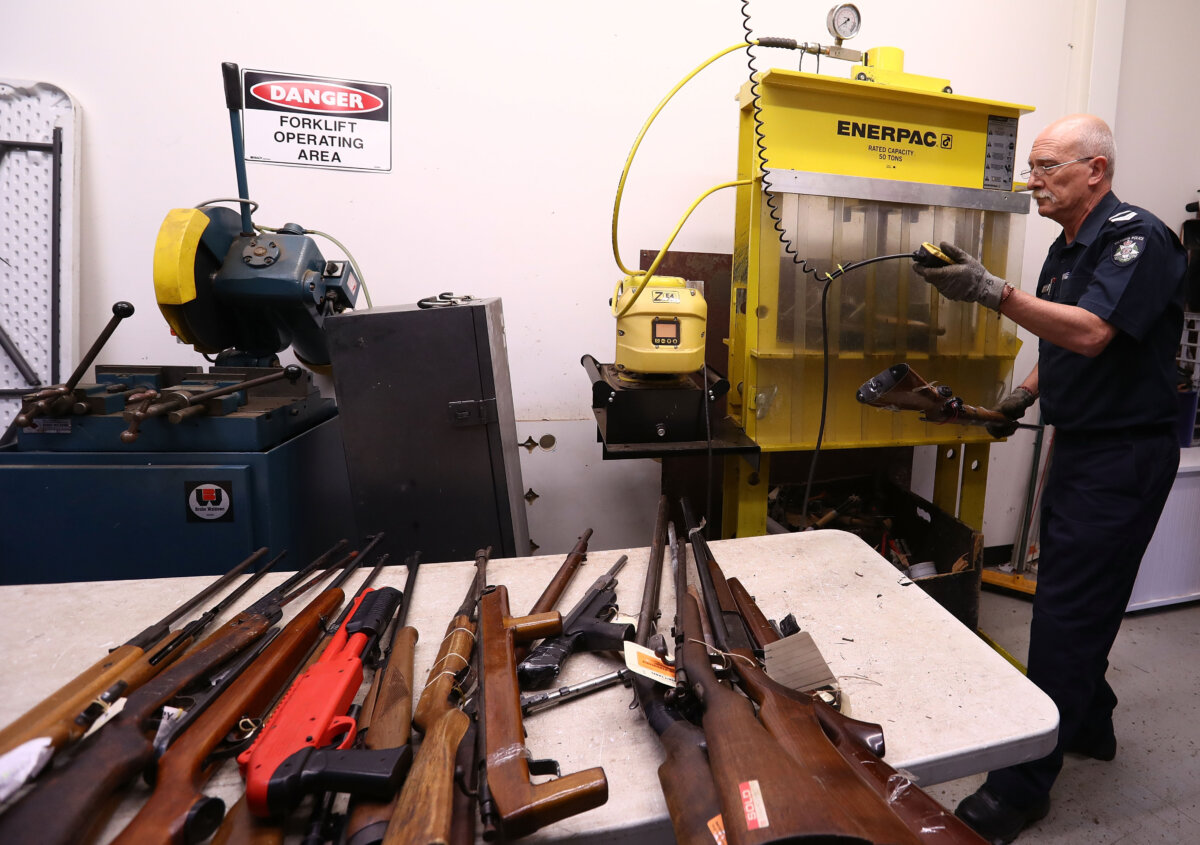
“We expect hundreds of thousands of firearms will be collected and destroyed through this scheme. Consistent with the approach that was taken in 1996, the government is proposing that states and territories will be responsible for the collection processing and payment to individuals for surrendered firearms,” he said.
“The Australian Federal Police will then be responsible for the destruction of these firearms.”
When asked how many guns a person is allowed to own, Albanese said that “is the subject of work,” adding that that finalising the laws requires cooperation and agreement from the states and territories.
“The laws are only as strong as the weakest laws in any state,” he said.
“We have tasked [New South Wales] Premier [Chris] Minns together with [Western Australian] Premier [Roger] Cook to oversee that process they will undertake through state and territory governments, then come back to national cabinet with the details there.
“I want laws to be as strong as possible whilst, of course, providing for legitimate use of guns as well.”
Home Affairs Minister Tony Burke said a buyback scheme was going to be “a piece of the puzzle” to reducing the number of guns currently in circulation.
“The reduction happens in number of ways, in the limiting of number of firearms held by any one individual, in limiting open ended licencing, in making citizenship a condition of a firearm licence,” he said.
Burke also highlighted the need to accelerate the establishment of the National Firearms register and improving the intelligence sharing decisions regarding firearms licencing.
Government Has Not Done Enough: Former Prime Minister
Albanese’s moves come amid criticism of his response to the Bondi massacre.
Former Liberal Prime Minister John Howard, who introduced the first major buyback scheme after Port Arthur, had said moves to limit gun ownership were to detract from the Labor government’s lack of action on anti-Semitism.
“Every time the question of fighting anti-Semitism comes up, he talks about Islamophobia,” he told Nine News on Dec. 16.
“Since then [Oct. 7, 2023], more should’ve been done by Mr. Albanese. He should’ve been more vigorous. He should’ve not try to win domestic political support by prematurely and unjustifiably recognising an independent Palestinian state.”
Several electorates held by the Labor government contain major Muslim populations.
The National Cabinet is expected to reconvene on Dec. 22 to discuss details about how the gun buyback scheme will be carried out.
Labor MP Says He Does Not Support ‘Unfair’ Gun Law Changes
Meanwhile, federal Labor MP Dan Repacholi, who represents the NSW electorate of Hunter, said he did not support any potential “unfair” changes to gun laws due to be introduced to the state parliament on Dec. 22.
“Firearms laws in Australia are primarily state-based, and the matters raised by Premier Minns are decisions for the NSW parliament, not the federal parliament. I won’t be voting on NSW firearms legislation,” he said in a statement on social media.
“My position is consistent and clear. Australia has strong gun laws and they save lives, but I DO NOT support changes that unfairly target responsible, law-abiding firearms owners.
“Measures that are blunt, symbolic, or simply designed to appease public anger without improving safety are not the answer.”
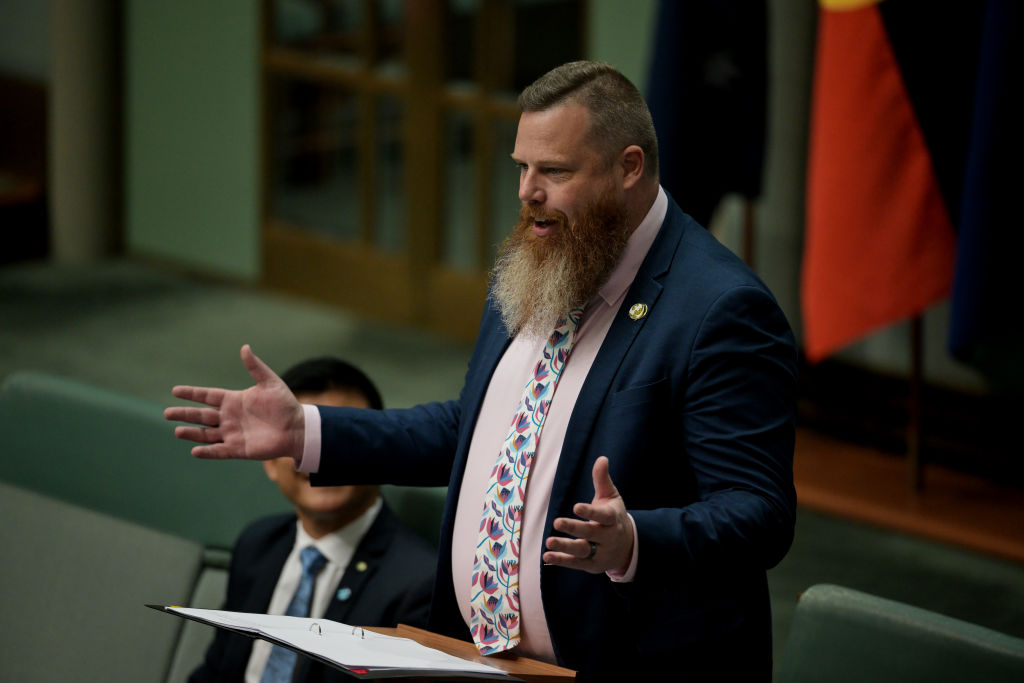
Repacholi, who is a licensed gun owner, said he understood that the “overwhelming majority of firearms owners do the right thing.”
“What happened at Bondi was horrific and should never have occurred. People are right to ask hard questions about whether it could have been prevented,” he said.
“From what we are learning, the focus should be on information sharing, risk identification and enforcement of existing powers, not on arbitrary limits that penalise people who have done nothing wrong.”
Farmers Seek More Clarity on Policy
NSW Farmers, a peak farming body, said it was aware of exemptions for primary producers in the proposed firearm reforms but needed more detail from the state government.
“We have urgently asked for more detail on what this practically means for the law-abiding farmers and those in agriculture who will be affected,” it said in a statement.
“NSW Farmers chose to engage directly with politicians this week to avoid causing further harm or distress to those impacted by the atrocity at Bondi on Sunday and will not be making further statements until more information is available.”
Advocacy Group Supports Stricter Gun Control
Meanwhile, Gun Control Australia (GCA), an advocacy group, said it supported firearm reforms nationwide.
“Australia’s world-renowned firearm framework, established after the Port Arthur tragedy in 1996, has saved countless lives and demonstrated that strong, evidence-based gun laws work,” it said in a statement.
“However, nearly three decades on, Australia’s gun laws have not kept pace with changes in firearm technology, shifts in ownership patterns and contemporary risk factors.
“Firearm ownership in Australia is a privilege, not a right, and it must be justified by genuine public-interest need.”
The GCA also stated that the Bondi attack exposed serious gaps in firearm licensing, oversight and national coordination.
“It is clear that we must reduce the number of firearms circulating in the community and rigorously tighten regulatory safeguards,” it said.
 Friends Read Free
Copy
Facebook
Tweet
Friends Read Free
Copy
Facebook
Tweet